Every fiber network is built from joints — two fibers meeting end to end so light passes with as little loss as possible. There are two established ways to make that meeting: fusion splicing and mechanical splicing. Both depend on the same careful preparation — strip, clean, and cleave. What differs is what happens at the meeting point, and that difference decides which method fits a given job.
In short: fusion joins the glass itself and is the default for permanent, high-performance work. Mechanical splicing holds two prepared ends in alignment and earns its place where speed, a small job, or no splicer matters more. The choice is made job by job.
Fusion Splicing: Two Ends Become One Piece of Glass
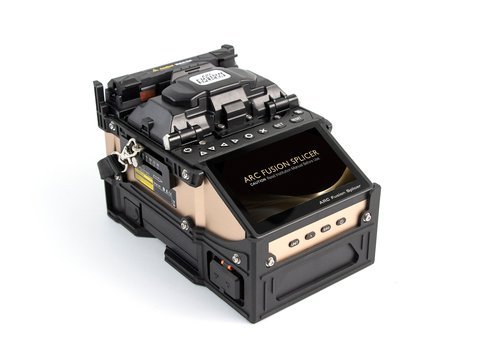
In fusion splicing, the two prepared fiber ends are aligned by core or cladding and an electric arc heats them until the glass fuses into a continuous joint. With no interface left for light to cross, the Fiber Optic Association describes fusion as offering the lowest loss and least reflectance in common use. A fused joint is also a strong one: the glass is one piece again, not relying on a clamp to stay together.
That performance comes with equipment. A fusion splicer is a real investment, and it is only as good as the cleaver feeding it — a poor cleave shows up as a poor splice, however capable the machine. Each joint is protected, usually with a heat-shrink sleeve, then laid into a tray and closure. The consumable cost per joint is low, so fusion is the economical choice when the joint count is high, and the natural choice for outside plant, FTTH feeder and distribution fibers, single-mode links, and high-speed services where reflectance matters. Our SD-9 fusion splicer and SD-6A fusion splicer are built for that daily field work — see our guides to the SD-9 and the SD-6A.
Mechanical Splicing: Alignment Held in Place
Mechanical splicing does not melt anything. The two cleaved ends are brought face to face inside a precision alignment fixture — commonly a V-groove or a capillary — and held there by clamping or crimping. Index-matching gel or adhesive between the ends reduces the optical discontinuity where the glass meets glass. The fibers stay two fibers; the fixture is what keeps them aligned.
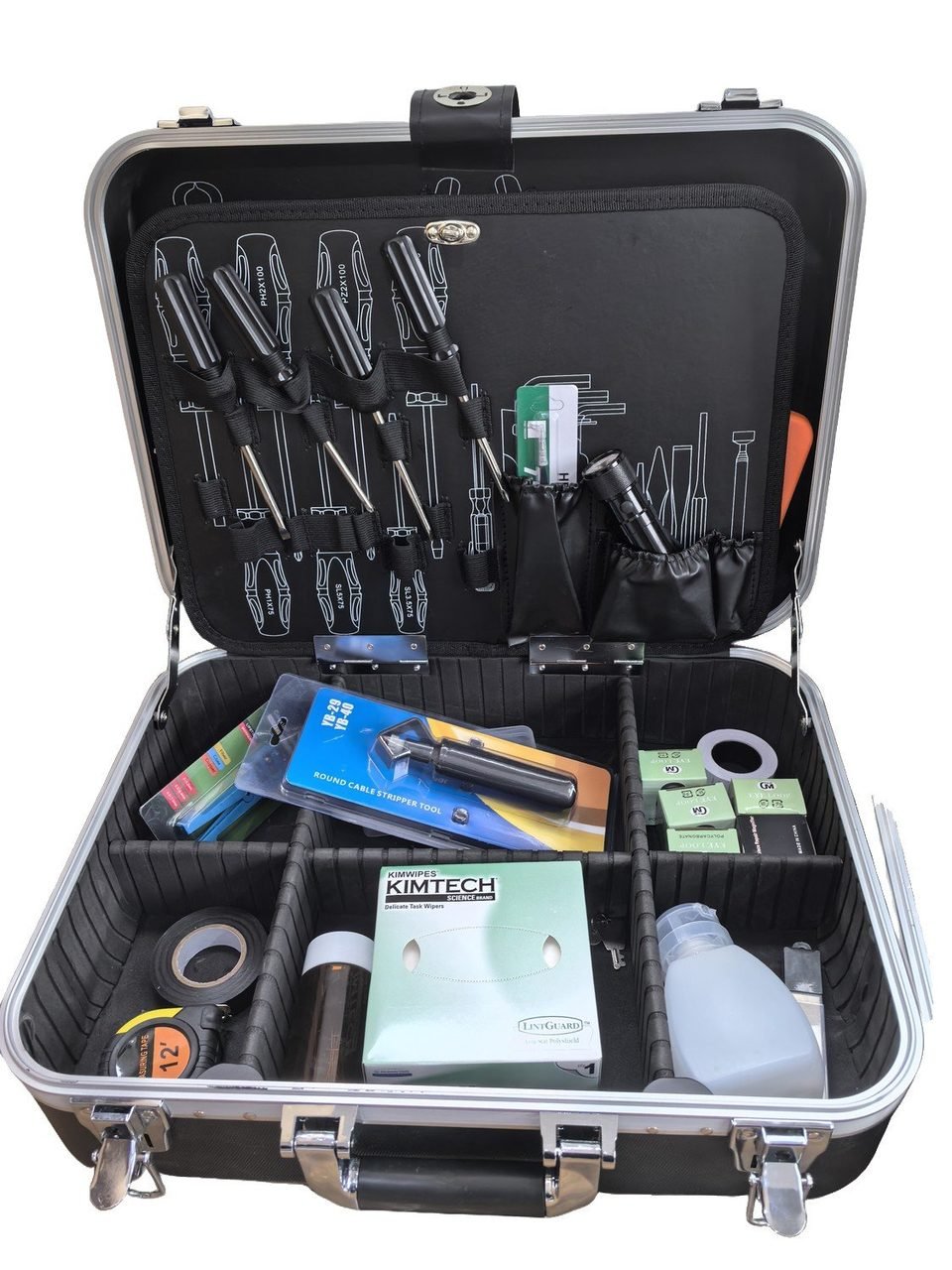
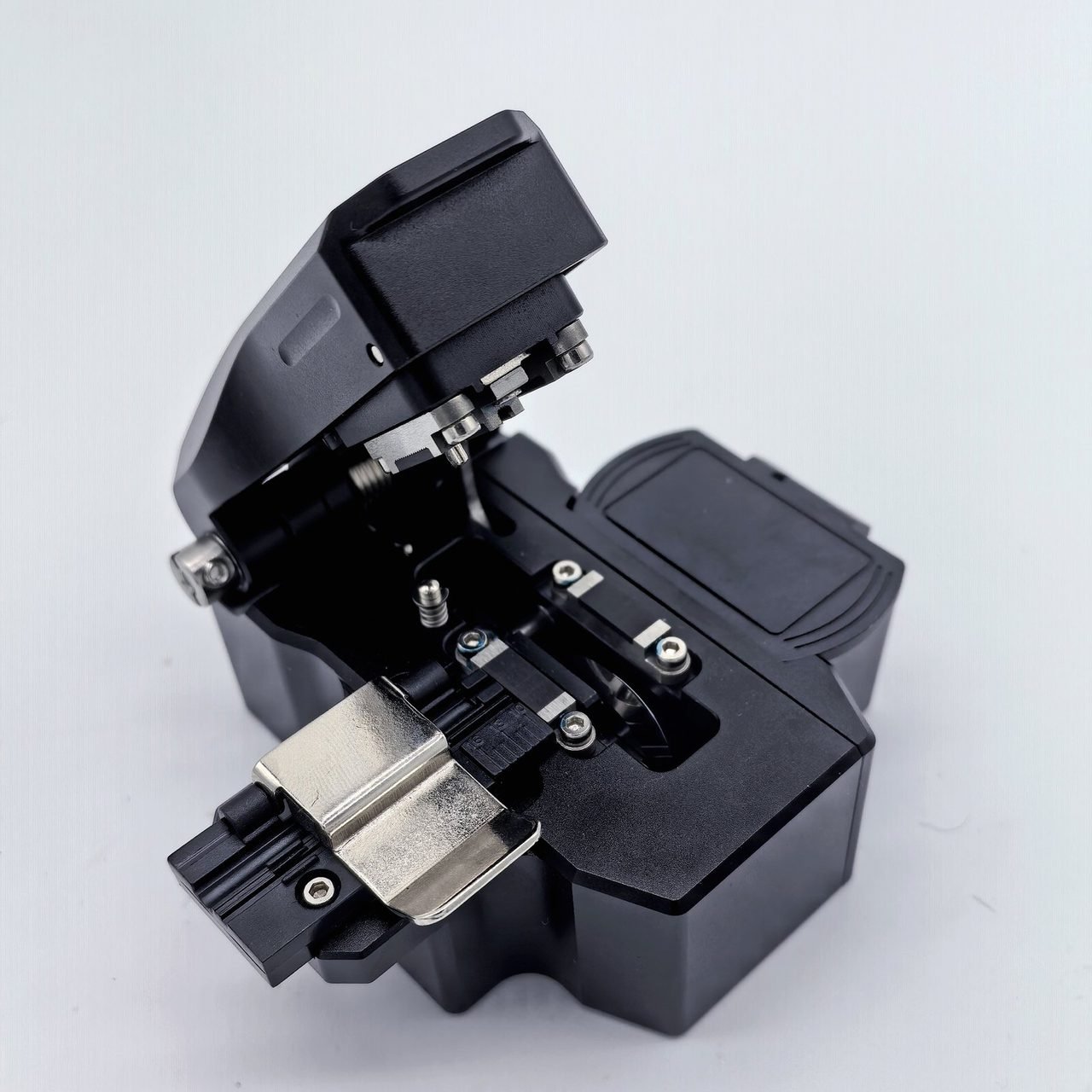
The trade-off is honest. The FOA notes that mechanical joints generally have higher loss and greater reflectance than fusion joints, and because the fibers are crimped to hold them in place, pull-out strength is lower. The splice component itself is also more expensive than the simple protection sleeve a fusion joint needs, so the cost per joint is higher even though no splicer has to be bought. Preparation is practically the same as for fusion: strip, clean, and cleave carefully. A good cleaver matters just as much here — our guide to cleave quality and splice loss explains why, and a K-35 one-step cleaver gives a consistent end face for either.
Where mechanical splicing earns its place is in speed and simplicity. No splicer to carry, power, or maintain — a cleaver and preparation tools are enough, and a visual fault locator can help optimize some splice types. That makes it the practical answer for fast, temporary restoration, a job with only a handful of joints, and some multimode premises installations. The same mechanism also appears inside prepolished field connectors and in temporary splices used to test bare fibers with an OTDR.
Choosing by the Job
A permanent single-mode joint on a feeder or backbone, a high-speed service, or a day of dozens of splices points to fusion: lower loss and reflectance, a stronger joint, and the lowest cost per splice once the machine is on the truck. A small repair, a restoration where minutes matter, or a premises job with a few multimode joints points the other way — made quickly, with light kit, and a higher per-joint cost that is trivial at that volume.
Whichever method is chosen, the rest of the routine does not change. The joint must be protected — a sleeve for fusion, the splice housing itself for mechanical — routed into a tray or closure, and tested. The finished link is proven with an OTDR trace or a power meter reading, as our guide to splice loss troubleshooting sets out. If the method is specified by the customer or the network design, that specification stands.
Most crews end up fluent in both: fusion for the permanent work that fills the week, mechanical for the repair that cannot wait. Knowing which joint a job needs — and having a clean cleave ready for either — is what keeps both reliable. Tell us how your crews join fiber, via the quote form below or silvia@licoom.com. EXW factory pricing on request.