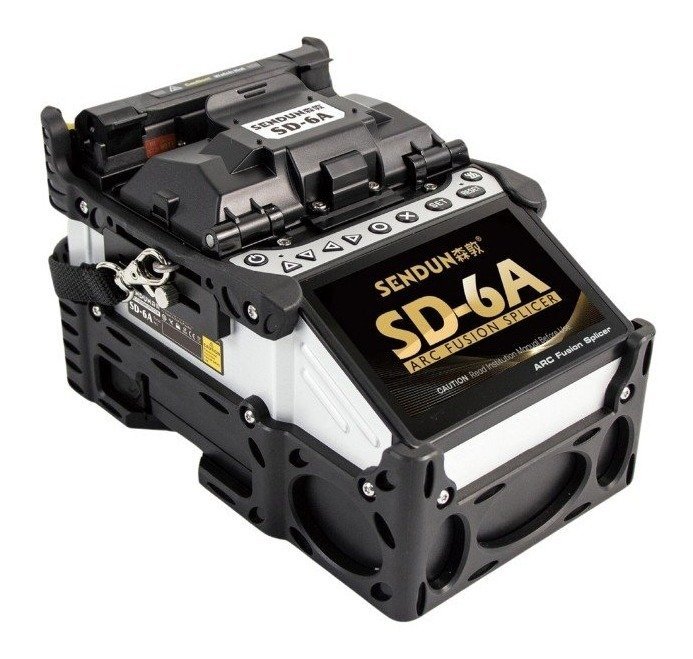
A fusion splicer has one job: join two fibers so cleanly that light passes through the joint almost as if the fiber had never been cut. On a working FTTH job, that joint has to be made on a pavement, in a cabinet, or at the side of a road — not on a laboratory bench. The SD-6A fusion splicer is built for that kind of day: a core alignment machine with four motors and 6-second fast splicing, made for crews that splice drop cables in the morning and backbone joints in the afternoon.
What 4-Motor Core Alignment Actually Does
When two fibers are spliced, what matters is the core — the thin glass centre that carries the light. If the cores are offset, light leaks at the joint and the connection suffers. The SD-6A uses four motors to position the two fibers, adjusting each one in both directions until the cores themselves line up. That is the difference between core alignment and simpler alignment methods that only line up the outer cladding: aligning the core is the alignment that counts, and it is what keeps a joint performing well once it is closed up and buried, hung, or sealed in a closure.
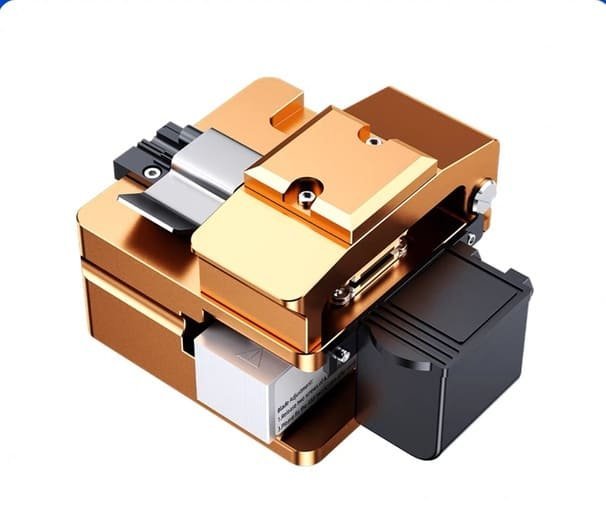
For a crew, the practical benefit is consistency. Different operators, different light conditions, different positions on site — the alignment system does the fine positioning work every time, rather than leaving it to the steadiness of one person's hands. A good cleave is still the starting point: a clean, flat fiber end face is what makes any splice possible, which is why cleave quality and splice results always go together. But once the fibers are prepared, core alignment is what turns two good ends into one good joint.
Fast, Fully Automatic Splicing on a Working Day
The SD-6A splices in 6 seconds, and its operation is fully automatic. On a job with dozens of splices ahead, that speed adds up — but the real gain is not just the seconds saved on each joint. Automatic operation means the splice cycle runs the same way every time, so quality does not depend on who happens to be holding the machine at that moment. A crew leader can trust the result from the newest member of the team as much as from the most experienced, and that matters when a job has to be finished before the light goes or the road reopens.
Speed also changes how a crew plans the day. When each splice is quick and repeatable, the team can work through a full route of joints without the splicing step becoming the bottleneck. The slow parts of the job stay where they belong — preparing cables, getting access, and testing — instead of piling up at the splicer.
From FTTH Drops to Backbone Joints
The SD-6A is made for the full range of field splicing, from FTTH drops through to backbone joints. A drop splice at a subscriber's premises and a backbone joint in a street cabinet ask for the same thing: a joint that will hold its performance for years without anyone coming back to it. Crews that carry one splicer for both kinds of work avoid the cost and complication of keeping two machines, two sets of spares, and two routines in the van.
That range is also what makes the SD-6A a practical choice for contractors and distributors building out their fleets. One machine type across the team means one training routine, one way of working, and one set of habits on site — and when a crew member moves from a drop job to a backbone job, nothing about the splicing step has to change.
If your crews are splicing FTTH drops, backbone routes, or both, the SD-6A fusion splicer is worth a look — and if you are putting together a full field kit, see our FTTH tool kit checklist for what else a splicing crew needs on site. Tell us what your crews splice and we will help you put together the right setup. Contact us through the quote form below or email silvia@licoom.com. EXW factory pricing on request.