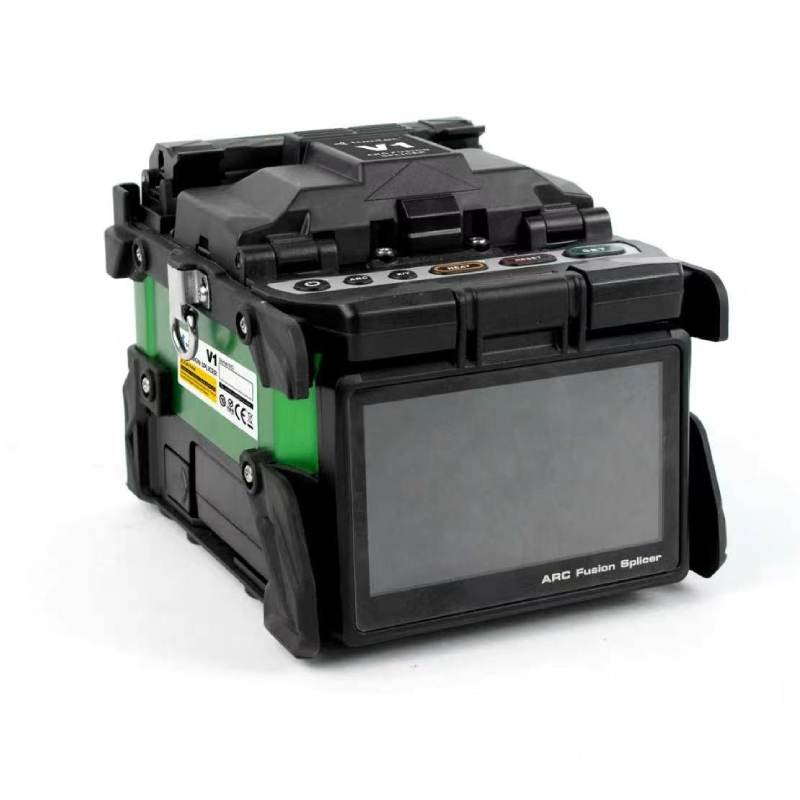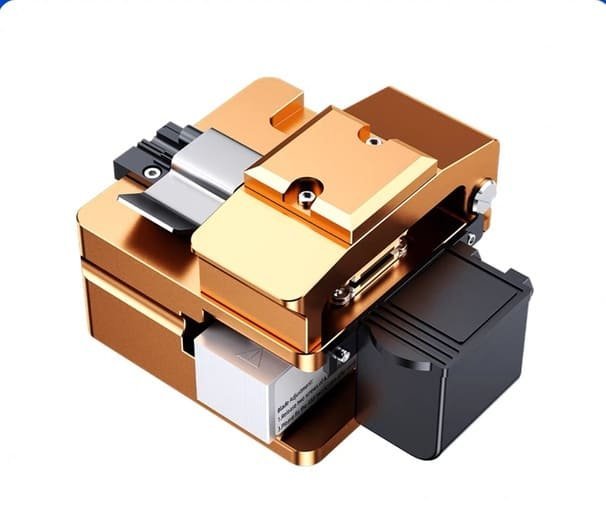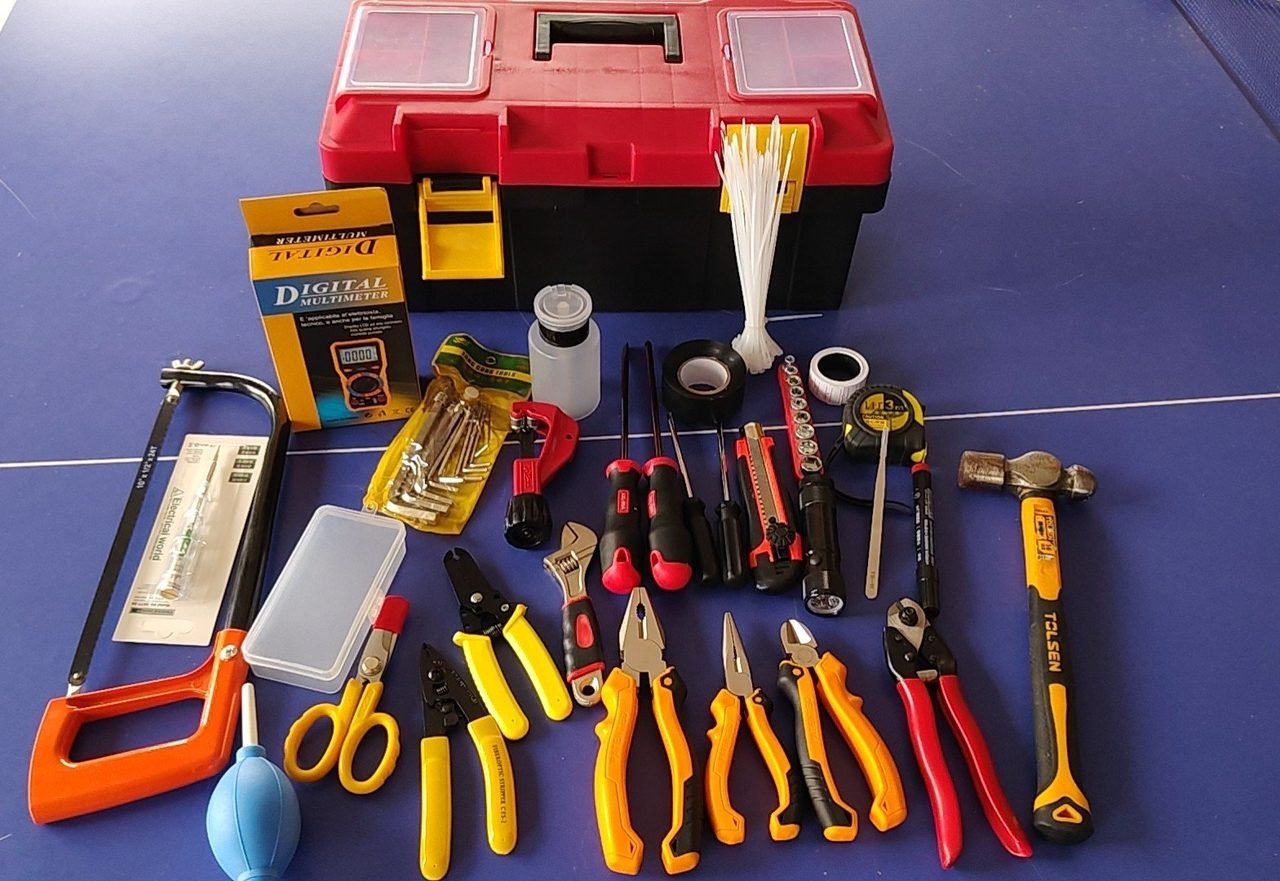
Open a fiber installer's toolbox and you will find two kinds of tools side by side. One half is the fiber kit: strippers, cleavers, cleaners, and test gear. The other half is the general hand tools — the multimeter, hammer, saw, wrenches, and pliers that have nothing specifically to do with fiber, and everything to do with getting the job finished on site. Installers carry both in one box for a simple reason: on a real installation, the fiber work is only part of the day.
The Measuring and Testing Half of the Day
Before any fiber is touched, the installer has to understand the site. A digital multimeter checks power and continuity where the job involves powered equipment or low-voltage wiring alongside the fiber run. A tape measure sizes up cable routes, wall runs, and the slack needed at each end — measure twice, cut once applies to fiber just as much as to anything else. And a blower clears dust and debris from work surfaces and enclosures before delicate work begins, because a speck of dust in the wrong place can ruin a connection.
These are not fiber tools, but they decide whether the fiber tools get a fair chance. A badly measured route means a cable under tension; a dusty enclosure means a dirty connector. The general tools do the preparation that makes the precision work possible.
Cutting, Fixing, and Fastening
Much of an installation is ordinary hand work. A claw hammer and a hacksaw deal with fixings, trunking, and brackets. An adjustable wrench and a set of pliers — combination, long-nose, and cutting pliers — tighten, grip, bend, and trim. Screwdrivers and a hex key set open enclosures, mount faceplates, and adjust hardware. Cable ties and electrical tape bundle and secure the finished runs so they stay neat and protected long after the installer has left.
None of this is glamorous, and that is exactly why it belongs in the same box. When the installer is up a ladder or in a cramped riser cupboard, walking back to the van for a wrench costs more time than the fiber work itself. One box, both halves — that is how a crew keeps moving through a full day of installs.
Why Installers Keep Both Halves Together
Putting general and fiber tools in one kit is a working habit, not just a packing choice. The two halves take turns all day: measure and fix, then strip and connect, then fasten and tidy. A crew that carries both never has to stop the fiber sequence to go and find a hand tool, and never has to improvise a fixing with the wrong tool because the right one was left behind.
It also makes the kit easy to check at the end of the day. An empty slot or a missing tool is obvious when everything has its place in one box, so the next morning starts complete instead of starting with a trip to replace something lost. For crews that run several jobs a day, that end-of-day check is worth as much as any single tool in the box.
If you are putting together kits for your own crews, the fiber half of the box matters just as much as the general half. See our FTTH drop installation kit for what the fiber tools in the bag actually do, and browse our fiber optic tool kits for complete sets built around field work. Tell us what your crews install and we will help you put together a kit list to match. Contact us through the quote form below or email silvia@licoom.com. EXW factory pricing on request.