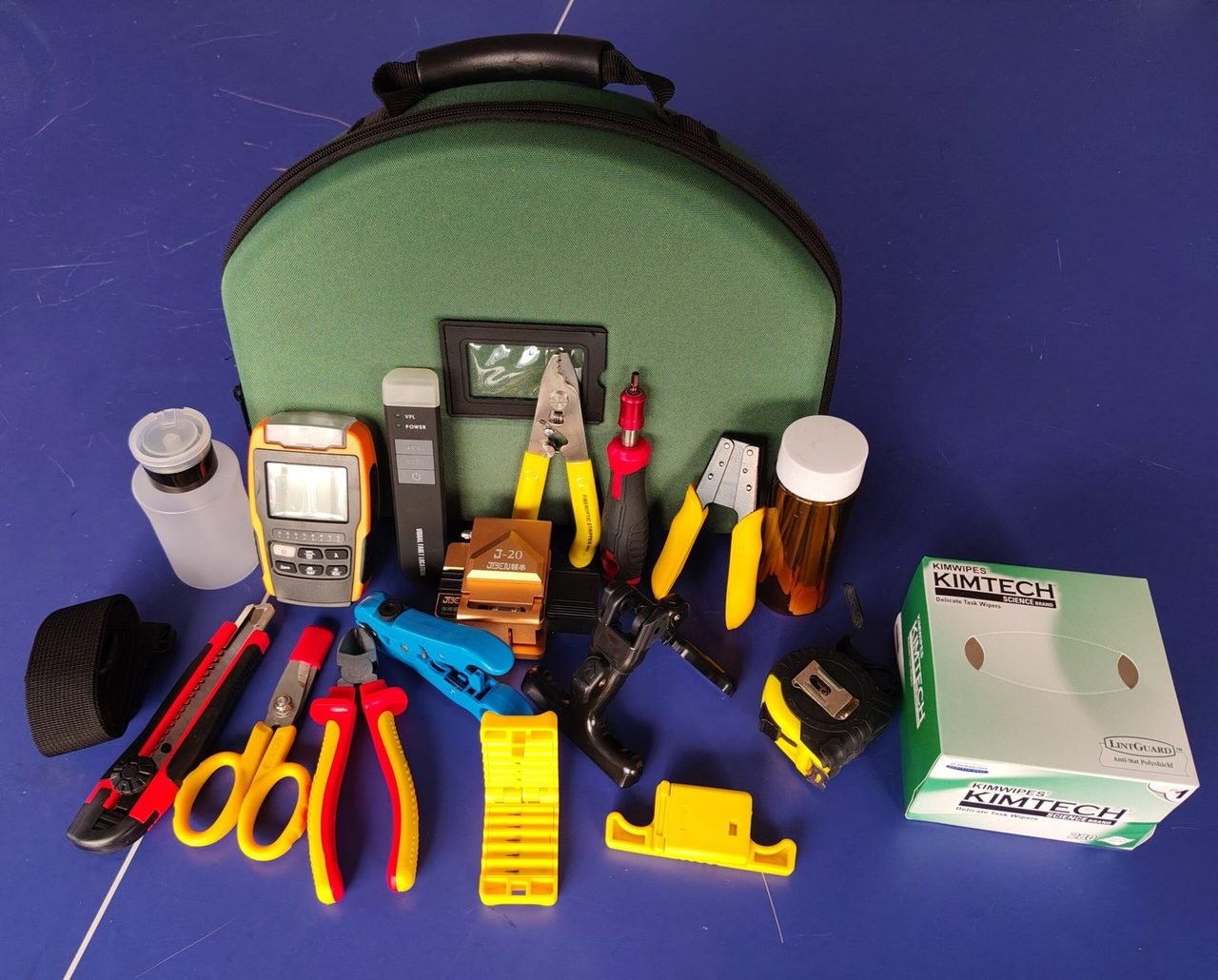
The last stretch of a fiber network — the drop from the street to the subscriber's premises — is where installation crews spend most of their day. It is also where a well-packed kit pays for itself: every tool has to be there, because going back to the van for one missing item costs more time than the job itself. The kit in the photo above is built exactly for that job.
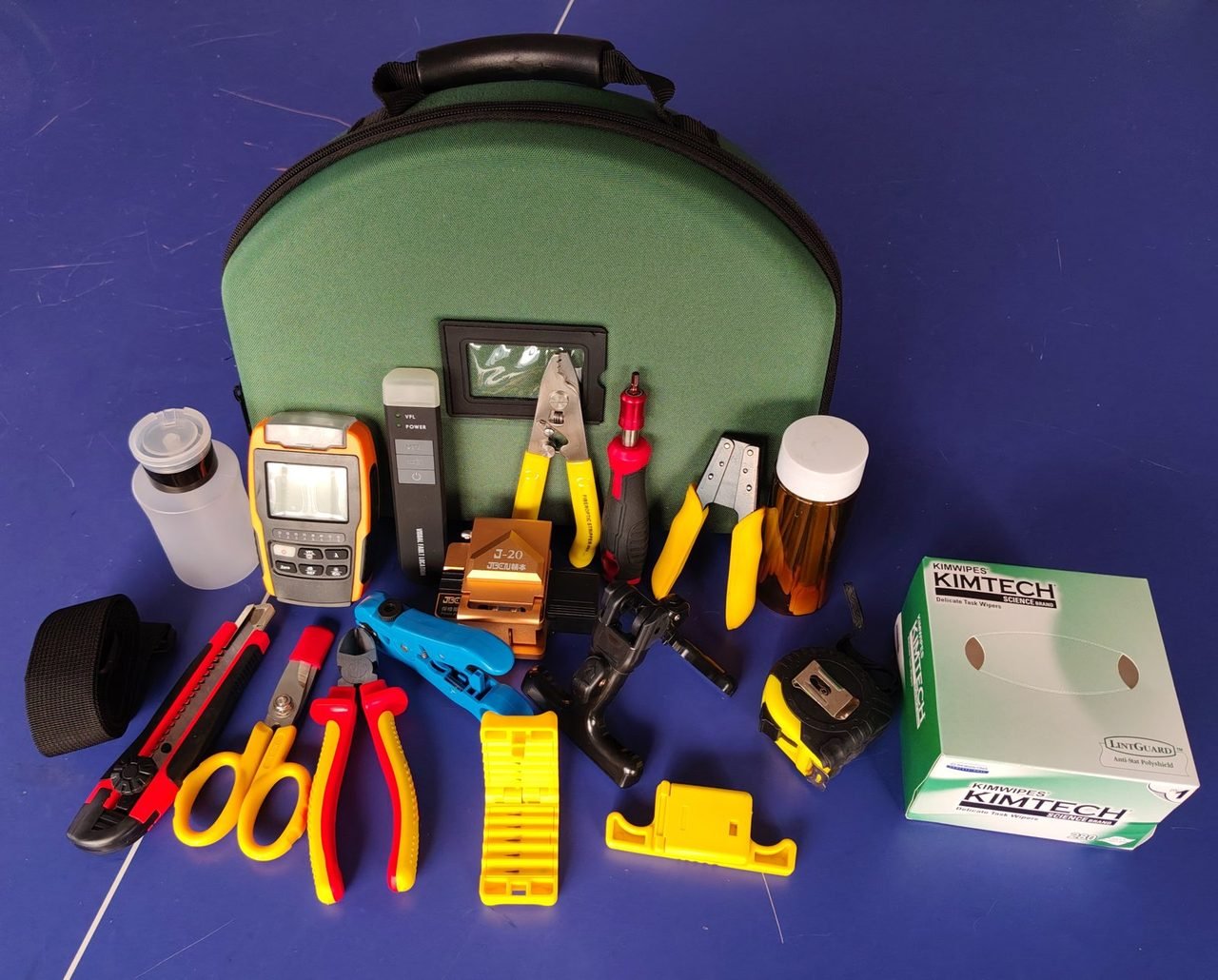
Note what is not in this bag: there is no fusion splicer here. This is a drop installation kit for mechanical splicing and field termination, not a splicing rig. If your job needs fusion splicing, that is a different case — see our fiber splicing tool kit. Here is what each tool in this bag does, and why it earns its place.
Preparing the Cable and the Fiber
Drop work starts with opening the cable and getting a clean, bare fiber ready for termination. The blue drop cable stripper opens the outer jacket of flat drop cable, while the three-hole fiber stripper removes the coating in stages down to bare fiber without nicking it. Kevlar shears cut the aramid strength members cleanly — ordinary scissors dull fast on Kevlar — and diagonal cutters handle trimming and general cutting. The utility knife covers scoring, opening packaging, and the odd jobs every site throws at you.
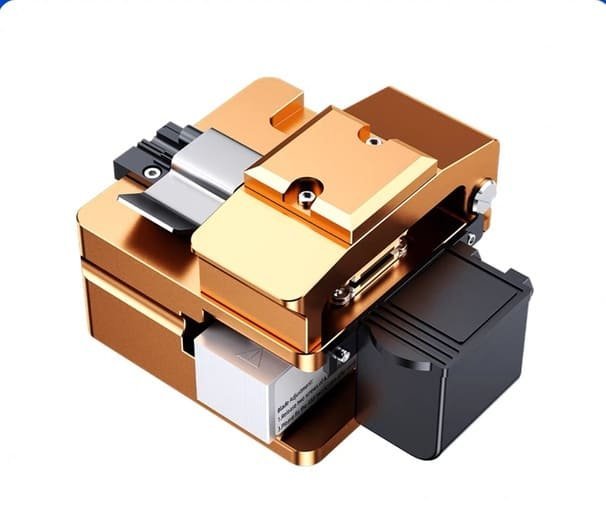
The J-20 high-precision fiber cleaver is the heart of the kit. A good cleave is a flat, clean fiber end face, and it decides whether a mechanical connector will perform or fail. Crews cleave, inspect, and re-cleave without thinking twice — which is why the cleaver sits front and center in this bag.
Testing Before You Leave the Site
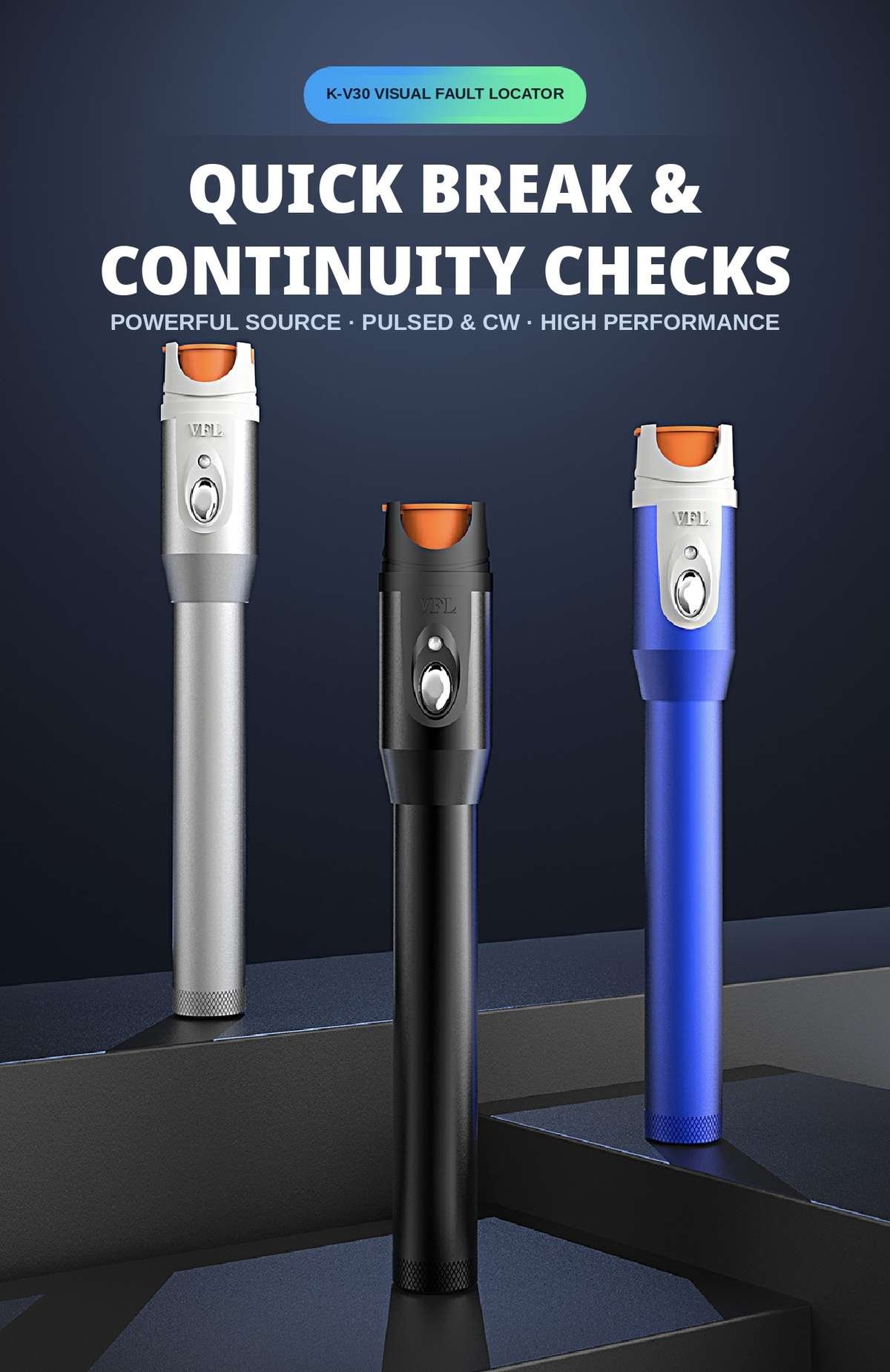
Two test tools ride in this kit. The visual fault locator (VFL) sends visible red light down the fiber: a break or a bad bend shows up as a glowing spot, so the crew can find the fault in seconds instead of guessing. The optical power meter then measures the actual signal level, confirming the finished drop is within the loss budget before the installer packs up. Testing on the spot is what keeps a crew from driving back for a callback.
Cleaning, Measuring, and Carrying It All
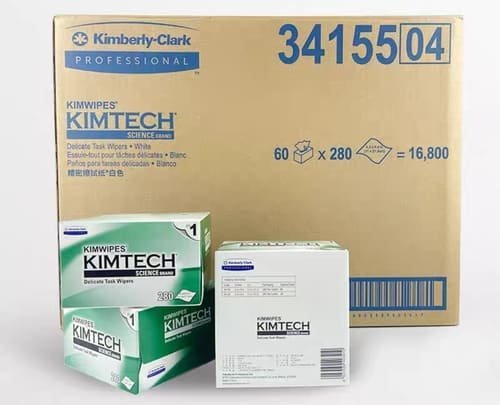
A dirty end face is the most common cause of a failed connection, so the alcohol bottle and lint-free wipes are not an afterthought — every connector gets cleaned before it is mated. The tape measure handles drop length, slack loops, and mounting height. And everything rides in the green soft bag, which keeps the kit portable enough to carry up a stairwell or along a street in one trip.
For a broader look at what a full installation crew carries, see our FTTH tool kit checklist. And if you need a kit configured for your own crews — different cleaver, different stripper set, or your own branding — our fiber optic toolkits page is the place to start.
Frequently Asked Questions
Does a drop installation kit include a fusion splicer? Not this one. This kit is set up for mechanical splicing and field termination. Fusion splicing needs a splicer, cleaver, and protection sleeves packed in a separate case, as shown in our splicing tool kit article.
Why does the kit carry both a VFL and a power meter? They answer different questions. The VFL finds where a fault is; the power meter tells you how much signal actually gets through. Together they confirm the drop is good before the crew leaves.
Can the kit be changed for a specific crew or market? Yes. Kits can be configured with different tool combinations, and OEM and private-label options are available for distributors and brand owners. Send us the models and quantities you need and we will reply with factory pricing (EXW), MOQ, and lead time.
Need a drop kit like this one, or a kit built to your own list? Request a quote or write to us at silvia@licoom.com — tell us the models and quantities, and we will come back with EXW factory pricing, MOQ, and lead time.