A fiber cleaver earns its place in the tool bag one cut at a time. The K-10 is Licoom's compact, manual-reset cleaver for crews that want a precise, repeatable cut before every fusion splice — without the bulk or the moving parts of a larger machine. It is a small metal tool built around one job: preparing a clean fiber end face, day after day.
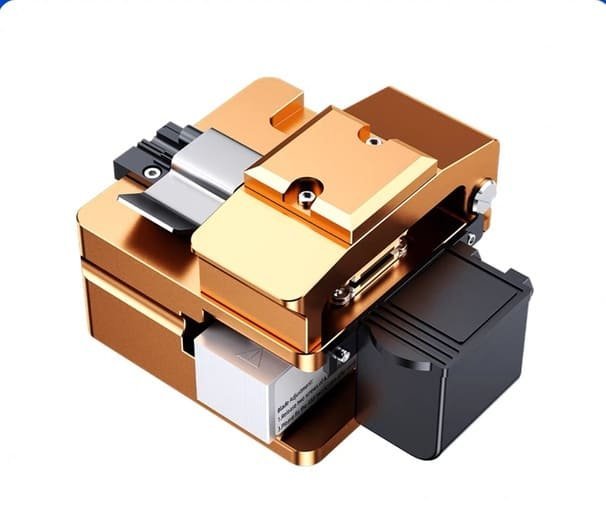
The K-10 is a high-precision cleaver for single fiber, with a tungsten steel blade rated for 48,000 cleaves and a cleave angle of 0.5° or better. Its defining feature is the reset: after each cleave, the operator returns the carriage by hand. That manual, half-step action is what keeps the tool simple, light, and easy to keep in service.
Manual Reset, by Design
Some cleavers spring the blade carriage back on their own after a cut. The K-10 does not — and that is a choice, not a missing feature. With manual reset, there is no return spring to weaken and no automatic mechanism to jam with dust or fiber scrap on a windy site. The operator controls the return stroke, feels the carriage seat, and knows the tool is ready for the next fiber. For a tool that may make dozens of cuts in a day, that simplicity is what keeps it working the same way in its hundredth week as in its first.
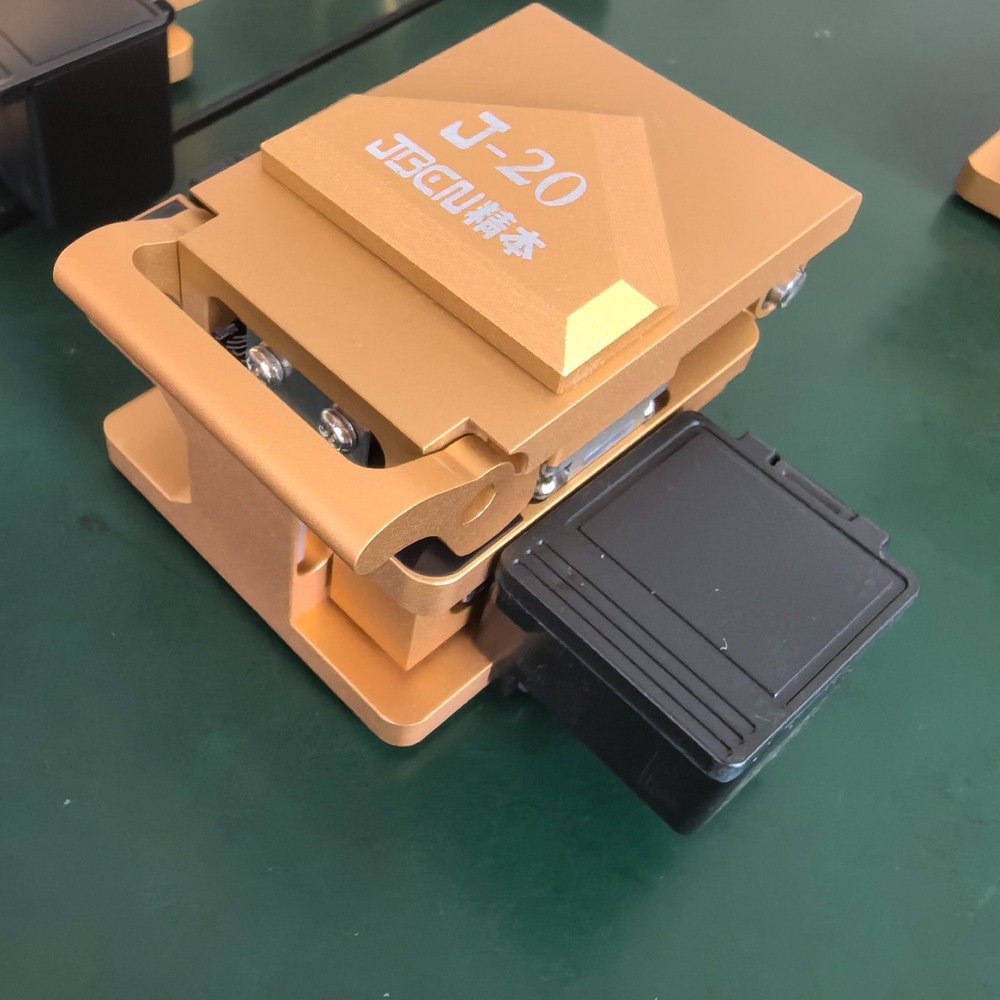
The half-step reset also sets the pace of the work. Each cleave follows the same short routine: load the fiber, close the lid, press, return the carriage, lift out the prepared end. Nothing in that sequence changes from the first splice of the day to the last, and that consistency is exactly what a splicer needs from the tool feeding it. Crews that prefer a carriage that returns on its own can look at our J20 high-precision cleaver instead; the K-10 is for crews that like to feel each step themselves.
What It Cuts, and How Cleanly
The K-10 prepares single quartz fiber with a 125 µm cladding, handling coating diameters of 0.25, 0.9, and 3.0 mm, so one tool covers bare fiber, tight-buffered pigtails, and jacketed drop cable preparation. Cleave length runs about 8 to 20 mm, and the cleave angle is 0.5° or better — the flat, square end face a fusion splicer needs for a low-loss joint. Ribbon fiber can be handled too, with an exchangeable holder.
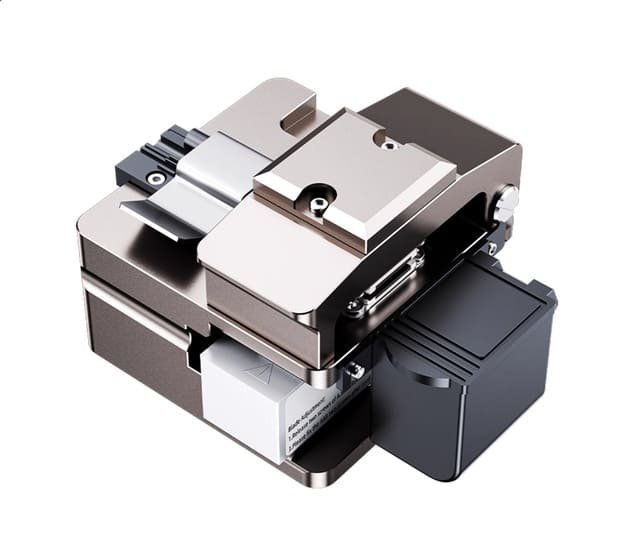
The tungsten steel blade is rated for up to 48,000 cleaves: 16 cutting positions at 3,000 cleaves each. Blade height is adjusted once every 1,000 cuts, with three height adjustments per position, so the edge is rotated and raised on a schedule instead of being replaced at the first sign of wear. A built-in scrap collector catches the cut-off fiber, keeping waste out of the work area and off the floor of the van. Our guide to cleave quality and splice loss explains why that flat end face matters, and our guide to replacing a cleaver blade covers the routine that keeps any cleaver cutting true.
Built for the Field Bag
The K-10's body is aluminum alloy, and the whole tool measures about 83 × 55 × 52 mm and weighs roughly 250 g — small enough to sit in a pocket of the tool case rather than needing its own slot. It works from −25 °C to +55 °C, so a cold morning on a pole or a hot afternoon in a roadside cabinet is within its range.
The practical details are the ones a crew notices. The hex key for blade adjustment is stored in the bottom of the unit, so it is there when the blade needs rotating. The cleaver ships in a black EVA storage box with a user manual. It comes in gold, silver, black, blue, and red — gold is the main color — and colors and a customer logo can be customized on request.
For FTTH installation, backbone maintenance, and any job where a fusion splicer is waiting on a clean end face, the K-10 is a compact, manual-reset cleaver that does one job well and keeps doing it. See the K-10 product page for the full specification, or tell us about your crew's cleaving work via the quote form below or silvia@licoom.com. EXW factory pricing on request.