
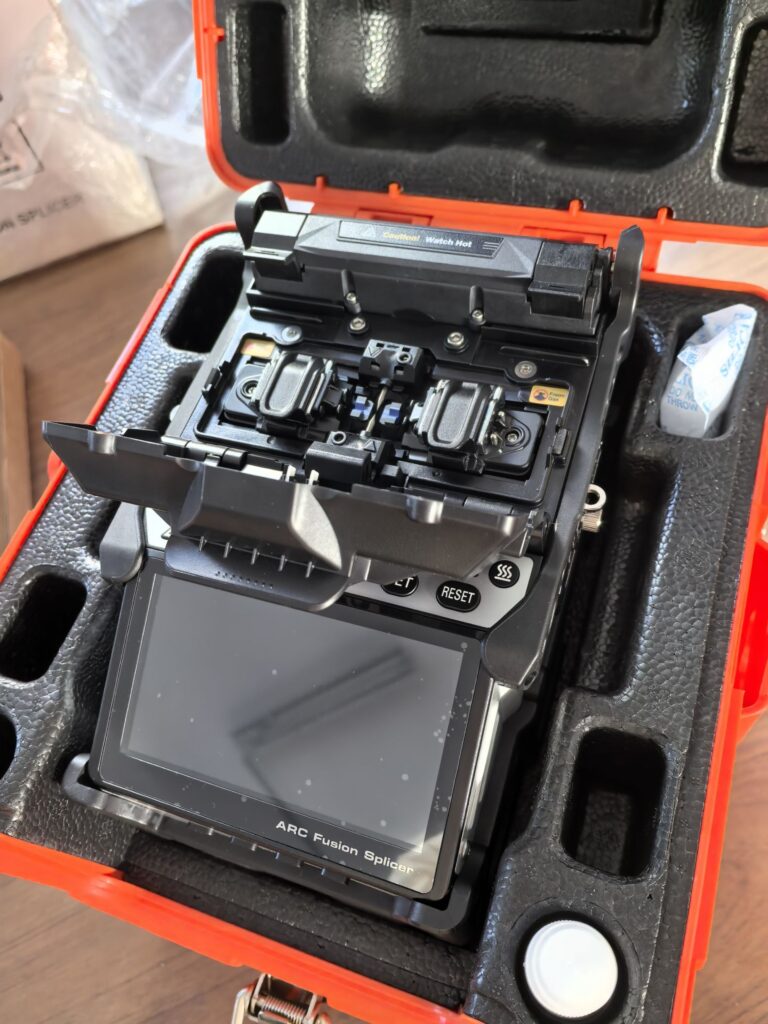
Quick answer: For FTTH work, choose a fusion splicer by alignment method, supported fiber types, splice speed, field durability, battery capacity, and after-sales support. The best model is the one that matches the project scope and can be supported with verified specifications.
What to Look for in an FTTH Fusion Splicer
1. Alignment and Fiber Compatibility
Confirm whether the splicer uses core or cladding alignment and whether it supports the single-mode, multimode, or other fiber types used in your project.
2. Splicing Speed and Workflow
Fast splice and heating cycles can improve field productivity, but the quoted times should be checked against the exact configuration and test conditions.
3. Portability and Field Use
FTTH technicians often work outdoors, in cabinets, or in limited spaces. Compare weight, battery endurance, screen visibility, carrying case contents, and environmental protection.
4. Cleaver and Preparation Tools
A fusion splicer cannot compensate for poor fiber preparation. A suitable stripper, clean working process, and a precision fiber cleaver are essential parts of the workflow.
LiCoom Models to Evaluate
| Model | Positioning | Confirmed information |
|---|---|---|
| SD-6A | Entry automatic alignment option | 4 motors, automatic alignment, 6-second splice description |
| SD-9 | Higher motor configuration | 6 motors, automatic alignment, 5-second splice description |
Heating time, battery capacity, standard accessories, warranty, and supported fiber types should be confirmed for the exact order configuration.
Buying Checklist
- Fiber types and daily splice volume
- Required alignment method
- Splice and heating cycle requirements
- Battery and field environment
- Included cleaver, stripper, electrodes, and case
- Warranty, calibration, and spare-parts support
Frequently Asked Questions
Does every FTTH project need a core-alignment splicer?
No. The appropriate alignment method depends on project specifications, fiber type, quality requirements, and budget.
Why does the fiber cleaver matter?
The cleaver prepares the fiber end face before splicing. Consistent preparation helps reduce rework and makes the splicing process more repeatable.
Request a Quote
Send LiCoom your fiber type, expected daily splice volume, required configuration, destination country, and quantity. We will confirm the suitable model, accessories, MOQ, lead time, and current quotation.