
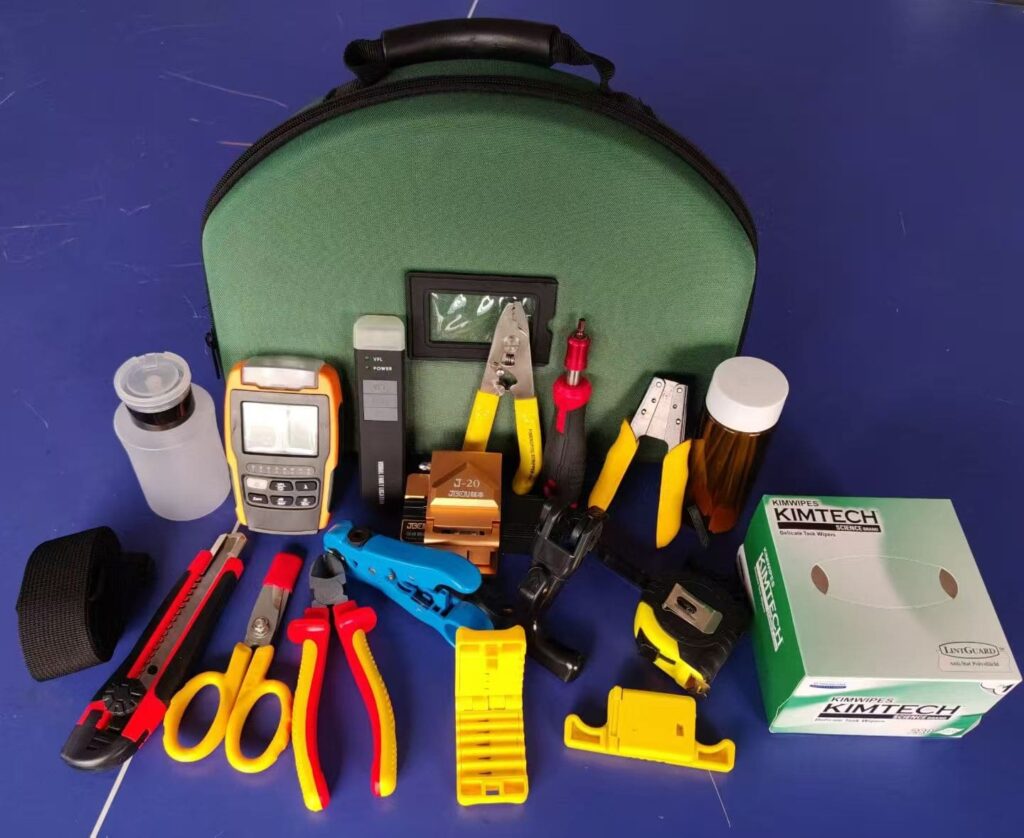
Quick answer: A contractor tool kit should cover cable opening, stripping, cleaning, cleaving, splicing support, visual fault location, power testing, and safe storage. The exact configuration should match the cable types and work scope.
1. Fiber Preparation Tools
- Tri-hole stripper for common jacket, buffer, and coating layers
- Kevlar shears for aramid strength members
- Drop-cable or armored-cable tools when required
- Lint-free cleaning supplies and alcohol bottle
2. Choose the Right Fiber Cleaver
| Model | Best suited to |
|---|---|
| K-35 | One-step field efficiency |
| K-10 | Balanced precision, price, and compact size |
| J-20 / K-21 | 54,000-cleave specification and 3-in-1 clamp |
| TC-90 | Economical mechanical-splice and quick-connector work |
3. Add Testing and Troubleshooting
A visual fault locator supports continuity checks and visible fault location. An optical power meter checks signal power. A fiber identifier helps with in-service fiber direction and tone detection. OTDR requirements depend on network length and acceptance-test needs.
4. Standardize the Kit
For multi-crew deployments, use a controlled checklist covering tool model, quantity, spare blade, cleaning materials, batteries, adapters, case contents, and inspection date. This makes replenishment and training easier.
LiCoom 11-Piece Toolkit
The current toolkit reference includes stripping, cutting, cleaning, and carrying items. The final item list, individual models, packaging, MOQ, and price should be confirmed before order.
Contractor Buying Checklist
- Cable and fiber structures
- Number of field crews
- Required cleaver model
- Test instruments and adapters
- Consumable replacement frequency
- Destination, quantity, and target delivery date
Request a Kit Configuration
Send LiCoom your field workflow, cable types, team count, required instruments, and budget range for a proposed toolkit and current quotation.