An OTDR trace looks intimidating the first time you see one: a sloping line, a few sudden steps, and spikes that seem to appear out of nowhere. In practice, reading a trace is a simple skill. The trace is a map of a fiber run, drawn from one end, and every feature on it corresponds to something physical in the cable. Learn the five steps below, and you can look at a trace and say, with confidence, where the fiber is healthy, where something needs attention, and where the measurement itself may be misleading you.
What the Trace Is Actually Showing
An OTDR sends pulses of light into the fiber and listens for the tiny amount of light scattered back. The horizontal axis is distance along the fiber, and the vertical axis is signal level. As light travels, a little of it is always lost, so the line slopes gently downward along a healthy span. That steady slope is normal: it is the fiber itself doing its job.
Anything that interrupts the fiber shows up as an event on the trace. A sharp upward spike usually marks a reflective point, such as a connector or a mechanical joint. A small downward step with no spike usually marks a non-reflective loss, such as a fusion splice. At the far end, the trace drops to the noise floor after a final reflection. Once you know that vocabulary, the rest is pattern recognition.
Reading a Trace in 5 Steps
- Start past the launch. The beginning of the trace is dominated by the launch pulse itself, and events very close to the start can be hidden or distorted. Use a launch cable so the first real connector sits in a readable part of the trace, and begin your reading after that launch section.
- Read the slope first. Before chasing individual events, look at the overall slope. A smooth, even slope means a uniform span. A section that slopes noticeably faster than the rest deserves a closer look: something in that section is adding loss, and the trace is telling you roughly where to look.
- Identify each event, one at a time. Walk along the trace and match every step and spike to a known point in the run: a splice closure, a distribution box, a connector panel. A reflective spike points to a connector or mechanical joint; a clean step points to a splice. If an event does not match anything on your route plan, flag it rather than guessing.
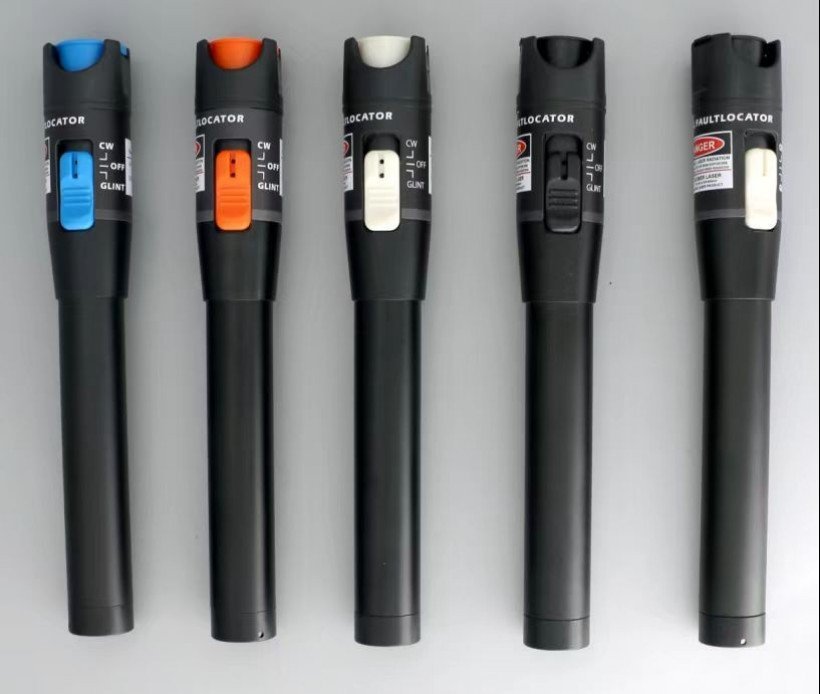
- Check the end of the fiber. A healthy trace ends with a clear end reflection followed by the noise floor. If the trace stops short of the expected distance, or the end reflection is missing, the fiber may be broken or sharply bent before the far end. That is the point where a visual fault locator check can help confirm what the trace suggests.
- Compare, do not judge a single trace alone. A trace is most useful next to a reference: a previous trace of the same span, or a trace shot from the other end. Testing from both directions is the classic way to resolve a doubtful event, since a real fault shows up from either side while a measurement artifact often does not.
Three Mistakes That Mislead Beginners
First, treating every spike as a fault. Connectors are supposed to reflect a little; a spike at a known connector location is expected, not alarming. Second, trusting the first few metres of a trace without a launch cable, where the instrument itself hides what is happening. Third, testing through dirty connectors. Contamination at the launch connector distorts the whole trace, so clean and inspect end faces before you trust any reading — the same discipline behind reliable optical power meter checks.
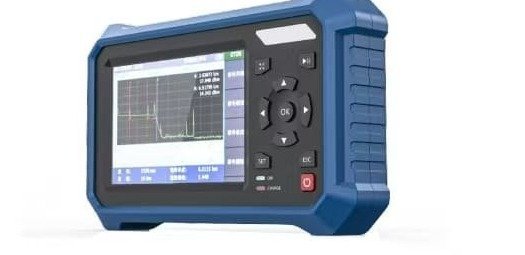
Trace reading rewards patience more than equipment. Walk the trace slowly, match events to the real route, and confirm doubtful results with a second shot from the other end. For field crews, a handheld unit that combines OTDR testing with the everyday checks — such as the K-100 multi-functional OTDR, covered in our K-100 overview — keeps the whole routine in one case instead of several.
Need help choosing OTDR and test gear for your crews, or a quote for a tool kit built around your jobs? Tell us what you test or write to silvia@licoom.com — we supply fiber tools and testers on EXW factory pricing on request, with small orders welcome.