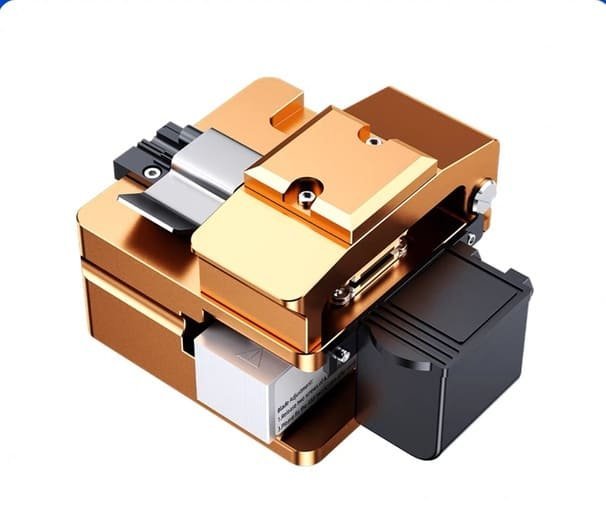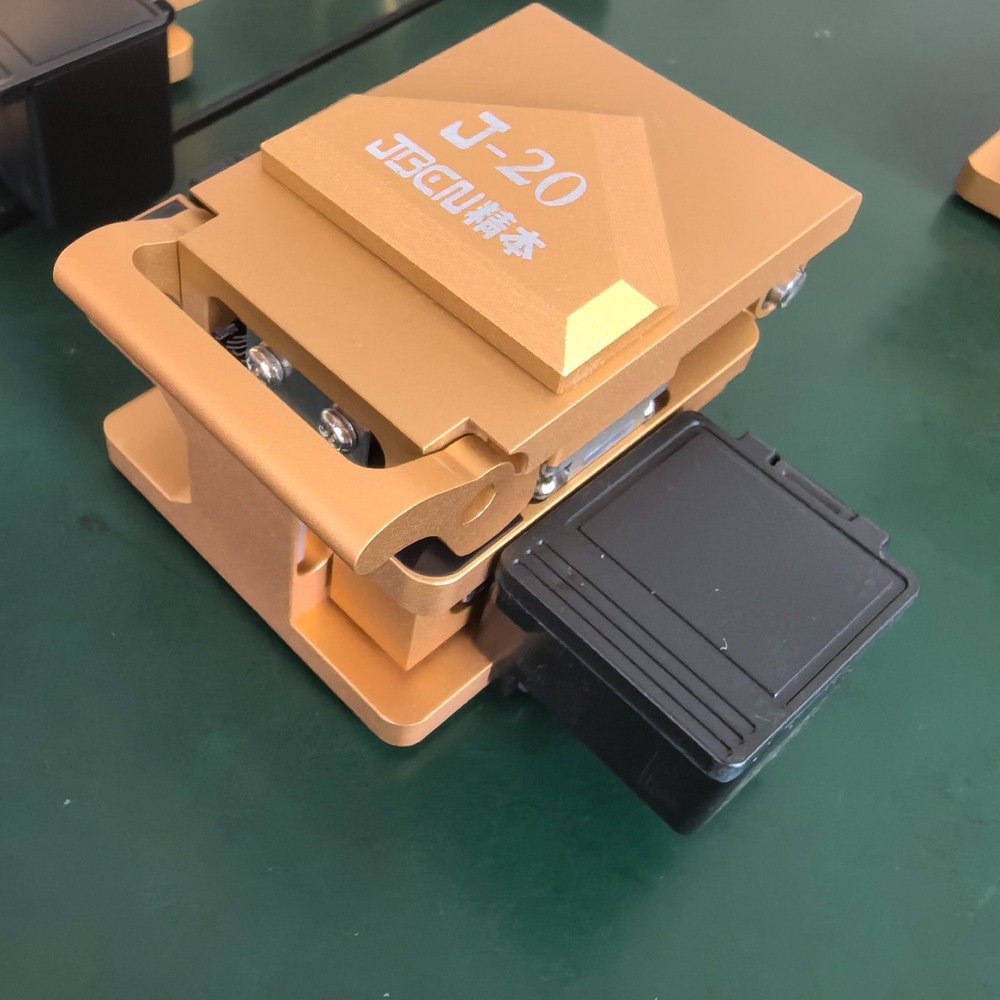
Most field cleavers are built for one kind of fiber. A crew that splices single fibers all week and then lands a ribbon job either carries a second cleaver or borrows one. The J20 high precision fiber cleaver is made to cover both: it cleaves single fibers and ribbon fiber of up to 12 fibers, in one compact tool that fits the same kit bag either way. For crews that move between drop-cable work and larger distribution jobs, that range is the whole point.
One Cleaver for Single Fiber and Ribbon Jobs
The J20 works in two steps, with an automatic blade reset after each cleave, so the operator repeats the same motion job after job instead of resetting the tool by hand. It handles coating diameters of 0.25, 0.9, 2.0 and 3.0 mm, with a cleave length of 9 to 16 mm and a cleave angle of 0.5 degrees or less. That combination matters because the cleave is what the splice is built on: as we covered in our guide to cleave quality and splice loss, a flat, square end face is the starting point for a low-loss joint, and a wandering angle shows up in the splicer's estimate before anything else does.
The fiber holder side is kept flexible on purpose. A universal fiber adapter plate accepts industry-standard removable fiber holders, so the cleaver adapts to the holders a crew already uses rather than forcing a change of holders across the board. The anvil opens high, giving a clear view of the fiber while it is loaded — a small detail that pays off on every job, especially in low light or when the fiber is a 900-micron tight-buffered strand that is easy to mis-seat.
Built for Volume: 48,000 Cleaves From One Blade
Blade life is where a cleaver's real cost shows up. The J20 blade offers 16 positions and up to 48,000 cleaves, and rotating or adjusting the blade is a quick job rather than a workshop task. On a large FTTH rollout, where a crew may cleave hundreds of fibers in a week, that life stretches the time between blade changes from weeks to months, and keeps the cost per cleave low across the whole project.
The rest of the tool is shaped around the same daily routine. A removable scrap bin collects fiber offcuts instead of letting them gather on the bench or in the case — offcuts are sharp, and a tidy bench is part of safe splicing practice. At 63 by 76 by 63 mm and 350 grams, the J20 packs into a tool kit without demanding its own case, and it travels as easily to a street cabinet as to a production bench.
Where the J20 Fits in a Crew's Kit
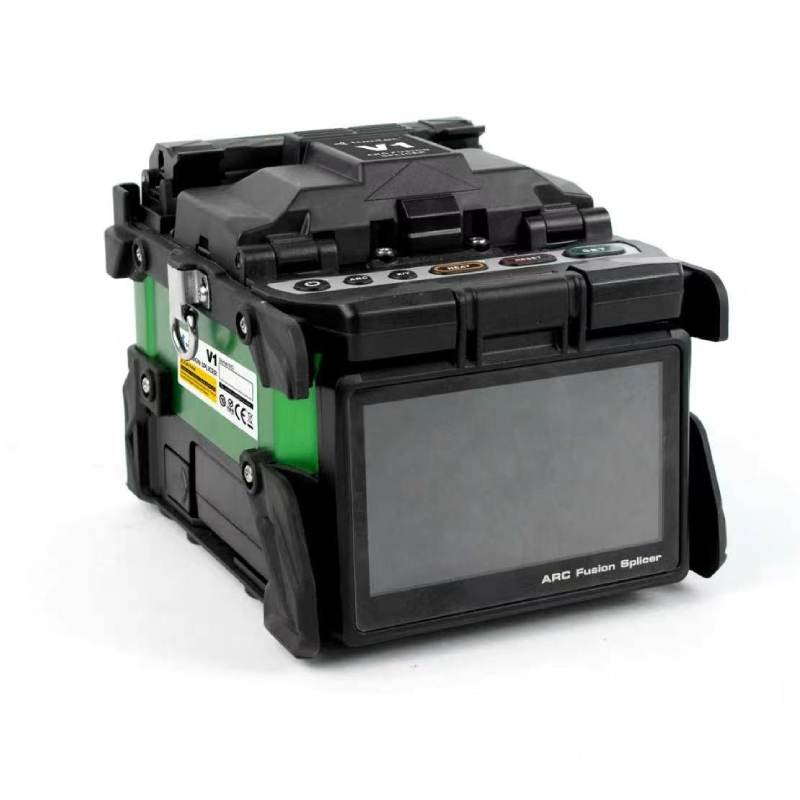
The natural home for the J20 is wherever splicing preparation happens: FTTH construction, backbone and distribution work, and production or lab benches that need a repeatable cleave across both single and ribbon fiber. It pairs with the usual kit — a stripper matched to the cable, cleaning supplies used before every splice, and a fusion splicer that rewards a good cleave with a clean estimate. Crews that already standardize their kits across vans will find it slots into the same layout as any other precision cleaver, with no special holder system to learn.
Like any cleaver, the J20 earns its keep on consistency rather than on any single specification. A blade that stays sharp across thousands of cleaves, a holder system that fits the crew's existing holders, and a cleave angle that stays within half a degree are what keep rework down — and rework, on a rollout schedule, is the cost that never appears on a purchase order. If your crews split their time between single-fiber drops and ribbon work, one cleaver that does both is worth a look.
Want to add the J20 to your crew's kits, or pair it with strippers, holders and consumables in a single order? Send us your list through the quote form or write to silvia@licoom.com for EXW factory pricing on request.