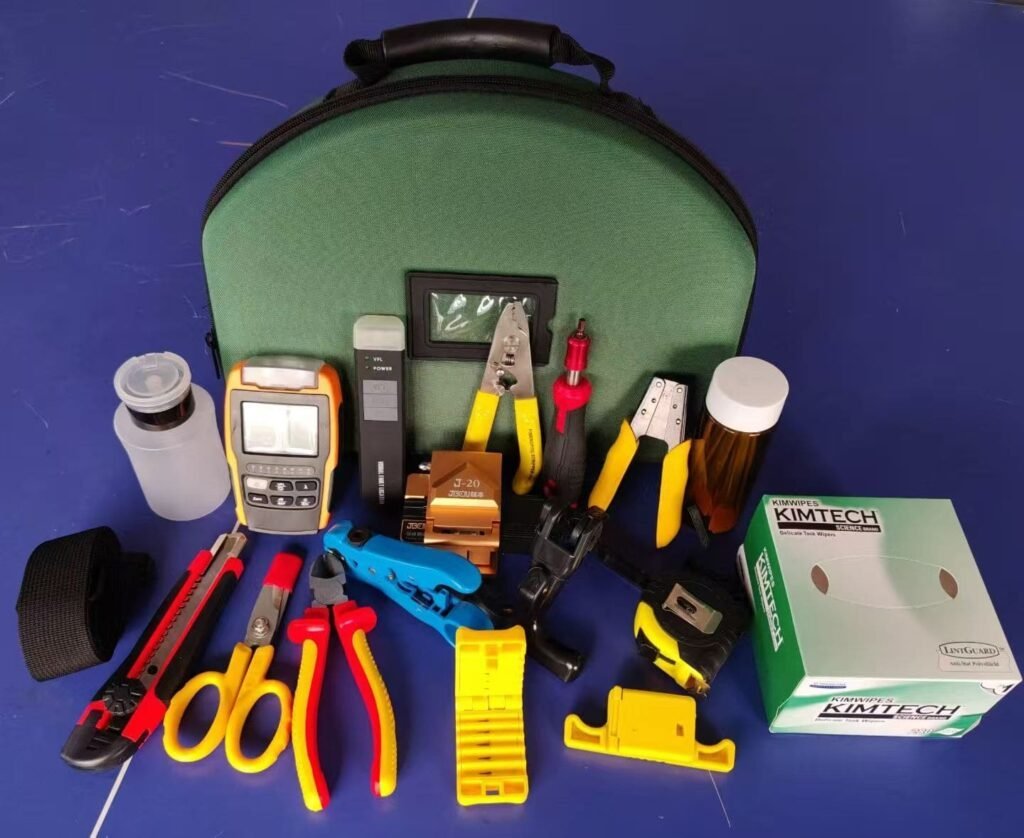
Quick answer: a contractor tool kit should cover cable opening, stripping, cleaning, cleaving, splicing support, testing and safe storage — and the exact configuration should match the cable types and the work your crews actually do. This guide goes job by job, so you can judge any kit — including ours — against your own work list.
Start with the jobs, not the tools
A kit bought from a catalogue page often fails in the field: it is heavy on tools the crew never touches and missing the one stripper the local network actually uses. List the tasks first. On a typical FTTH or telecom maintenance job those are: opening the cable, stripping it down to bare fiber, cleaning, cleaving, supporting the splice, testing the finished link, and carrying everything safely between sites. Every tool in the case should answer to one of those tasks.
Preparation: opening and stripping
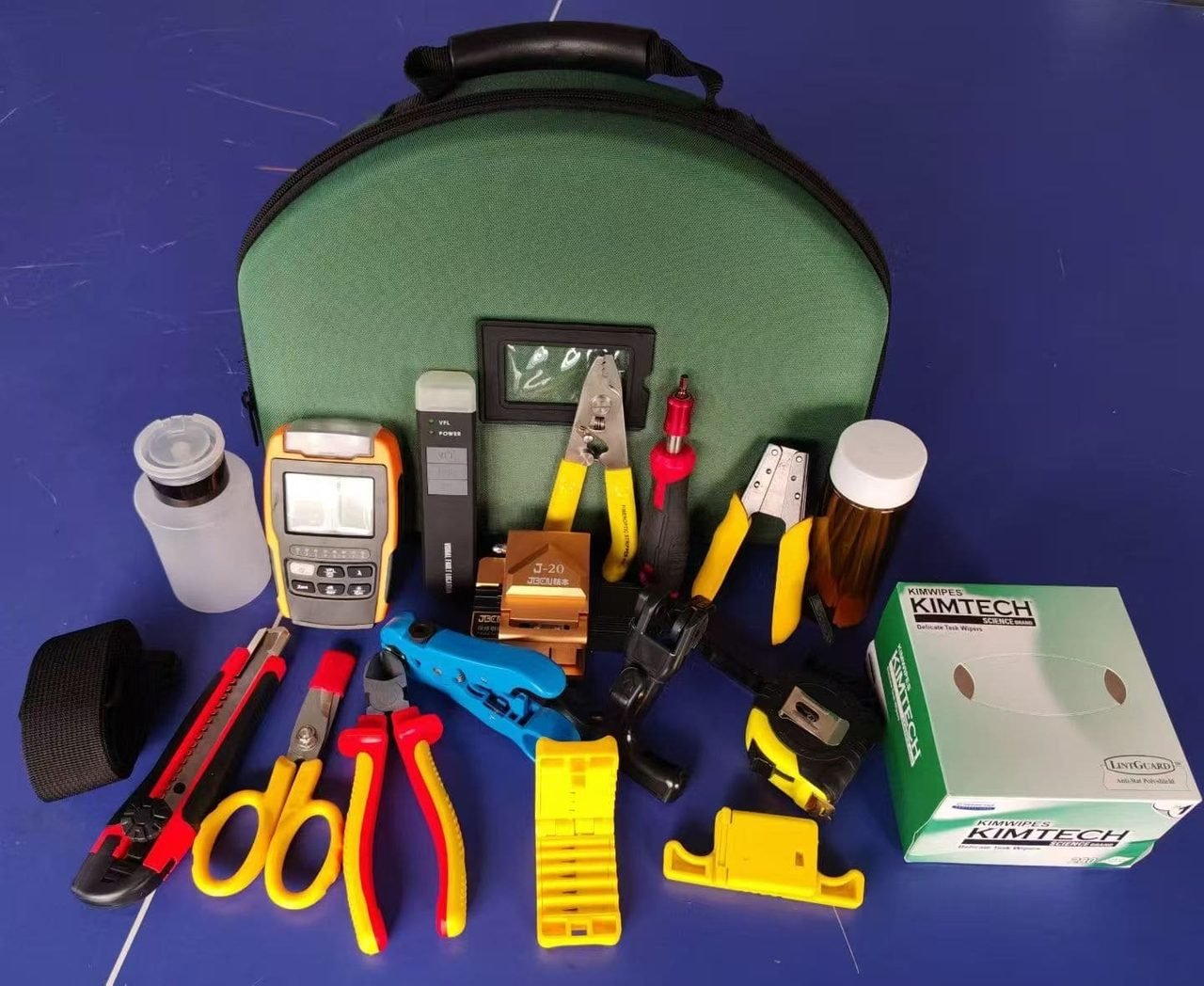
Preparation is where most of the hand tools sit. A tri-hole stripper handles jacket, buffer and coating layers; Kevlar shears cut the aramid strength member cleanly; and drop-cable or armored-cable tools depend on what your network runs. A well-planned kit carries several specialized strippers rather than one compromise tool — our 11-in-1 cleaning and stripping tool kit, for example, includes five stripping tools covering everything from 250 μm bare fiber to cables up to 28 mm in diameter.
Cleaning decides whether the splice passes
More links fail inspection from a dirty end face than from a bad splice. A contractor kit therefore needs cleaning at two levels: one-click cleaners for connector end faces — 1.25 mm for LC/MU and 2.5 mm for SC/FC/ST — and a cassette cleaner such as the KC-105 for bench-level work, backed by lint-free wipes. If a kit treats cleaning as an afterthought, it is not a professional kit.
Cleaving, splicing support and testing
The cleaver is the precision heart of the kit: a consistent cleave angle is what lets the splicer do its job, which is why many contractors standardize on a one-step model such as the K-35 across crews. Testing closes the loop — a visual fault locator for quick fault finding and an optical power meter to prove the link before the crew leaves site. A kit without test gear can finish a splice, but it cannot hand over a verified job.
Storage and standardization
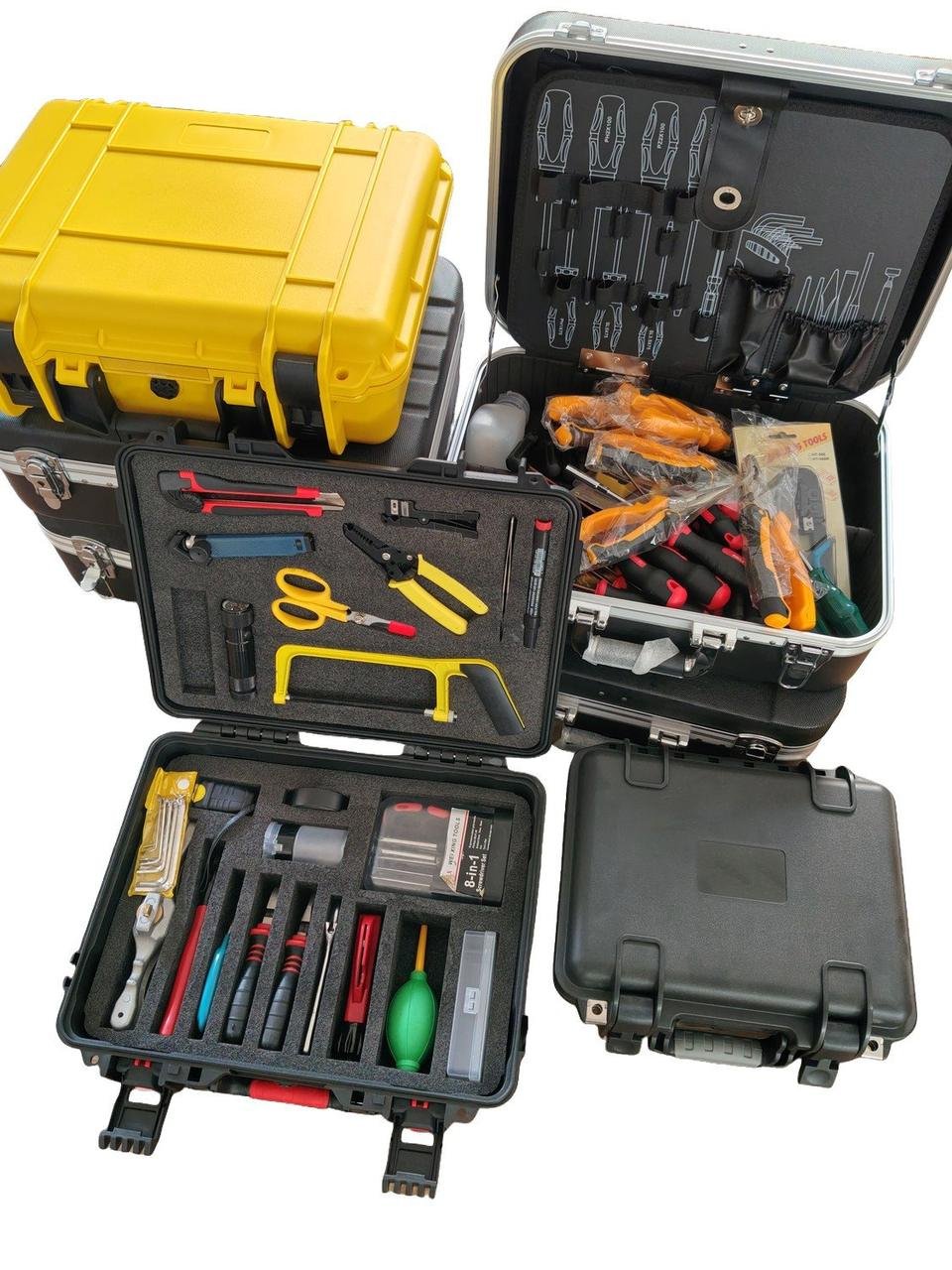
Finally, the case itself is part of the specification. Hard cases with shaped foam inserts protect the precision tools and make a missing item obvious at a glance. Contractors running several crews gain a second advantage from standardizing the kit list: any technician can pick up any case and find the same layout, training is simpler, and replacing a lost tool is a one-line order. We wrote about how this looks in daily practice in Inside a Fiber Optic Construction Tool Kit.
If you are specifying kits for a crew or a contract, send us your cable types and work scope — we will lay out a kit configuration and factory pricing (EXW) for you to compare. Write to silvia@licoom.com or use the quote form on the tool kit page.