Every fiber link ends in a connector, and the connector is usually the part that decides whether the link works the first time or comes back for a second visit. A splice can be perfect and the OTDR trace clean, and still the link fails because the plug on the end does not match the port, the polish, or the fiber in the cable. There are only four connector families a buyer will meet on most jobs — SC, LC, FC and ST — and they are not interchangeable. This guide from Licoom — Fiber Optic Tools is about telling them apart and ordering the right one, from the panel side rather than the catalogue side.
Four Connectors, Four Jobs — At a Glance
| Connector | How it locks | Ferrule | Where you meet it |
|---|---|---|---|
| SC | Push-pull, square body | 2.5 mm | FTTH drops, PON, patch panels |
| LC | Push-pull, small latch | 1.25 mm | Dense panels, SFP ports, data centers |
| FC | Screw thread | 2.5 mm | Test instruments, OTDRs, older telecom plant |
| ST | Bayonet twist-lock | 2.5 mm | Multimode LAN, campus networks, legacy installs |
Three of the four share the same 2.5 mm ferrule, so the ferrule size alone tells you almost nothing. What matters is the body, the locking mechanism and the port it has to fit.
SC: The FTTH Workhorse
SC is the square push-pull connector, and it is the one FTTH crews handle most. It clicks in and pulls straight out, which is fast on a ladder and easy with gloves on, and the square body cannot rotate in the adapter, so the fiber stays aligned the way it was polished. On a PON drop the SC you meet is almost always the green APC version — green is the color of angled polish, and GPON networks are built on it. The blue UPC version is the same body with a flat polish, and it turns up on older panels and indoor patching.
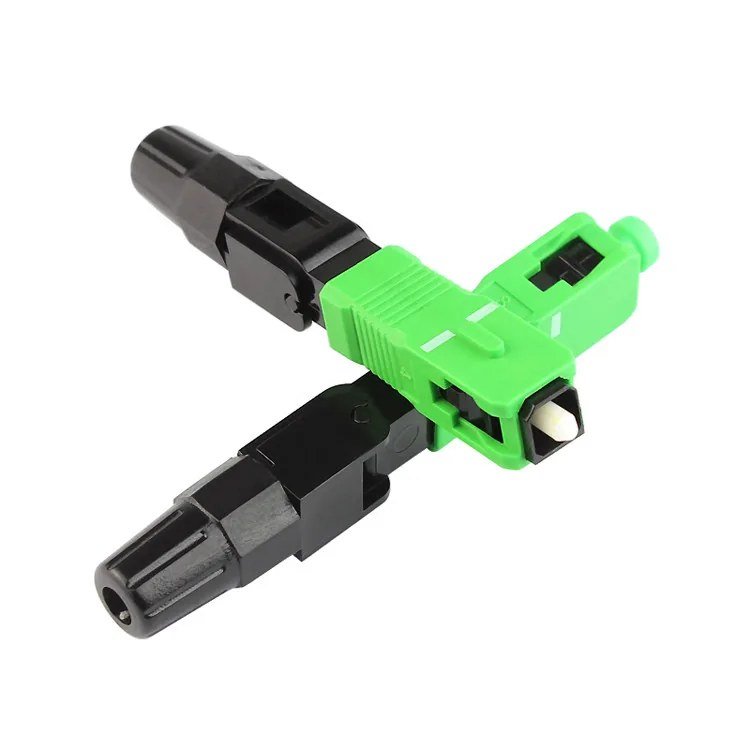
For field termination, the SC fast connector is the standard answer on a drop: a pre-polished stub and a mechanical splice inside the body, so there is no epoxy and no polishing on site. Our KW-01 SC fast connector fits 2×3.0 mm and 1.6×2.0 mm flat drop cable as well as Ø3.0, Ø2.0 and Ø0.9 mm round cable, in SC/APC and SC/UPC, for single-mode G.652D and G.657A fiber. Typical insertion loss is ≤0.3 dB, return loss ≥50 dB for UPC and ≥55 dB for APC, and a connector can be re-terminated up to 10 times — useful when a drop gets cut short and has to be redone on the spot.
LC: Half the Size, Twice the Density
LC is the small connector. Its ferrule is 1.25 mm — half the diameter of SC — and the body is about half the size, so a panel holds twice as many ports in the same space. The latch works like the clip on an RJ45 plug, which makes it the natural fit for SFP transceivers and for any panel where the ports sit shoulder to shoulder. That density is also its weakness in the field: LC plugs are fiddly with gloves on, and in a packed panel the connector next door is always in the way. That is why crews working dense LC panels carry a K-IET insertion and extraction tool — long-nose pliers that reach in, grip the boot and pull the plug without disturbing its neighbours.
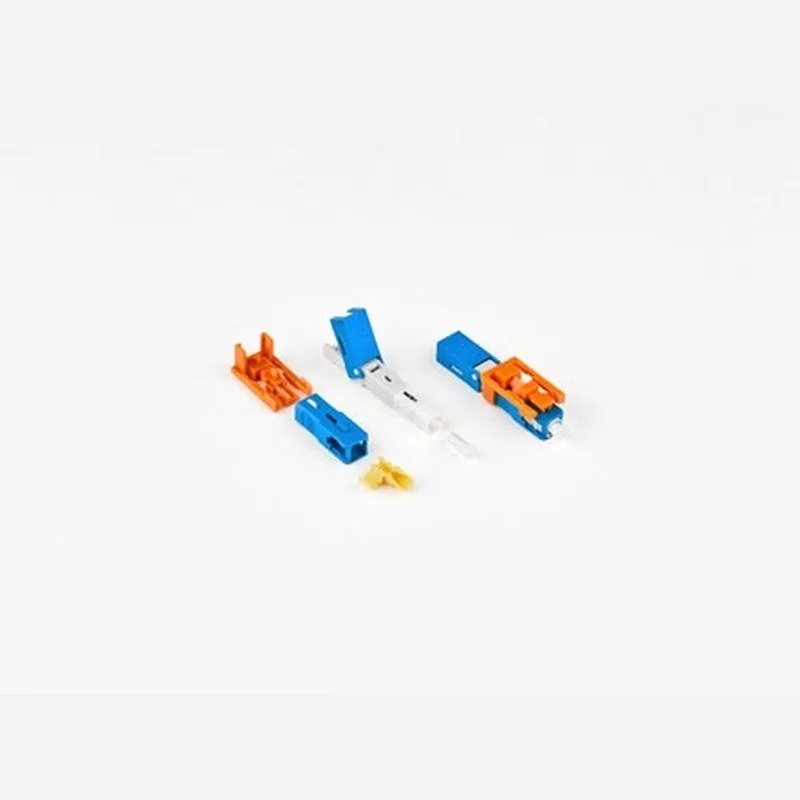
The KW-02 LC fast connector comes in LC/APC and LC/UPC, with versions for drop cable, general cable and round cable, plus a 0.9 mm type for tight-buffered fiber. The rule for choosing between SC and LC is simple: if the port is LC, the connector is LC. Nobody picks LC to save space on a drop — the port decides, and the port on an ONT, a switch or an SFP cage is LC far more often than it is SC.
FC: The Screw-On Connector That Stays Put
FC is the threaded connector. The coupling nut screws onto the adapter, and once it is tight the connector cannot be pulled out or knocked loose — which is why it survives on test instruments, OTDRs and vibration-prone plant long after newer connectors took over the panels. The thread makes it slow to mate, so nobody specifies FC for a panel that gets re-patched often, but for a port that is connected once and left alone, the screw thread is still the most secure coupling of the four.
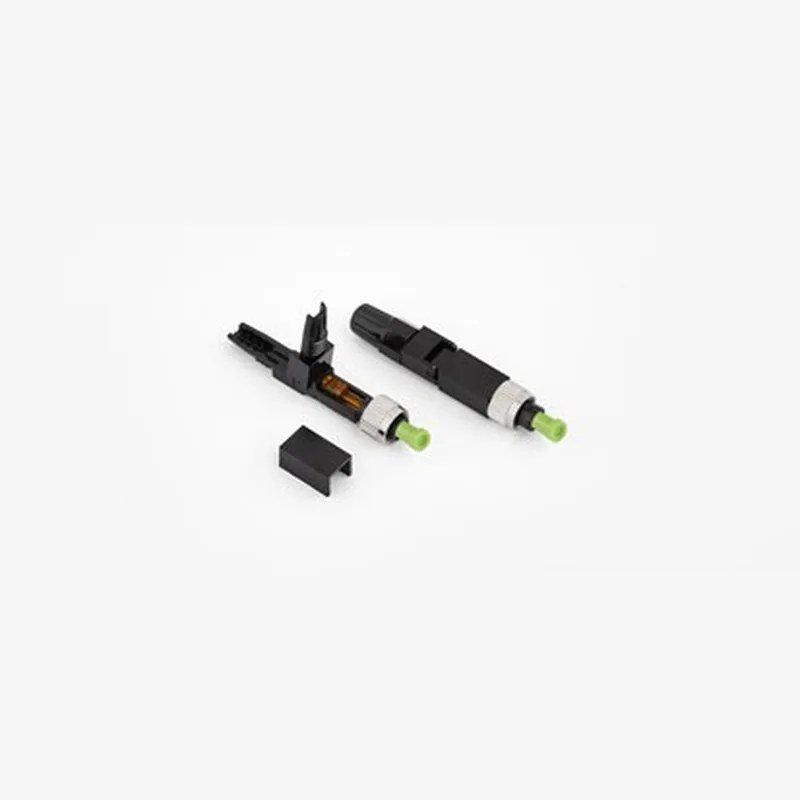
Our KW-03 FC fast connector is the 55 mm crocodile-mouth type, in FC/APC and FC/UPC. It is the one to reach for when the job ends on an instrument port or an old telecom frame — and the one to check first when a customer says "the connector with the screw thread", because that is how most buyers describe it.
ST: The Bayonet Connector Still in the Walls
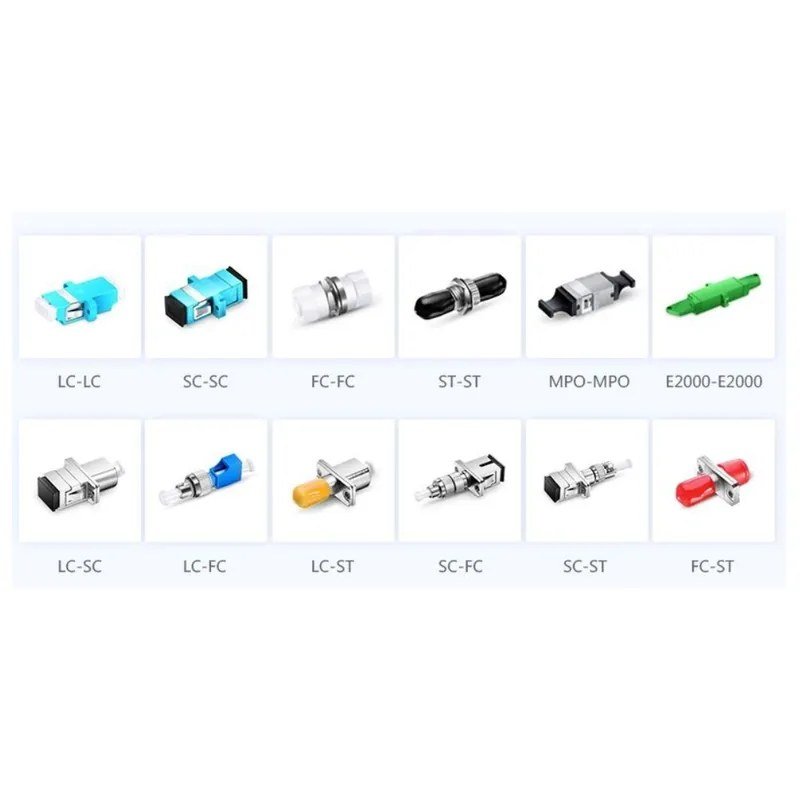
ST locks with a bayonet twist — push in, quarter turn, done — and it was the standard connector for multimode LAN and campus networks for years. New installs have mostly moved to LC, but ST is still in the walls of older buildings, schools and hospitals, and a retrofit job usually means matching what is already there rather than arguing for something better. ST adapters are still stocked for exactly that reason: a hybrid adapter, ST on one side and SC or LC on the other, is how an old ST panel talks to a new network without replacing the panel.
UPC or APC? The Polish Is the Part Most Orders Get Wrong
The connector family is only half the order. The other half is the polish — the shape of the ferrule end-face — and getting it wrong is the most common ordering mistake in this product line.
UPC is a flat polish with a slight dome. Its housings are blue, and it is the general-purpose polish for indoor patching and most data-center links. APC is polished at an 8° angle. Its housings are green, and the angle sends reflected light out of the fiber instead of back toward the source, so return loss is higher — ≥55 dB against ≥50 dB for UPC on our fast connectors. That is why PON and GPON networks are built on APC: a passive optical network has splitters and many reflection points, and it needs the quieter return.
Two rules to keep. First, never mate an APC connector to a UPC port: the angled face meets a flat face, the cores do not line up, and the connection is bad from the start — and repeated mating can damage the ferrules. Second, check the color before you order, not after the box arrives: green means APC, blue means UPC, and the color is the fastest check on site.
Single-Mode or Multimode — and the Colors That Tell You
The connector body does not tell you the fiber type; the cable jacket does. Single-mode jumpers are yellow, multimode are orange for OM1/OM2 and aqua for OM3/OM4, and the two do not mix: a single-mode connector on multimode fiber, or the other way round, gives a link that tests badly and fails early. Ferrule size does not help either — a 2.5 mm ferrule can carry either fiber type. When the cable is already in the wall and the jacket color is not visible, ask what network it belongs to: a PON drop is single-mode, a legacy office backbone is often multimode, and the answer decides the order.
Five Questions Before You Order
- What port does it plug into? Match the connector family to the port — SC, LC, FC or ST. The port decides; preference does not.
- Single-mode or multimode? Yellow jacket means single-mode; orange or aqua means multimode. Order the fiber to match.
- UPC or APC? Green is APC, blue is UPC. PON drops are APC. Never mix the two on one mating.
- What cable is it going on? A 2×3 mm flat drop, a 0.9 mm tight-buffered fiber and a Ø3.0 mm round cable take different connector versions.
- Field-terminated or factory-terminated? A fast connector goes on with hand tools at the job; a pigtail is spliced on; a pre-terminated assembly arrives ready to plug in. The choice is about the crew and the schedule, not the connector.
Terminating in the Field: Three Ways to Put a Connector On
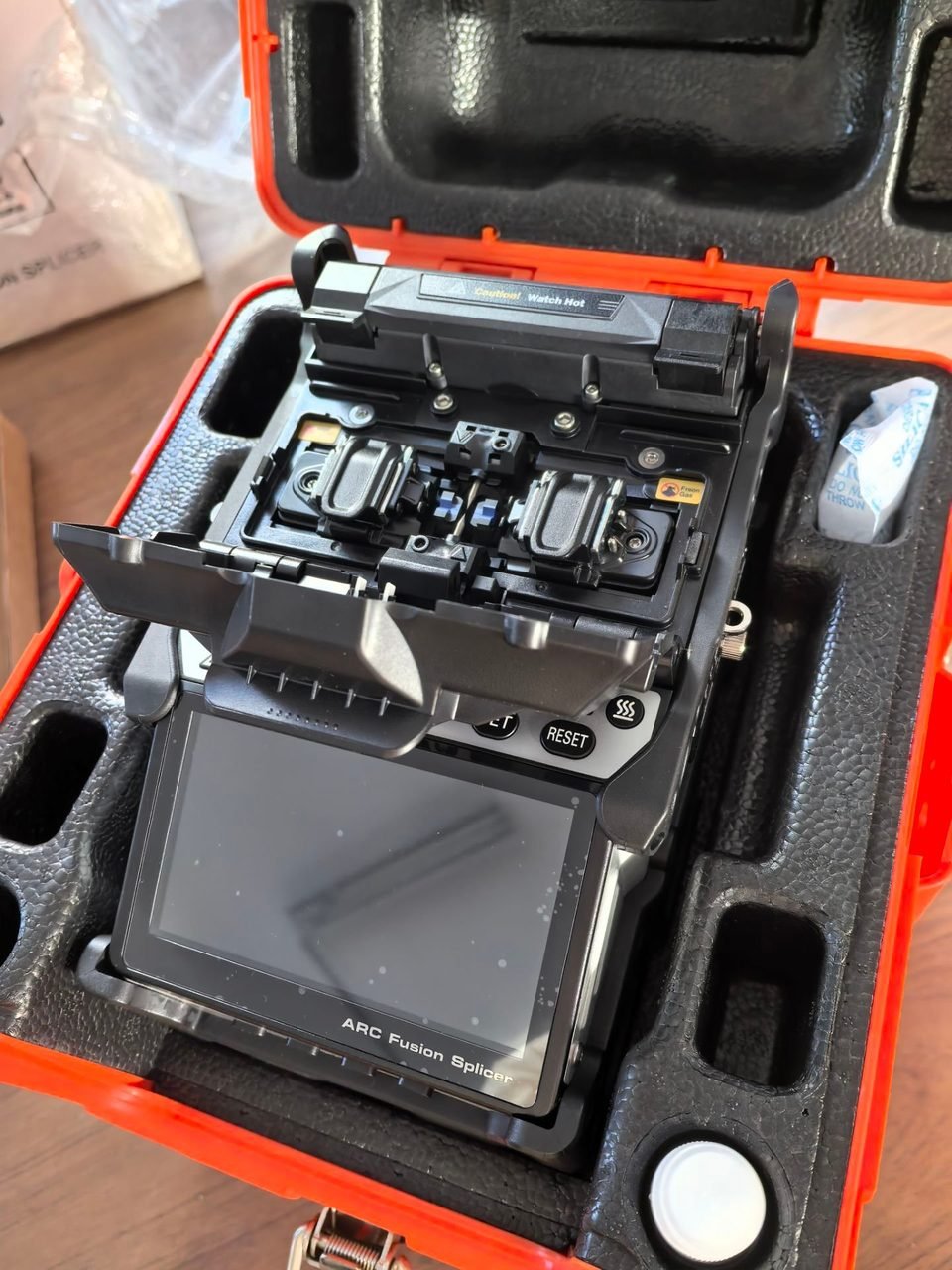
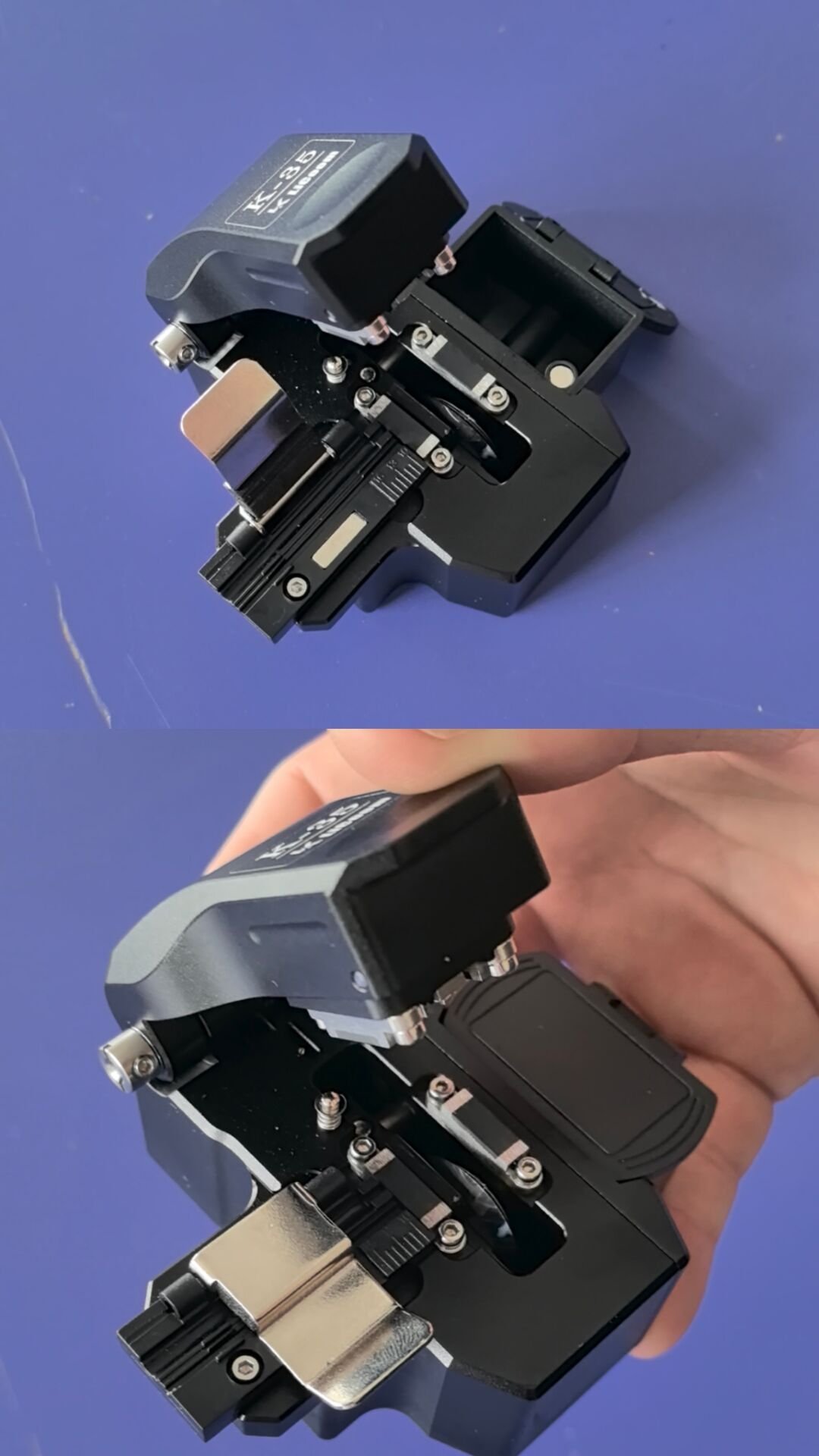
Once the connector is chosen, there are three ways to get it onto the fiber. Fast connectors — KW-01 SC, KW-02 LC and KW-03 FC — are the quickest: strip, cleave, push the fiber into the pre-polished stub and lock it, with no epoxy, no polishing and no power. Hot-melt splice-on connectors — KW-04 SC, KW-05 LC and KW-06 FC — are fused onto the fiber with a splicer, for jobs where the specification calls for a welded joint; typical insertion loss is ≤0.3 dB, with return loss ≥55 dB for UPC and ≥60 dB for APC. And where the last connector on a drop lives outdoors, on a facade or up a pole, the waterproof KW-08 MINI SC and KW-09 hardened SC housings seal it to IP68.
The parts around the connector matter as much as the connector itself. Fiber optic adapters join two connectors — same type, or hybrid like LC-SC and SC-FC when an old panel meets a new one — with zirconia ceramic sleeves and typical insertion loss of ≤0.2 dB. And a connector that has never been cleaned is a connector that has never been tested properly: one-click cleaner pens come in 2.5 mm for SC, FC and ST (K-SC) and 1.25 mm for LC (K-LC), one push per mating, before the link is measured.
Connectors look like a commodity until the wrong one arrives on site. Order by the port, check the polish color, match the fiber, and the connector stops being a problem. For the full connector and adapter range — fast connectors, hot-melt splice-on, waterproof housings and hybrid adapters — see the fast connectors and adapters pages, or send us the port type and cable size via the quote form below, on WhatsApp +86 150 6823 2998, or at silvia@licoom.com. EXW factory pricing on request.