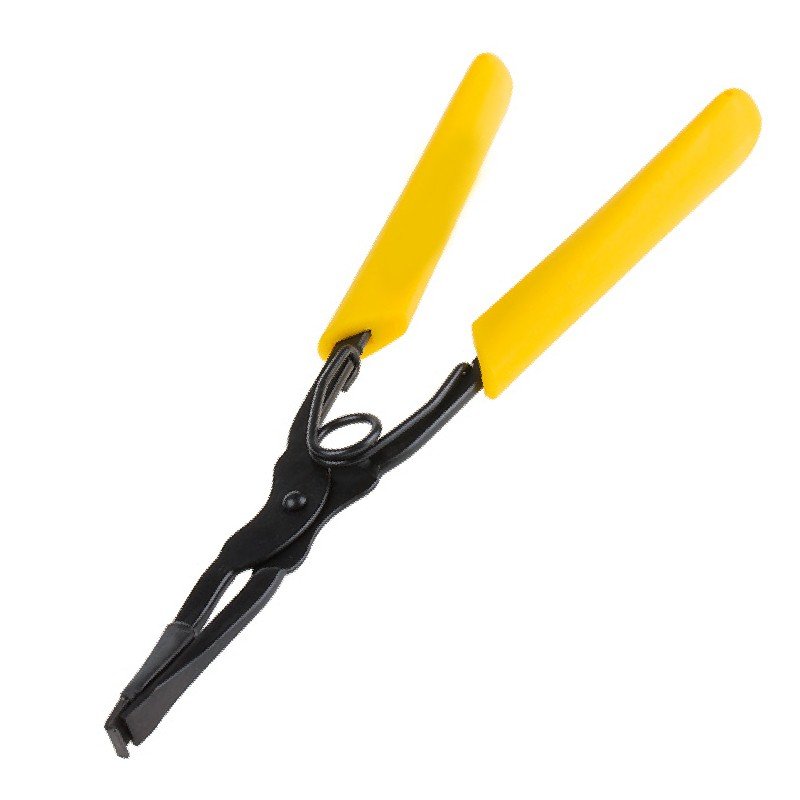
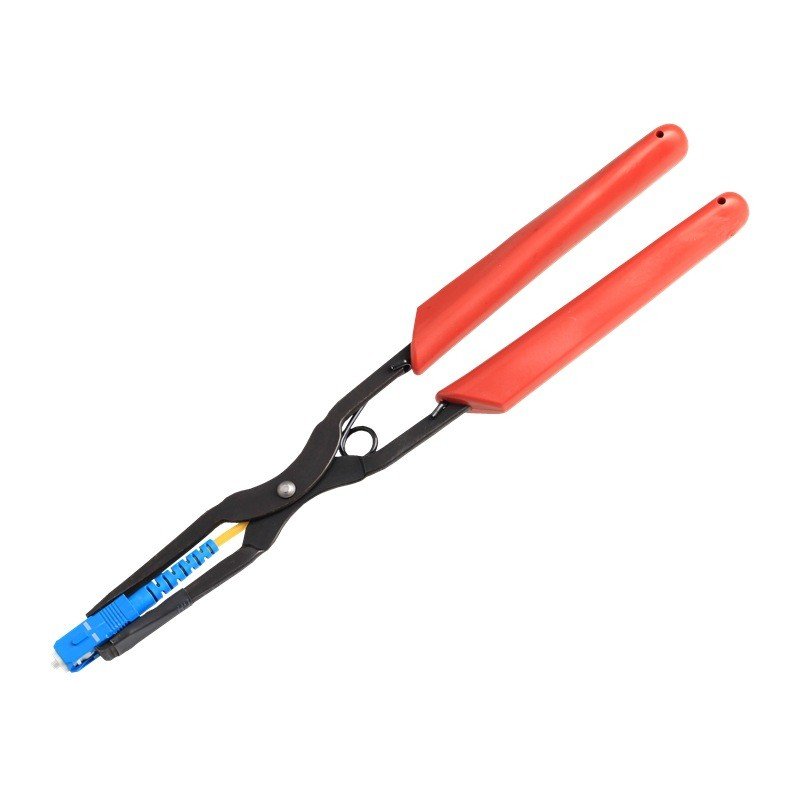
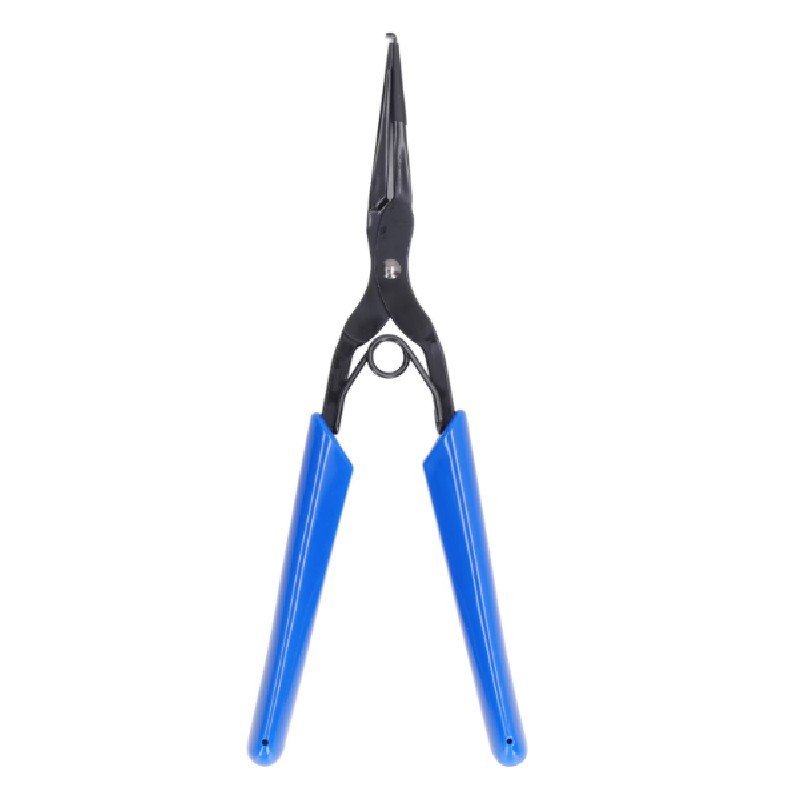
Long-nose pliers that reach into a packed patch panel, grip an LC or SC connector by its body and boot, and pull it straight out — or seat a new one home — without disturbing the links either side of it. Spring-open handles, in yellow, red or blue.
Checked against the specifications on this page before dispatch.
Supplied neutral; labeling per order.
Held as neutral stock — small lots welcome, mix models in one shipment.
| Function | Insertion and extraction of fiber connectors in high-density patch panels |
|---|---|
| Connectors | LC and SC, simplex and duplex |
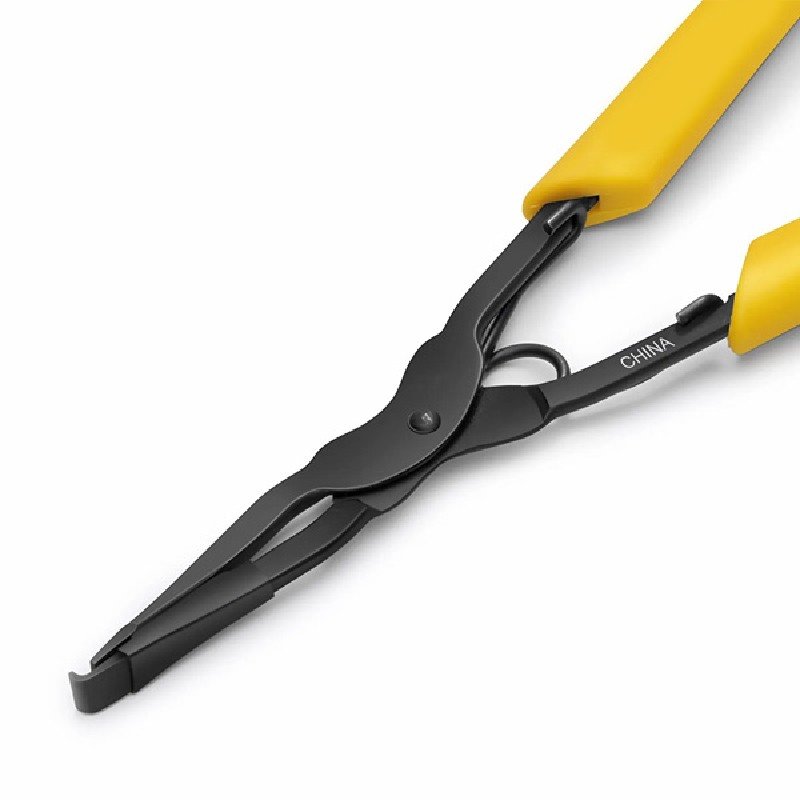
| Jaws | Long slim nose with notched tips that grip the connector body and boot |
| Spring | Coil spring between the handles — the jaws self-open |
| Body | High-carbon steel, black finish |
| Handles | Dipped grips with lanyard holes — yellow, red or blue |
| Length | 226 mm |
| Weight | Approx. 100 g |
In the box: the parts above, packed per unit. Applications: Patching and re-patching in high-density data center panels · Extracting LC connectors whose latches fingers cannot reach · Seating connectors fully in crowded bulkheads and distribution frames · FTTH distribution frames and optical distribution frames (ODF) · A standard hand tool in FTTH tool kits.
A high-density panel defeats fingers in three ways. The connector you want is surrounded by cords, so getting two fingertips onto it means bending its neighbours out of the way — and a disturbed neighbour is a link that starts erroring. The LC latch sits on top of the connector, exactly where a fingertip cannot press while also pulling. And the natural finger move is to pull on the cable behind the boot, which bends the fiber at the connector rear and drags the ferrule sideways in its sleeve as it comes out.
The tool replaces the fingertips with two long, slim jaws. Slid in flat between the cords, the jaws reach the connector without moving anything else; the notch at each tip closes over the connector body and the ribbed boot, so the grip is on the connector itself, not on the cable. Squeeze, and the pull runs along the connector's own axis — the ferrule slides straight out of the adapter sleeve, the latch rides clear, and the link either side never feels it.
Insertion is the same grip used the other way. Hold the connector aligned in the jaws, offer it to the adapter, and push straight until the latch clicks. That last push is the one fingers most often leave undone in a crowded bulkhead — a connector that looks seated but never latched, and fails the first time the cord is touched. With the jaws on the boot, full engagement is something you can feel.
Working habits: keep the jaw faces clean, because grit in the notch mars connector housings; use the tool on connectors, not as a general-purpose plier — the long nose is ground for reach, not for prying or cutting; and check the spring now and then, since the self-opening action is what keeps the tool one-handed at speed.
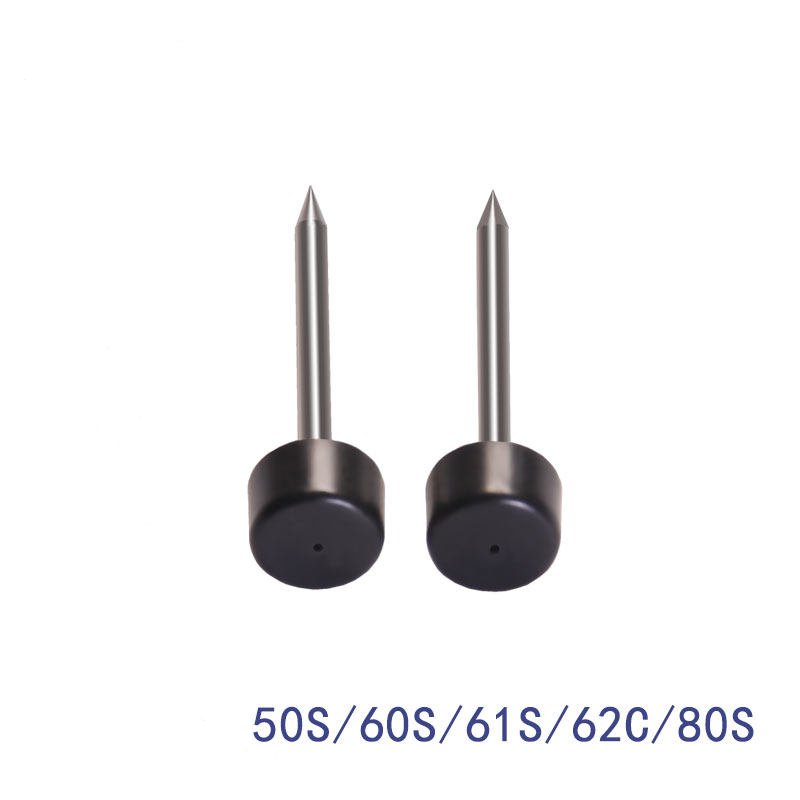
Replacement electrode pairs for the splicers your crews already run — Fujikura, Sumitomo, Comway, INNO, Jilong
View K-E1 →
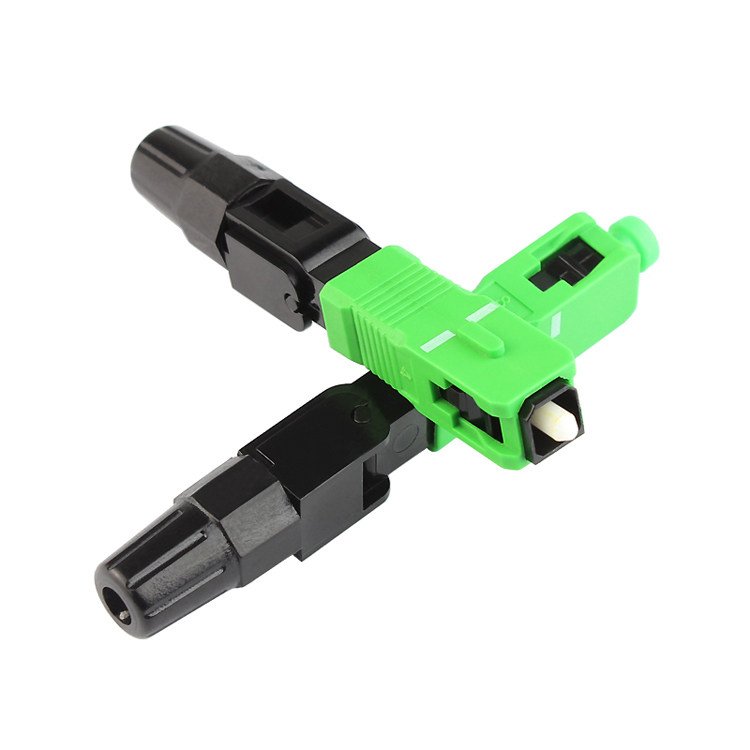
Field assembly SC connectors in APC and UPC — a whole family of housings from 45 to 60 mm, terminated with the
View KW-01 →
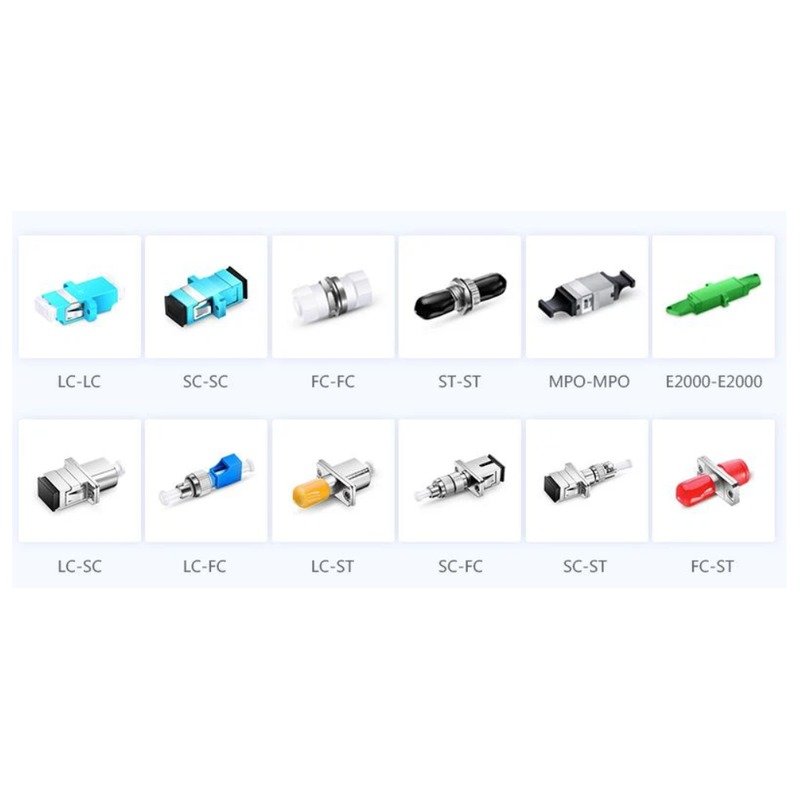
The full adapter range — SC, LC, FC, ST, E2000 and MPO couplers plus hybrid adapters — in simplex, duplex and
View Fiber Optic Adapters →
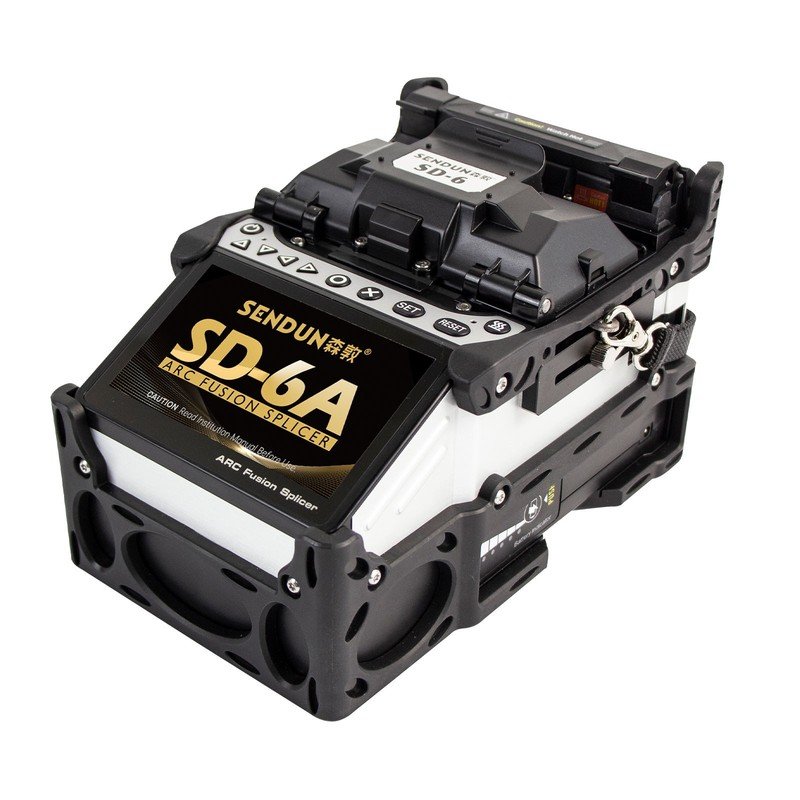
The compact crew splicer: 4-motor core alignment and a 6-second fully automatic splice, with a power meter and
View SD-6A →Tell us the quantity and the finish or branding you need — Silvia replies personally with factory pricing (EXW).
Email: silvia@licoom.com · sales@licoom.com
WhatsApp: +86 150 6823 2998