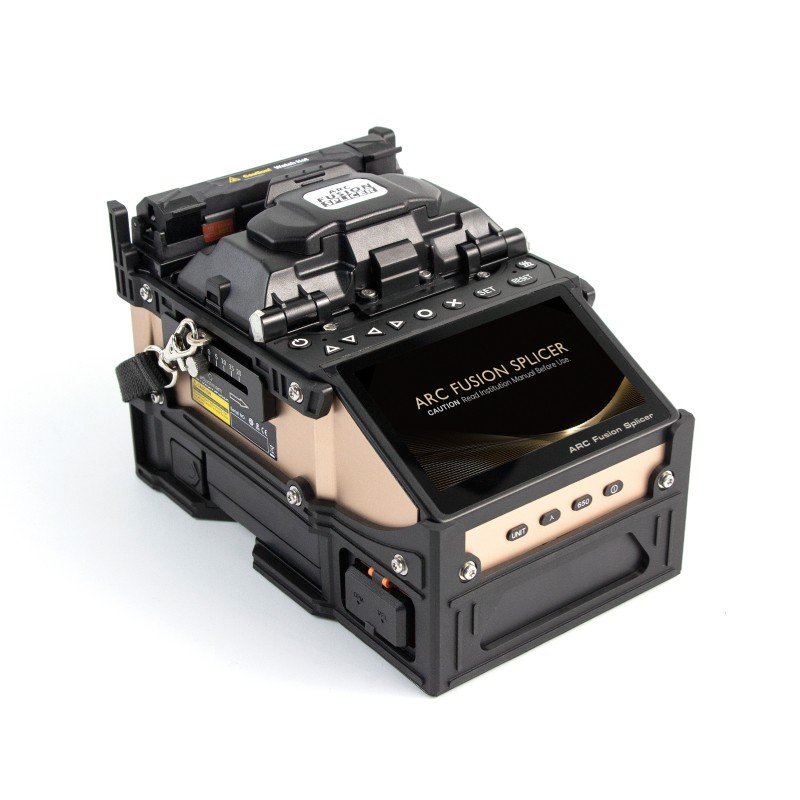
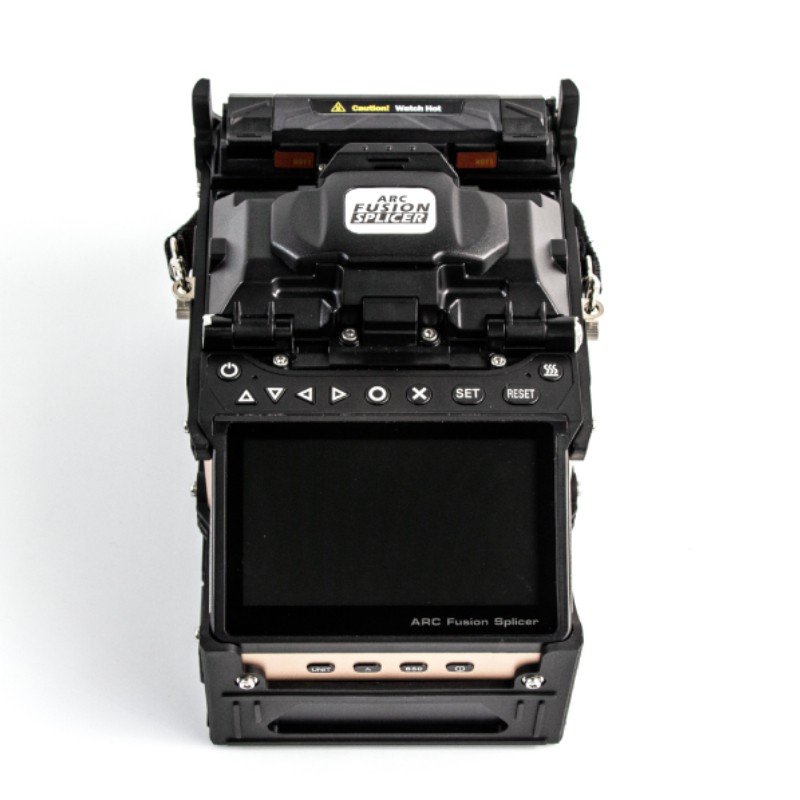
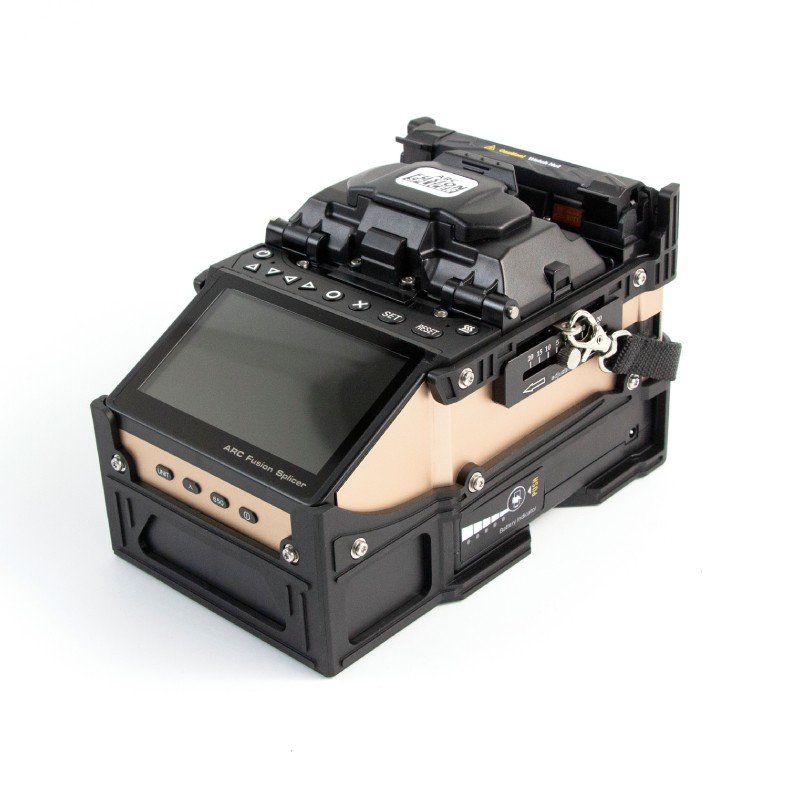
Six-motor core alignment, a 5-second splice and 11-second heat — with a power meter and a 15 mW VFL built in, so the splicer is also the test set.
Six-motor alignment and a full splice-and-heat cycle are tested on every unit before dispatch.
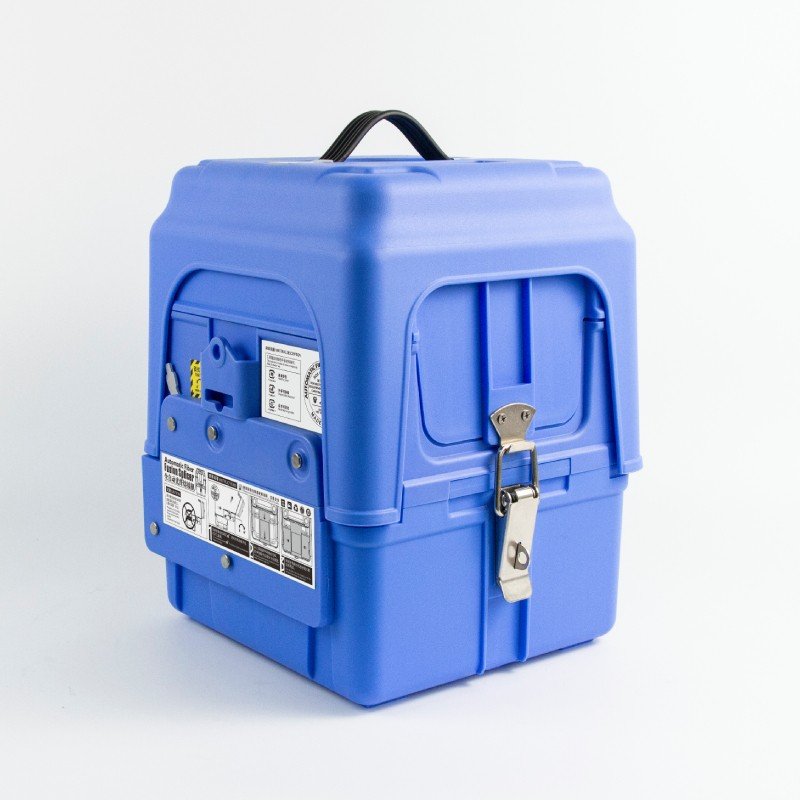
Neutral as standard; your labeling on the case and cartons per order.
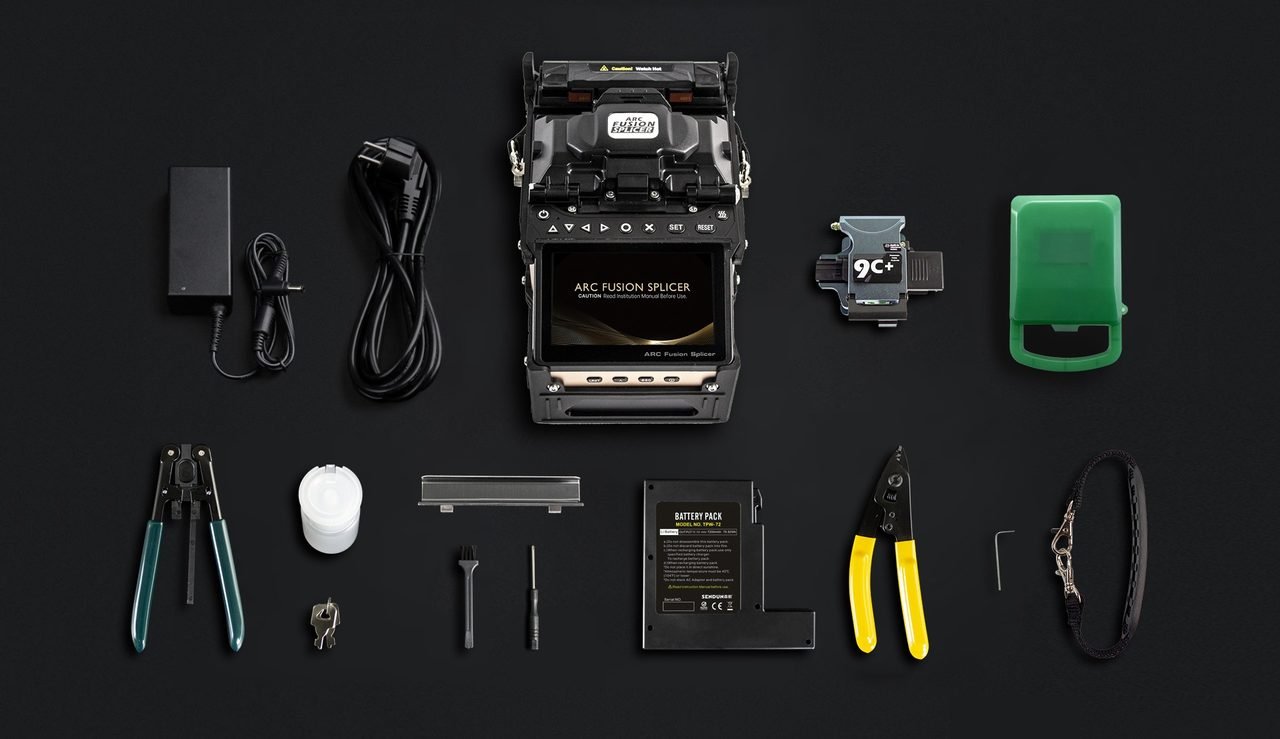
The flagship splicer, supplied complete with its working kit; electrodes and sleeves stocked alongside.
| Alignment | Core alignment, 6 motors, fully automatic |
|---|---|
| Applicable fibers | SM (ITU-T G.652 & G.657), MM (G.651), DS (G.653), NZDS (G.655) |
| Compatible fiber / cable | 0.25–3.0 mm / indoor cable |
| Cladding diameter | 80–150 µm |
| Cleave length | 8–16 mm (coating diameter 0.125–1 mm) |
| Splicing time | 5 s |
| Heating time | 11 s (fast auto-heating) |
| Typical splice loss (ITU-T) | SM 0.02 dB · MM 0.01 dB · DS 0.04 dB · NZDS 0.05 dB · G.657 0.03 dB |
| Return loss | ≥ 60 dB |
| Splice modes | 41 preset, 100 storable |
| Display | 4.3-inch colour capacitive touchscreen (button + touch), 380x magnification (X / Y), 180x dual view |
| Built-in power meter | 850 / 1300 / 1310 / 1490 / 1550 / 1625 nm; -50 to +26 dBm; absolute error < 0.3 dB |
| Built-in VFL | 15 mW, 2 Hz flashing and constant modes |
| Protection sleeves | 20–60 mm; heater presets 20 / 30 / 40 / 50 / 60 mm, up to 100 modes |
| Results storage | 20,000 splice records and 200 images; USB 2.0 |
| Tension test | 2.0 N (standard) |
| Electrode life | 5,000 arcs |
| Arc calibration | Automatic, by air pressure and temperature |
| Battery | 7,200 mAh — typically 240+ splice + heat cycles per charge |
| Power supply | AC 100–240 V; DC 12–15 V |
| Operating conditions | Altitude 0–5,000 m; humidity 0–95%; -15 °C to +50 °C; wind up to 15 m/s |
| Dimensions | 135.1 × 205.9 × 130.4 mm |
| Weight | 1.75 kg |
In the box: the parts above, packed per unit. Applications: FTTH access-network construction and drop splicing at volume, where 5-second splices and 11-second heats set the day's pace · Metro and backbone maintenance, where core alignment and 0.02 dB typical SM loss are the acceptance numbers · Splice-and-test in one visit: the built-in power meter and 15 mW VFL verify the joint without a second instrument bag · High-altitude, dusty and wet field work — rated to 5,000 m, -15 °C and 15 m/s wind · Contractor fleets standardising on one splicer for trunk and drop crews alike.
Core alignment is a measurement before it is a weld. Cameras image both fiber ends in X and Y; six motors walk the fibers until their cores — not their claddings — are concentric, because light travels in the 9 µm core and only core offset becomes splice loss. Cladding-alignment machines skip half of that work, and their loss figures show it; the SD-9's 0.02 dB typical on SM is the six motors being paid for.
The arc itself is recalibrated continuously: air pressure and temperature change how an arc burns — thin mountain air genuinely splices differently from sea-level air — so the machine measures the conditions and adjusts the discharge before the fibers meet it. Electrodes are rated for 5,000 arcs, and the splice log keeps the estimate for every joint, so drift shows in the records long before it shows in failures.
Speed is engineered as a pair: the 5-second splice is only half the cycle — the 11-second auto-heat on the protection sleeve is what lets joints leave the machine at the rate the arc makes them. A slow heater quietly halves any splicer's real output; here both numbers are fast, and the 7,200 mAh battery sustains 240+ full cycles of the pair.
The built-in instruments close the loop the splicer opens. The power meter verifies the through-level the moment the joint is made (six wavelengths covering every working window), and the 15 mW VFL — flashing or constant — walks a red glow to the break or crushed point when the meter says the span is wrong. One caution stays manual: keep the V-grooves and lenses clean. Every field splicer's accuracy is, in the end, housekeeping.
The trunk-line splicer built for pace: core alignment, a 6–10 second splice with typical single-mode loss of 0
View K-V1 →
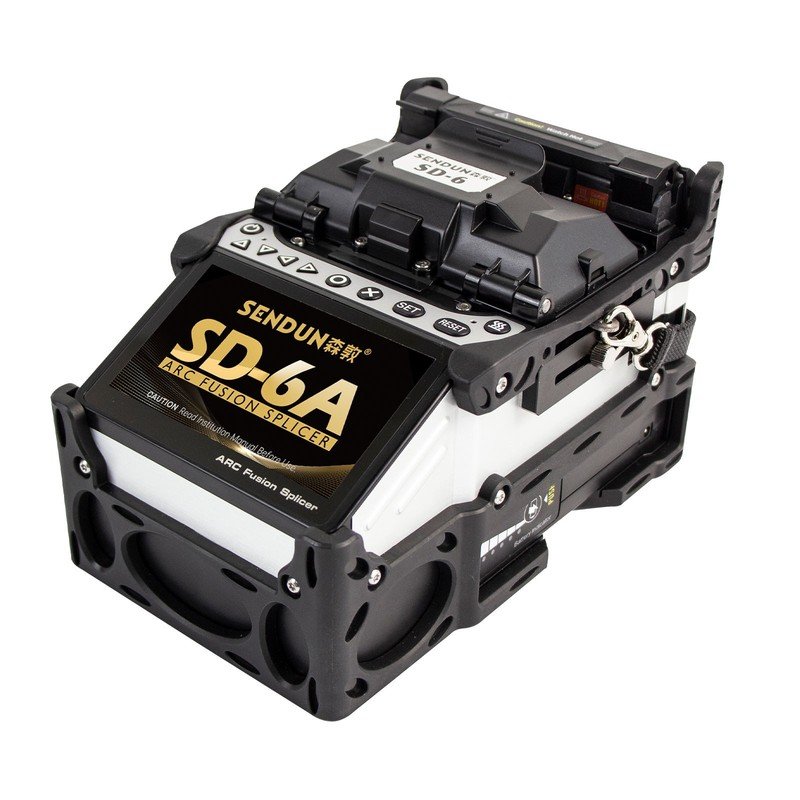
The compact crew splicer: 4-motor core alignment and a 6-second fully automatic splice, with a power meter and
View SD-6A →
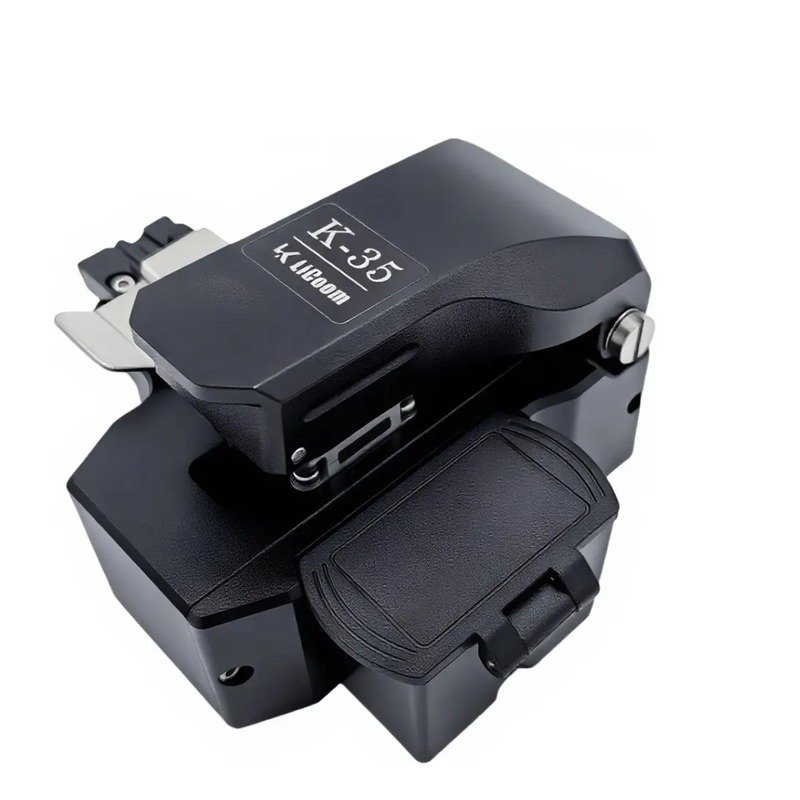
Fully automatic one-step cleave — single fiber and 1–12 ribbon fiber, cleave angle ≤ 0.5°, CNC aluminum-alloy
View K-35 →
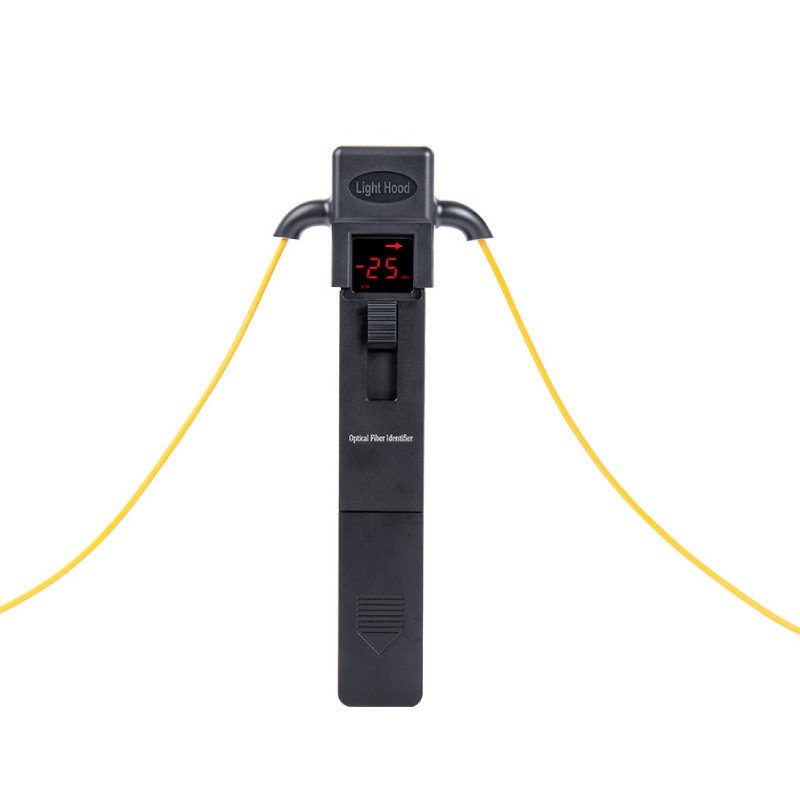
Clamp it on a live fiber and it tells you — without cutting anything — whether light is there, which way it tr
View K-350 →Tell us the quantity and the finish or branding you need — Silvia replies personally with factory pricing (EXW).
Email: silvia@licoom.com · sales@licoom.com
WhatsApp: +86 150 6823 2998