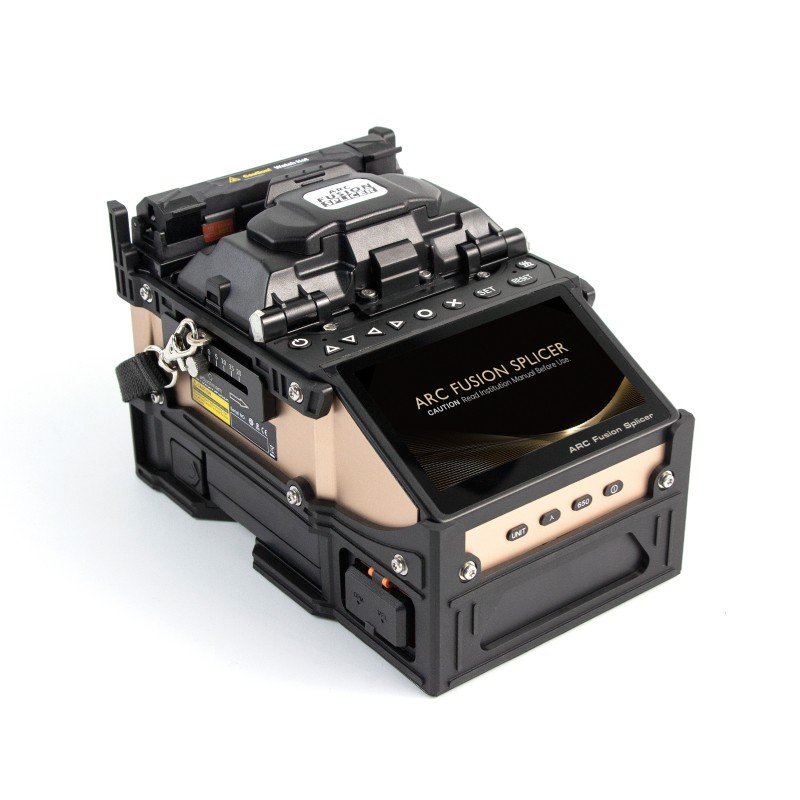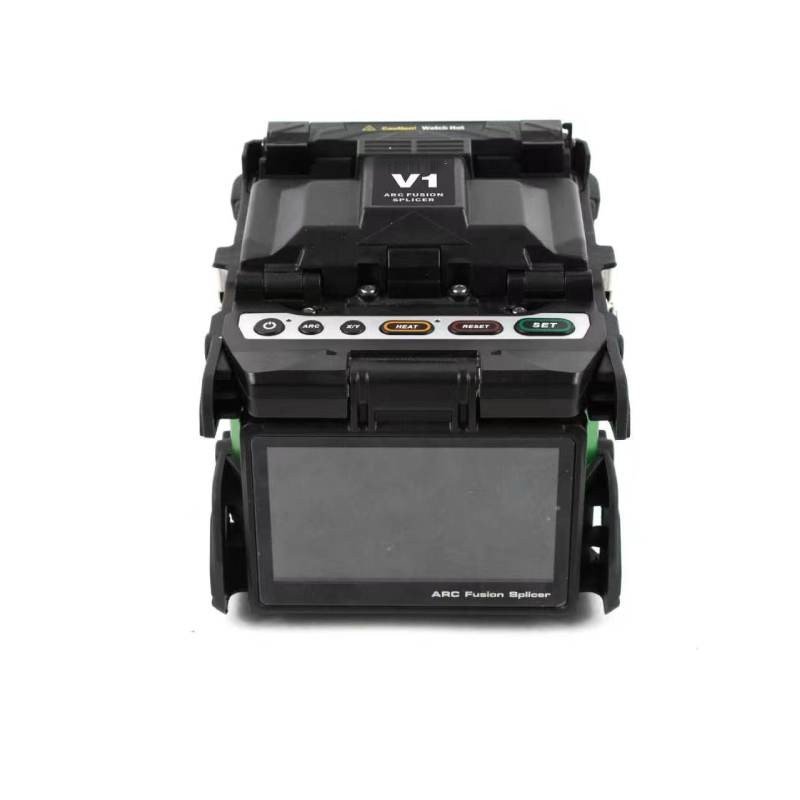
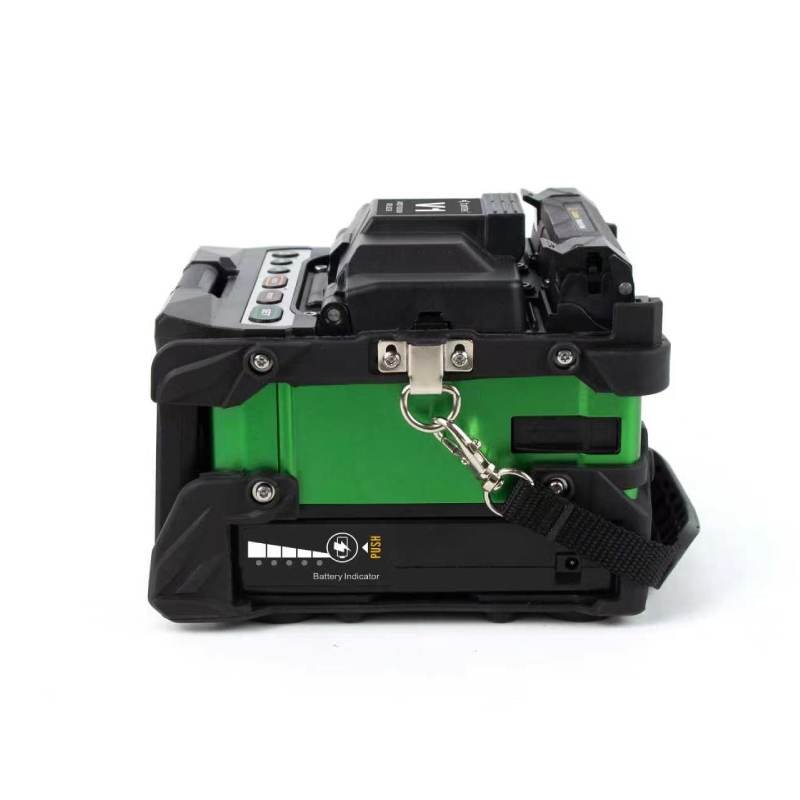
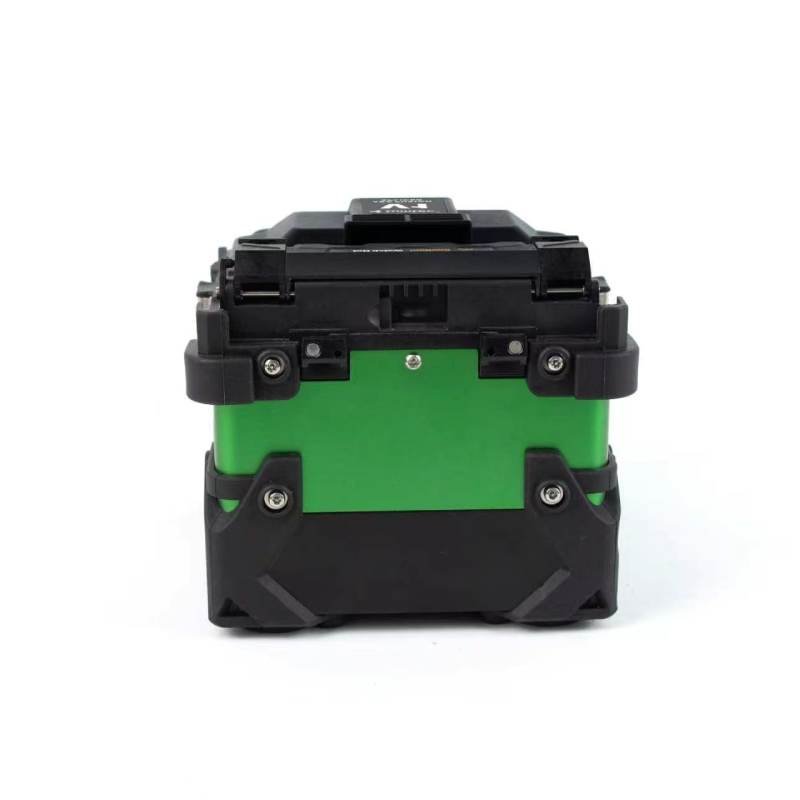
The trunk-line splicer built for pace: core alignment, a 6–10 second splice with typical single-mode loss of 0.02 dB, a 4.3-inch touchscreen, and a 5,200 mAh battery good for more than 250 splice-and-heat cycles per charge.
Checked against the specifications on this page before dispatch; splicer consumables are batch-checked.
Supplied neutral; labeling per order.
Consumables and connectors are restock lines — combine them with tool orders in one shipment.
| Alignment | Core alignment |
|---|---|
| Applicable fibers | SM / MM / DS / NZDS / BI, single fiber |
| Fiber diameter | 0.25–0.3 mm / indoor cable |
| Coating diameter | 0.125–1 mm |
| Cleave length | 5–16 mm |
| Typical splice loss | SM 0.02 dB · MM 0.01 dB · DS 0.04 dB · NZDS 0.04 dB · BI 0.02 dB (ITU-T) |
| Return loss | ≥ 60 dB |
| Splicing time | 6–10 s |
| Heating time | 15–30 s typical, multiple heating modes; sleeves 20–60 mm |
| Splice modes | 41 preset modes, up to 100 stored |
| Display | 4.3-inch 480 × 272 color LCD touchscreen, dual cameras |
| Fiber view | X / Y / X-Y views, up to 380× magnification |
| Result storage | 10,000 splice records and 10,000 splice images |
| Tension test | 1.96–2.25 N |
| Adaptive discharge | Automatic ARC calibration by air pressure and temperature |
| Electrode life | 5,000 discharges |
| Battery | 5,200 mAh lithium — over 250 splice + heating cycles per charge |
| Power supply | AC 100–240 V / DC 12–15 V |
| Interface | Mini USB 2.0 |
| Operating conditions | −10 °C to +50 °C; relative humidity 0–95%; altitude 0–5,000 m; wind up to 15 m/s |
| Dimensions | 140 × 165 × 126.5 mm (incl. rubber bumpers) |
| Weight | 1.36 kg (battery 0.38 kg) |
In the box: the parts above, packed per unit. Applications: Trunk and backbone line construction — the work this machine is specified for · Access network and FTTH feeder splicing · Maintenance and emergency restoration crews who need a fast, consistent joint · Contractors equipping several crews with a capable mid-range splicer.
Alignment decides the splice before the arc fires. The two fibers rest in the V-grooves and the dual cameras watch them from two axes at 90° to each other; the machine centres the fibers on their cores in the X view, the Y view or both together, magnified up to 380× on the touchscreen, so any offset is visible and corrected before the discharge — the routine that keeps typical loss at 0.02 dB on single-mode and 0.01 dB on multimode.
Then the arc takes over, and it does not fire blind. The machine reads the air pressure and temperature around it and calibrates the discharge to the conditions — thin air at altitude and a hot afternoon both change how an arc behaves, and the calibration follows them, which is what makes joint number forty on a mountain repeater site match joint number one in the yard.
Every joint leaves proof. The machine estimates the loss of the splice it just made, proof-tests the joint at 1.96–2.25 N, and stores the result with its splice image — 10,000 of each on the machine, ready to come off over Mini USB for the job file.
Housekeeping is the accuracy budget: keep the V-grooves, clamps and lenses clean, watch the electrode count — a set is rated for 5,000 discharges — and let the automatic calibration run when the weather turns, and the machine repays it with consistent joints.
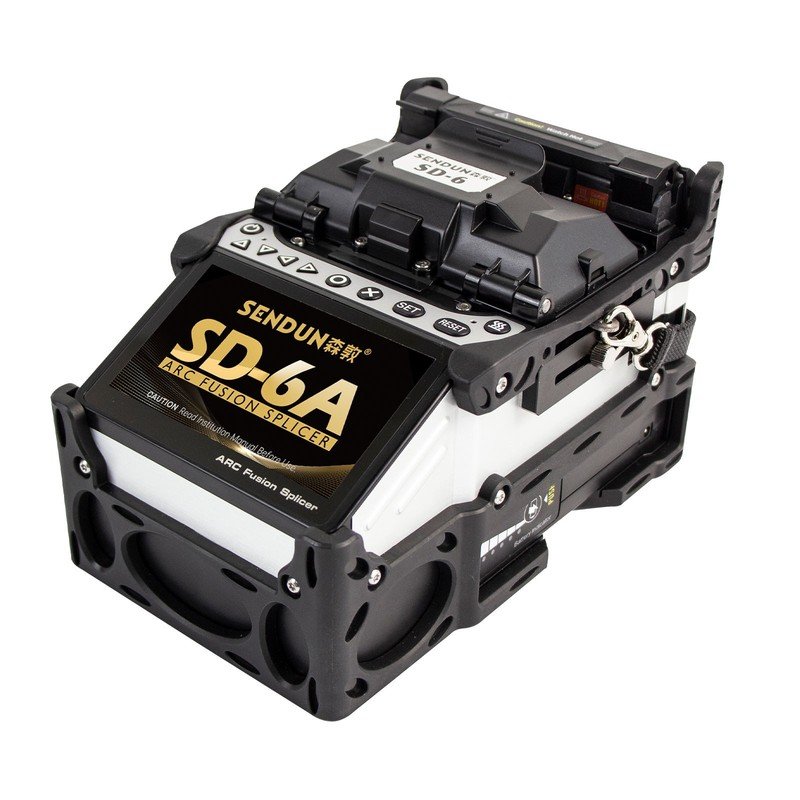
The compact crew splicer: 4-motor core alignment and a 6-second fully automatic splice, with a power meter and
View SD-6A →
Six-motor core alignment, a 5-second splice and 11-second heat — with a power meter and a 15 mW VFL built in,
View SD-9 →
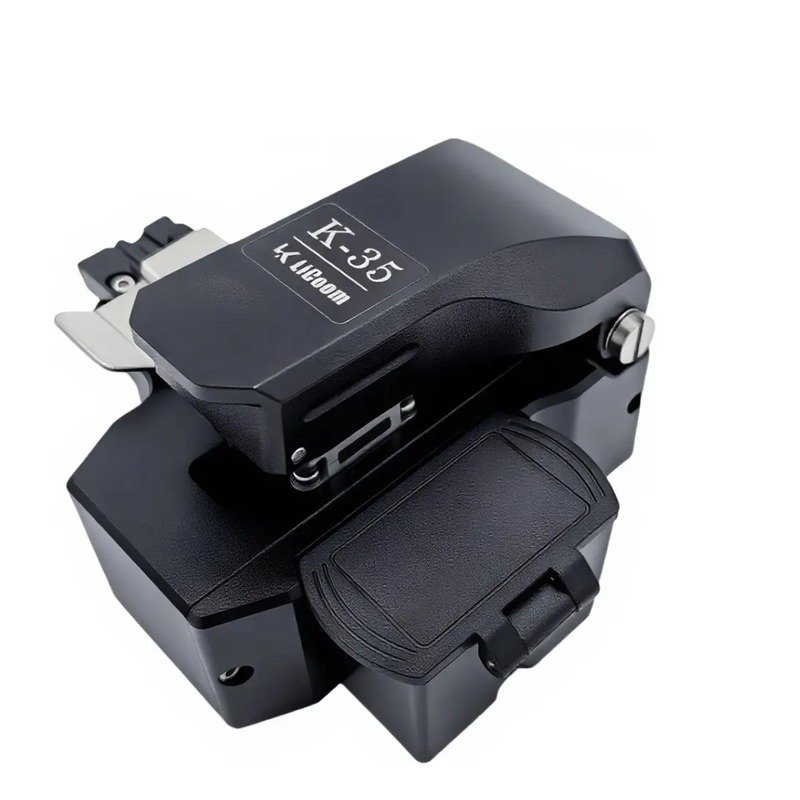
Fully automatic one-step cleave — single fiber and 1–12 ribbon fiber, cleave angle ≤ 0.5°, CNC aluminum-alloy
View K-35 →
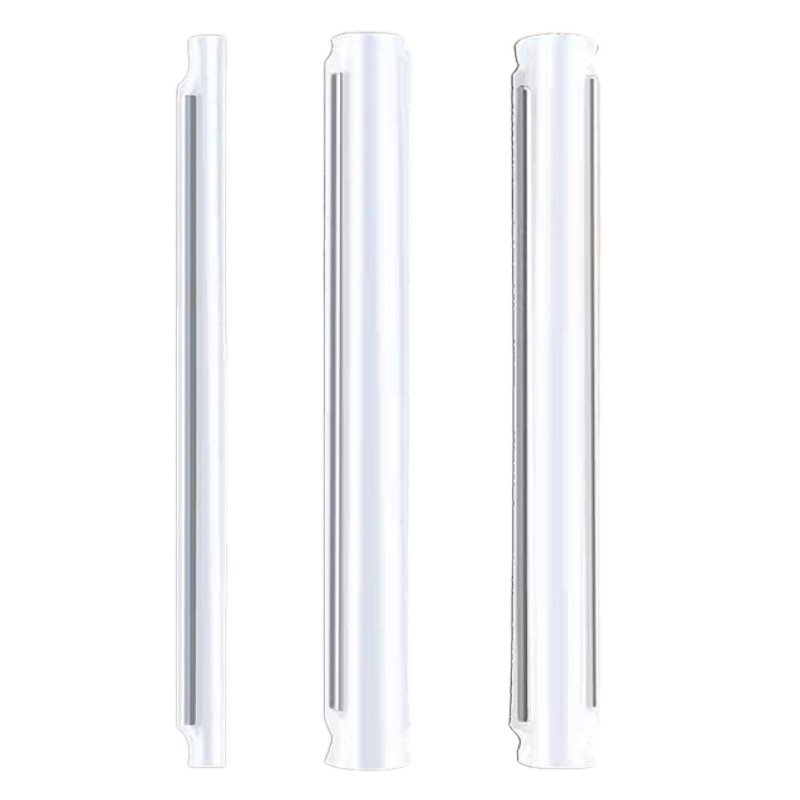
60mm heat shrink splice protection sleeves with a stainless steel strength pin — the standard closing step of
View KM-60 →Tell us the quantity and the finish or branding you need — Silvia replies personally with factory pricing (EXW).
Email: silvia@licoom.com · sales@licoom.com
WhatsApp: +86 150 6823 2998