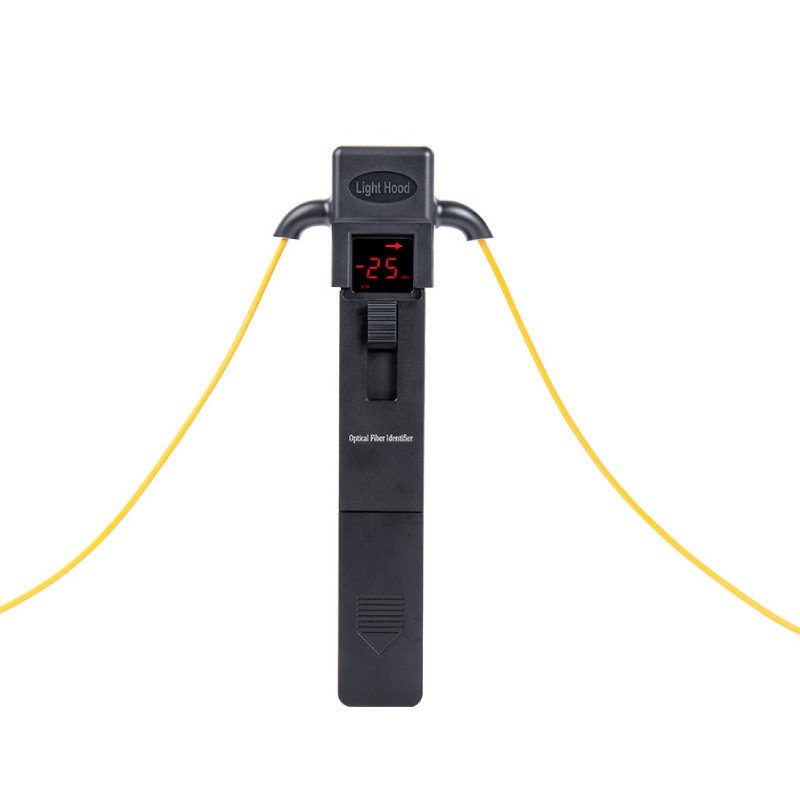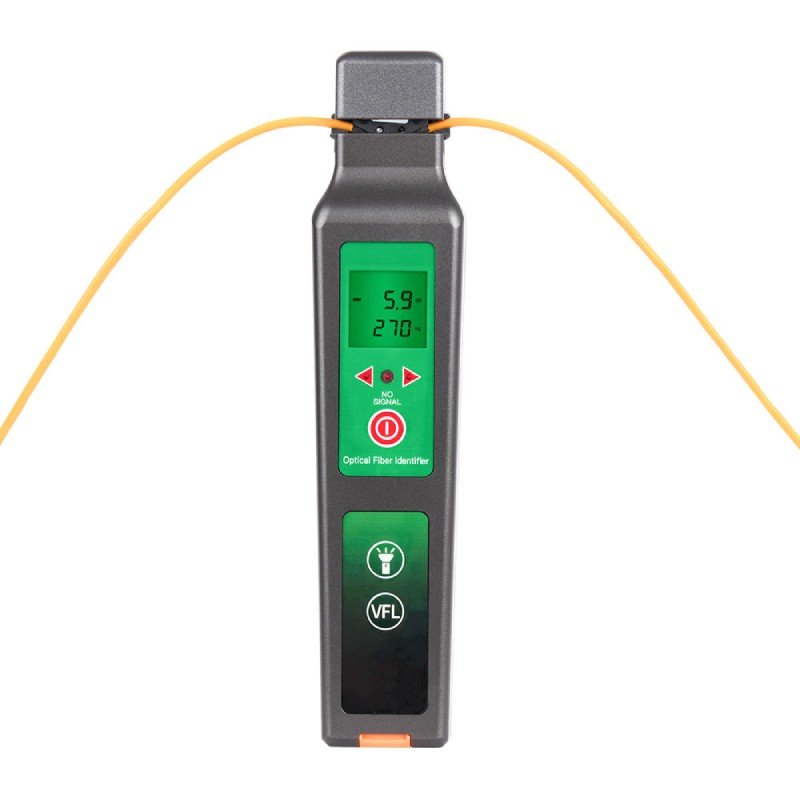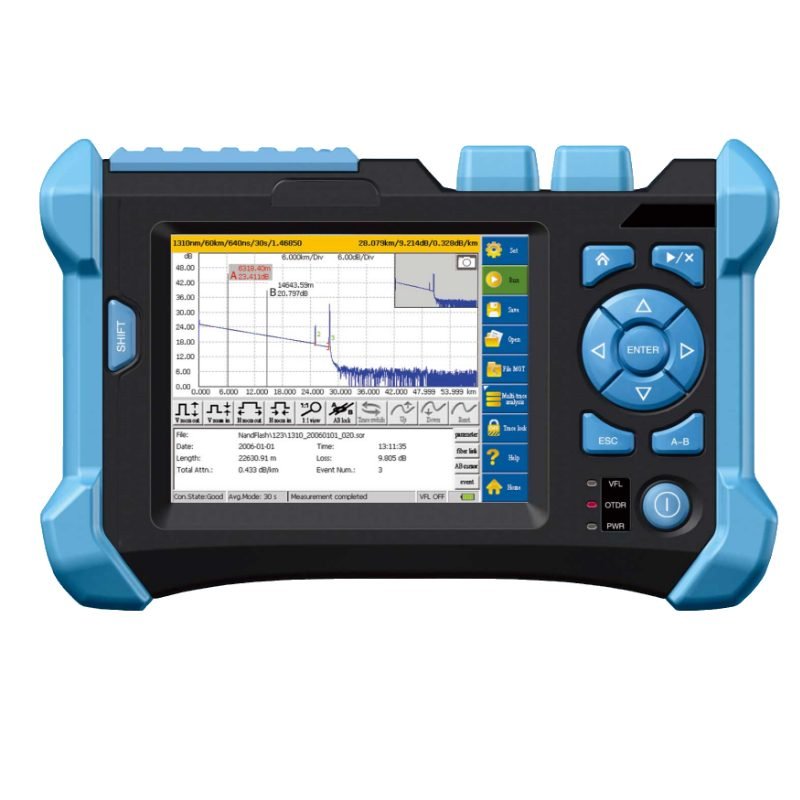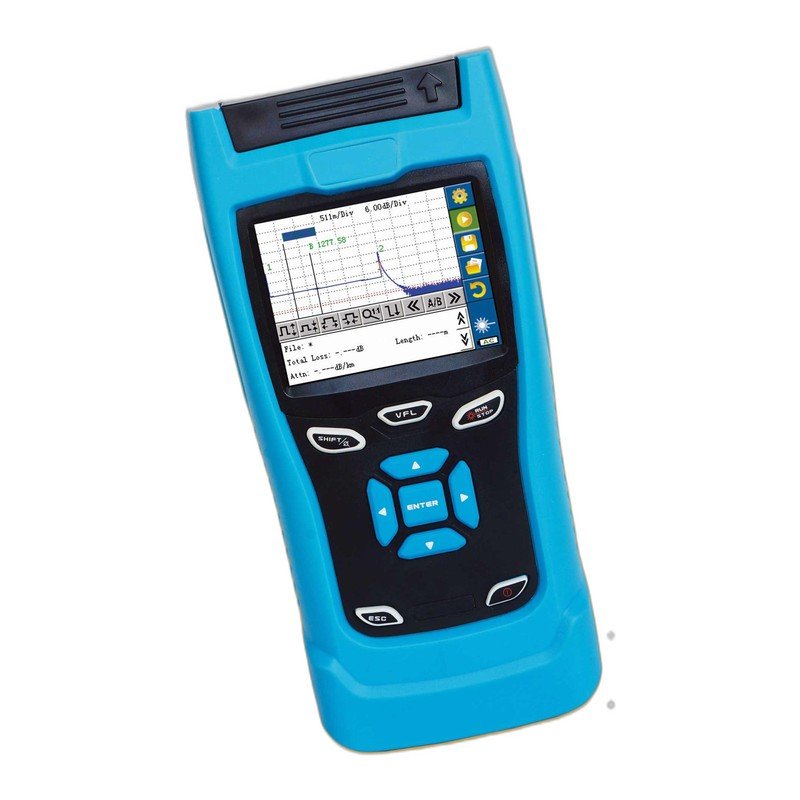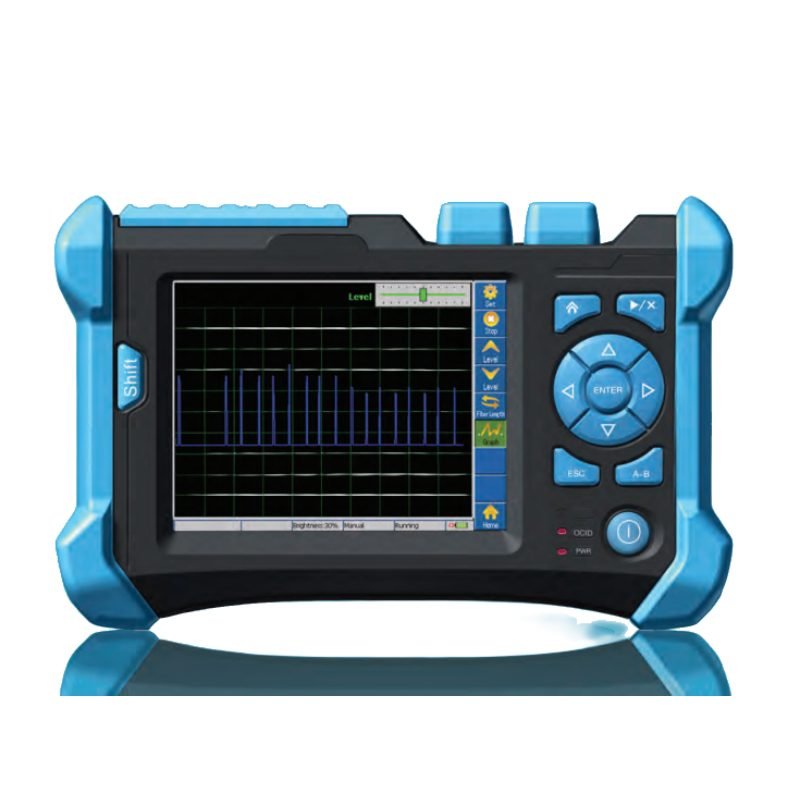
Finds the one cable you want inside a manhole or duct full of identical ones: tap the cable, and the K-200 turns the knock into a tone and a bar reading — nothing is cut, bent or frozen.
Functions verified against the ordered version before dispatch — the version table on this page is the exact build list.
Neutral instrument branding as standard; labeling per order.
Instruments are supplied to the version you order; tell us the work and we will help you spec it.
| Test method | Single fiber |
|---|---|
| Wavelength | 1550 nm |
| Fiber type | Single-mode |
| Maximum test distance | 40 km or 100 km (by version) |
| Unidirectional fiber loss | 10 dB (40 km version); 30 dB (100 km version) |
| Initial blind zone | None |
| Fiber-end return loss requirement | ≤40 dB (40 km version); ≤20 dB (100 km version) |
| SNR | ≥25 dB |
| Optic connector | FC/APC |
| Display | 5.6 in LCD touch screen |
| Input | Touch screen + buttons |
| Output | Visual: bar chart or ECG display; Audio: sound tracking the knock intensity |
| Battery | Lithium 7.4 V, 10.4 Ah — ≥10 h continuous work |
| Power consumption | <6 W |
| Power supply | DC 12 V / 3 A |
| Dimensions | 65 × 150 × 235 mm |
| Weight | 1.5 kg (including battery) |
| Working temperature | 0 °C to +45 °C |
| Storage temperature | -20 °C to +55 °C |
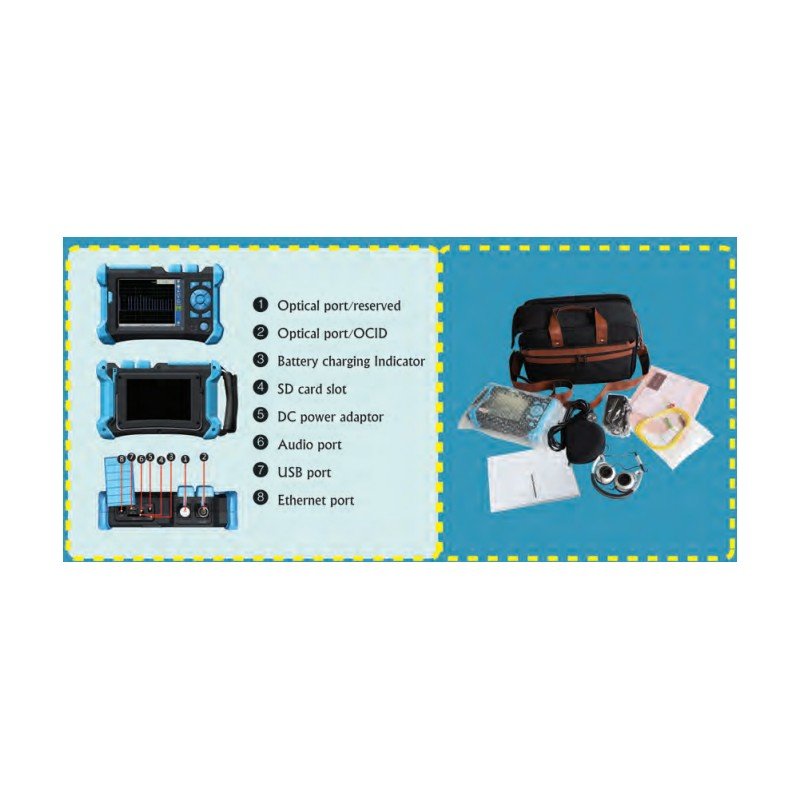
In the box: the parts above, packed per unit. Applications: Picking the target cable out of a crowded manhole, duct or tunnel run before cutting or splicing · Verifying cable identity where records are wrong or labels are missing · Aerial, conduit and buried routes where several operators' cables share the path · Pre-work confirmation on live cables that cannot be interrupted for identification.
Records lie and labels fall off; a duct can hold a dozen cables that all look the same. The old ways of proving which is which — cutting, bending or freezing the fiber — interrupt service and can damage the cable. The K-200 works differently: a coherent 1550 nm signal is launched into the fiber at one end, and when the cable is tapped, the mechanical disturbance changes the light through the photo-elastic effect. The instrument reads that disturbance and plays it back as sound and as a bar or ECG trace.
In practice one technician connects the identifier at the accessible end and a second walks the route, tapping each candidate cable. On the wrong cables the screen stays flat and the earpiece stays silent; on the target cable every tap answers back, louder the harder the knock. Because nothing about the fiber is disturbed, the method works on live cables — even while the fiber is under cut or splicing conditions — and the identification holds over 40 km or 100 km of route depending on the version.
Clamp it on a live fiber and it tells you — without cutting anything — whether light is there, which way it tr
View K-350 →
The identifier that also finds faults: clip-on live-fiber identification with a universal holder, plus a built
View K-340 →
A platform OTDR for FTTx, metro and backbone work: choose the wavelength set and dynamic range the network nee
View K-600 →
A handheld OTDR sized for everyday FTTH and metro work: 1310/1550 nm, up to 120 km of range, a 3.5-inch touch
View K-300 →Tell us the quantity and the finish or branding you need — Silvia replies personally with factory pricing (EXW).
Email: silvia@licoom.com · sales@licoom.com
WhatsApp: +86 150 6823 2998