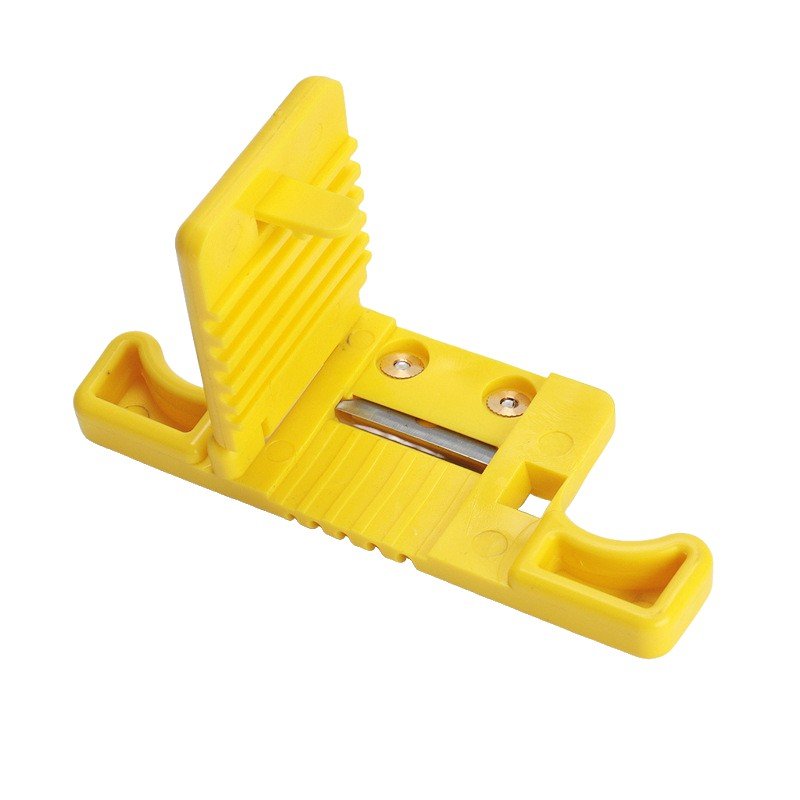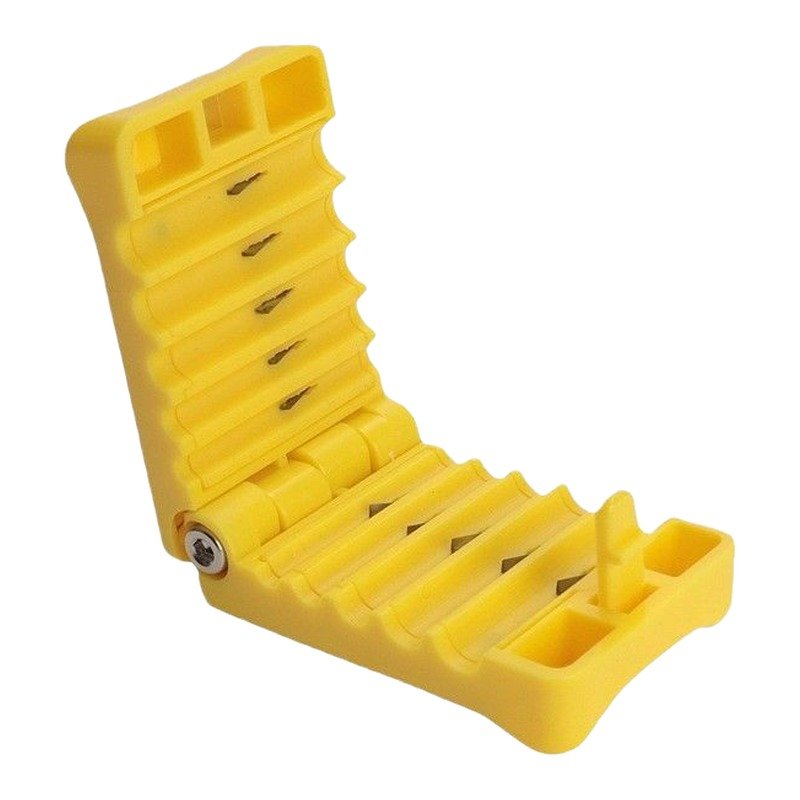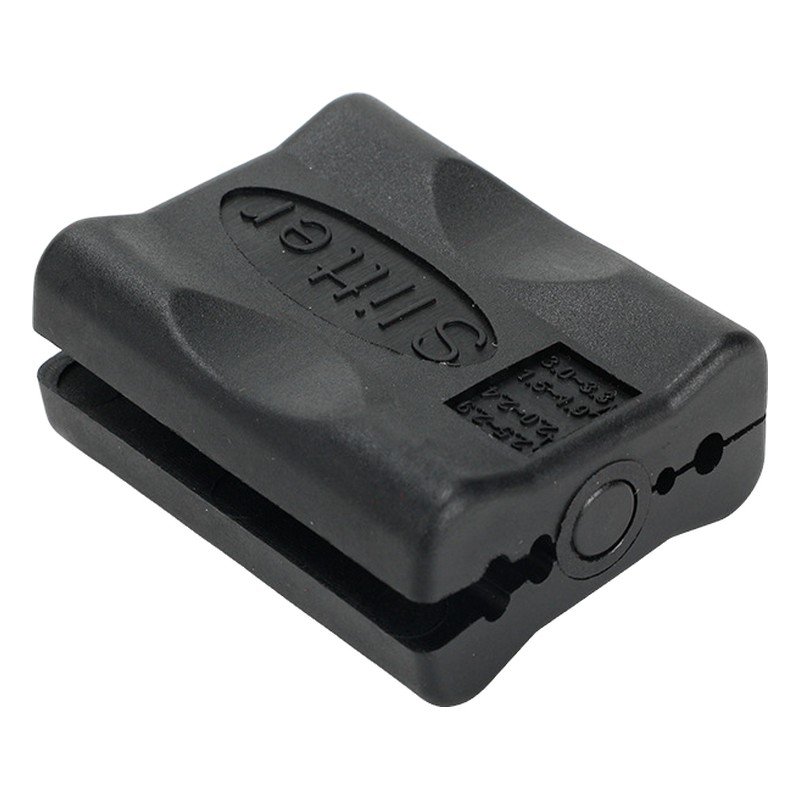
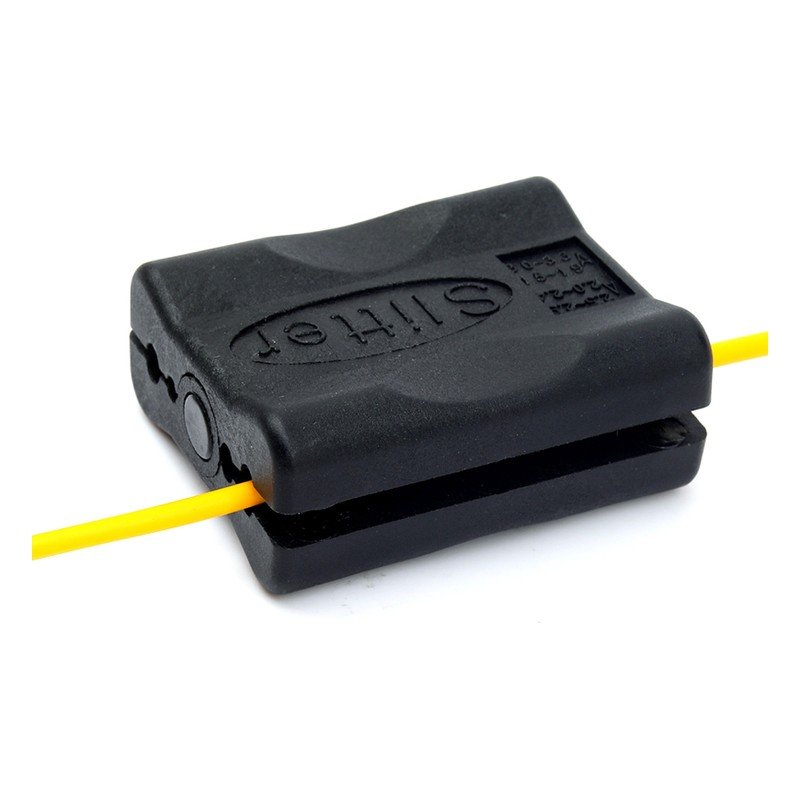
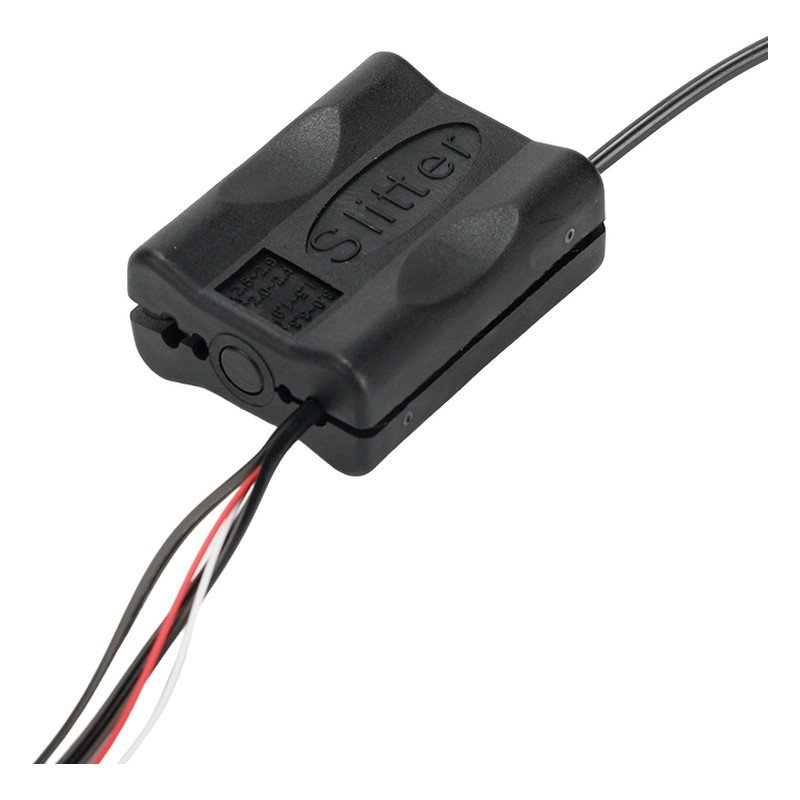
Four grooves cover every standard loose tube from 1.5 to 3.3 mm: lay the tube in the groove that matches it, close the two shells, and pull — the alloy blade scores the tube wall lengthwise and the tube opens along the score, so the fibers lift out untouched. It clamps on anywhere along the run, for end access and mid-span windows alike.
Checked against the specifications on this page before dispatch.
Supplied neutral; labeling per order.
Held as neutral stock — small lots welcome, mix models in one shipment.
| Grooves | 4 — for tube OD 1.5–1.9 / 2.0–2.4 / 2.5–2.9 / 3.0–3.3 mm |
|---|---|
| Blade | Alloy slitter blade |
| Blade setting | Factory pre-set — the groove is the gauge, no adjustment |
| Body | Moulded plastic, two-shell clamshell with latch |
| Dimensions | 50 × 40 × 20 mm |
| Weight | 30 g |
In the box: the parts above, packed per unit. Applications: Mid-span access on loose tube cables · Outdoor cable cutover · End access to loose tubes before splicing · FTTx maintenance and repair.
A loose tube is a thin plastic pipe, and inside it the fibers float loose in gel — that freedom is what protects them, and it is also what makes the tube awkward to open. Cut too shallow and the wall will not part; cut too deep and the blade reaches the fibers, and a nicked fiber is a future break. The K-SLT removes the judgement call: the tube's own diameter sets the cutting depth, because the groove it sits in is sized for exactly that range.
Pick the groove whose range brackets your tube — the chart moulded into the top shell lists all four — and lay the tube in it. Close the two shells and latch them: the groove now holds the tube centred under the alloy blade, which protrudes into the wall by a fixed, factory-set amount. Draw the tool along the tube in one steady motion and the blade scores the wall along its full length. The tube then peels apart along the score line and the fibers can be lifted out with a fingertip, dry and unmarked.
At a cable end the slitter is simply the fastest way into the tube before the fibers go to the tray. Mid-span is where it earns its place: clamp it over a tube anywhere along a live run, open a window long enough to work in, cut and splice the fibers you need, and let the express fibers pass through the opened tube untouched — the standard move in outdoor cutover and branch work.
Match the groove to the tube every time: a tube forced into the next groove down is held too tight and the blade reaches too far. Keep the grooves brushed clean of gel and wall shavings so the tube seats fully, and wipe the blade after gel-filled tubes. The blade is a fixed part of the shell — when it finally dulls, the tool is replaced, which is why the pattern is built light and inexpensive. Store it latched shut so the groove edges stay protected.
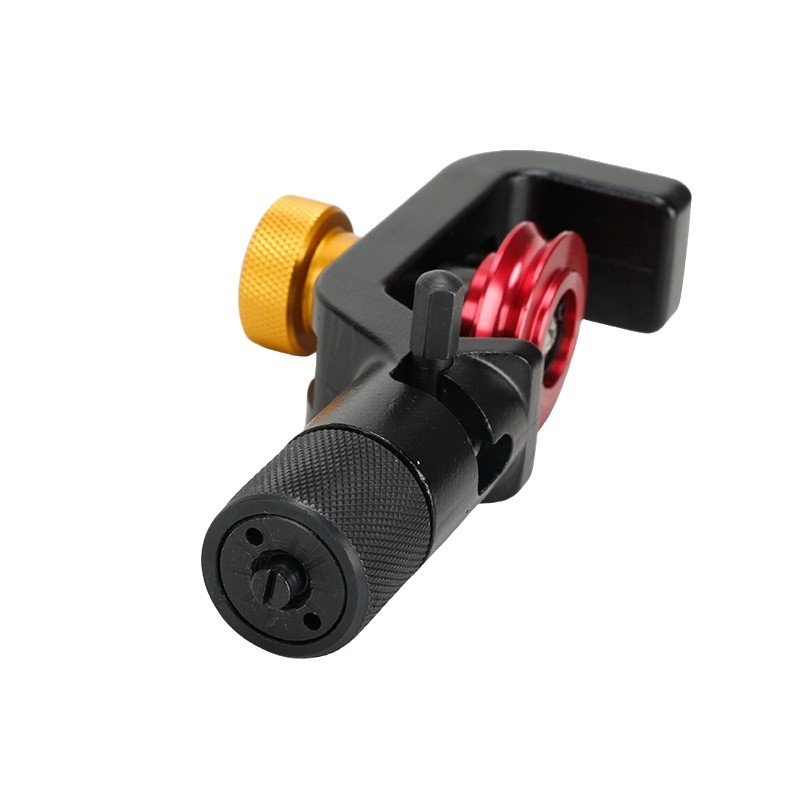
The small-cable armored slitter: the red roller sizes the same one-hand body down to cables from 4 to 10 mm —
View K-ACS-2 →
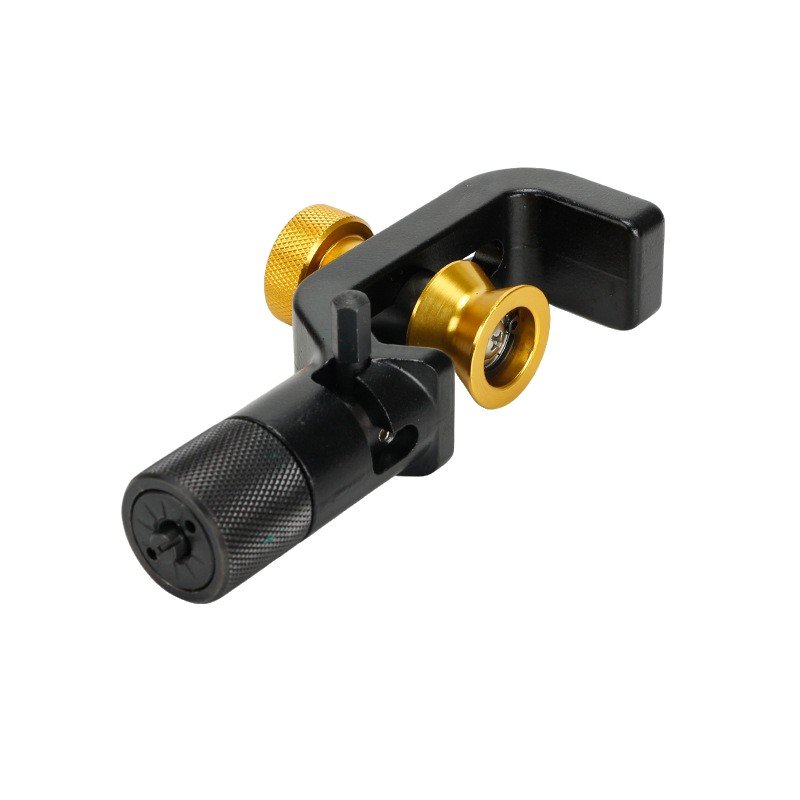
The general-purpose armored slitter: hook it over any round cable from 8 to 28.6 mm, set the blade to the jack
View K-ACS →
Shaves a window into one loose buffer tube mid-span — the cable is never cut, the fibers running through stay
View K-MSAT5 →
Five grooves, ten blade points, one pull: lay the loose tube in the groove sized to it — 1.5–1.9, 2.0–2.4, 2.5
View K-5 →Tell us the quantity and the finish or branding you need — Silvia replies personally with factory pricing (EXW).
Email: silvia@licoom.com · sales@licoom.com
WhatsApp: +86 150 6823 2998