Home›Products›Fiber Strippers & Cable Tools›K-5
FIBER STRIPPERS & CABLE TOOLS

Loose Tube Opener K-5

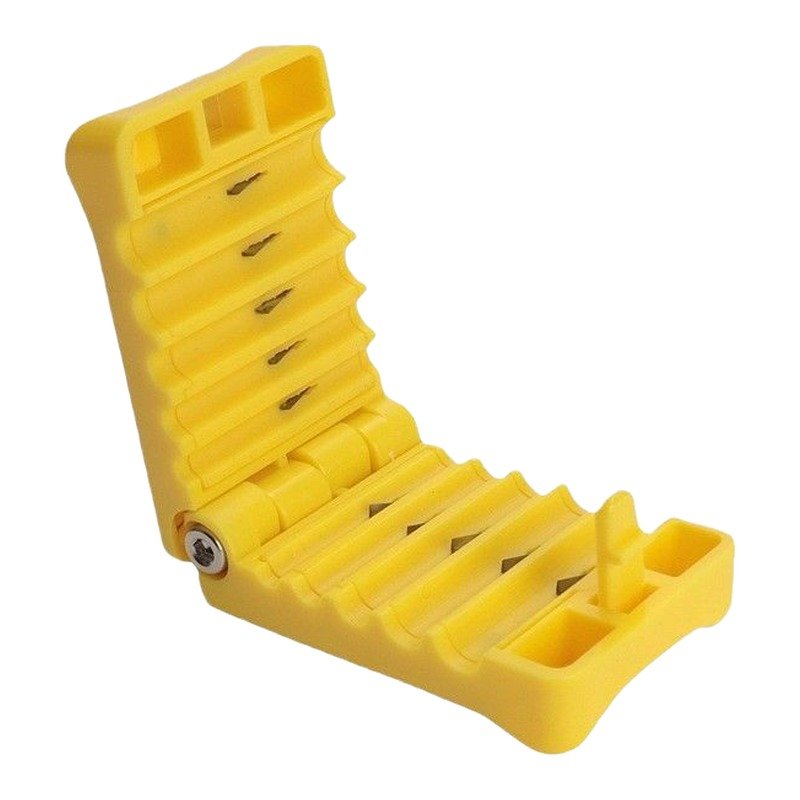
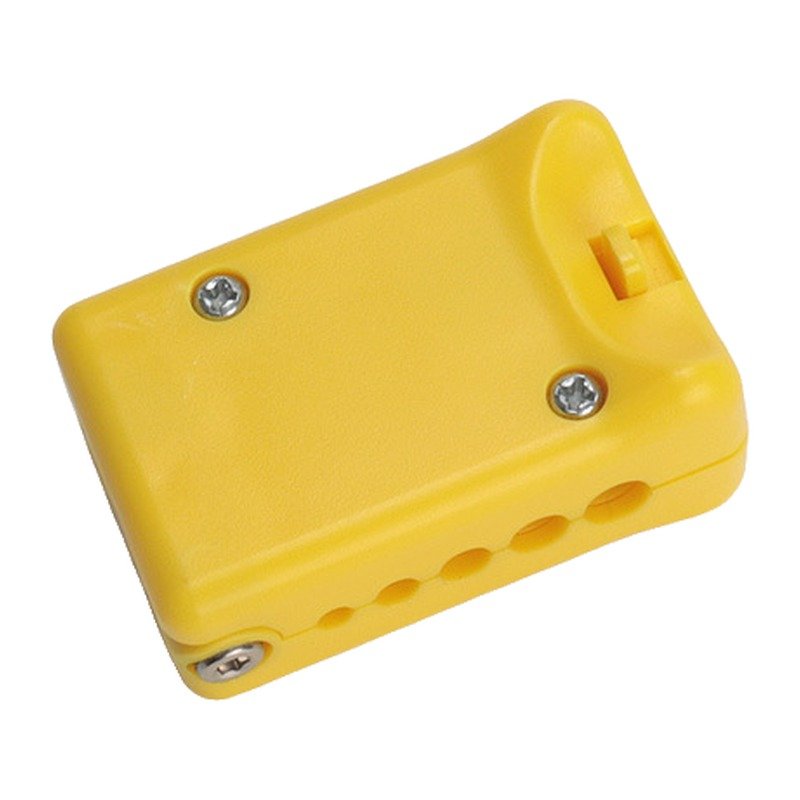
Five grooves, ten blade points, one pull: lay the loose tube in the groove sized to it — 1.5–1.9, 2.0–2.4, 2.5–2.9, 3.0–3.3 or 3.5–3.8 mm — close the hinged shells until the latch clicks, and draw the tool along. A blade point in each shell scores the tube wall from both sides at once, so the tube splits open lengthwise and the fibers lift out untouched.

  • Five grooves cover the loose tubes used across FTTH and backbone cables — 1.5–1.9, 2.0–2.4, 2.5–2.9, 3.0–3.3 and 3.5–3.8 mm — so one pocket tool opens any standard buffer tube in the cable
  • Ten blade points, five in each shell, score the tube wall from both sides at once: the tube splits into two halves along the draw instead of tearing, and the halves peel away from the fibers cleanly
  • Nothing to set: each groove is sized to its tube range and the blade points stand at a factory pre-set depth, so the score runs through the wall and stops there — the 250 µm fibers inside are never touched
  • Hinged shells with a snap latch: lay the tube in the groove, close until it clicks, and pull — the same action opens a tube at the cable end or windows one mid-span inside a closure
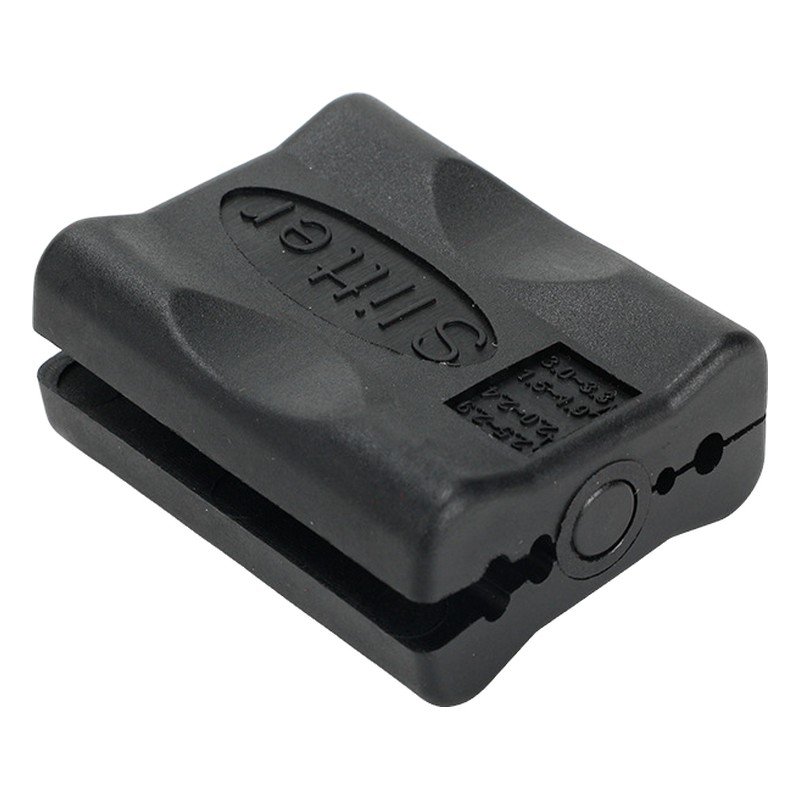
  • The entry holes on the side face double as a quick gauge: hold the tube against the holes, pick the one it matches, and open the tool to that groove
  • Pocket-size moulded body at about 46 g, with the blades covered when the shells are latched shut — it rides safely in a kit or a pocket between jobs
  • Supplied neutral and unbranded as standard; private labeling is made to your requirements — labels with your logo, part numbers and barcodes on the inner boxes and outer cartons, so the goods arrive ready for your warehouse
⌖

Checked before it ships

Checked against the specifications on this page before dispatch.

✦

Your brand on it

Supplied neutral; labeling per order.

▦

Stock & small lots

Held as neutral stock — small lots welcome, mix models in one shipment.

Specifications

K-5 full specification

Grooves5 — one for each tube size below
Groove sizes (tube OD)1.5–1.9 / 2.0–2.4 / 2.5–2.9 / 3.0–3.3 / 3.5–3.8 mm
Tube diameter range1.5–3.8 mm
Blades10 preset blade points, 5 in each shell — the tube wall is scored from both sides
Blade settingFactory pre-set, no adjustment
BodyMoulded plastic, hinged two shells with snap latch
ColorYellow
Dimensions64 × 40 × 28 mm
WeightApprox. 46 g
One K-5 loose tube opener

In the box: the parts above, packed per unit. Applications: Opening loose buffer tubes at cable ends before splicing · Mid-span access to a single tube inside a closure · FTTx installation and maintenance · A standard hand tool in FTTH tool kits.

How the K-5 opens a loose tube from both sides

Once the cable jacket is off, every color-coded loose tube still has to be opened before its fibers can be cleaned and spliced — and the wall must be split lengthwise without the blade ever reaching the fibers. The K-5 does that step mechanically: the tube lies in a groove bored for its own diameter, and blade points in both shells score the wall from opposite sides, so no freehand knife work decides how deep the cut runs.

Pick the groove that matches the tube — the five grooves take tubes of 1.5–1.9, 2.0–2.4, 2.5–2.9, 3.0–3.3 and 3.5–3.8 mm, and the entry holes on the side face work as a quick gauge before you open the tool. Lay the tube in its groove, close the shells until the snap latch clicks, then hold the tube and draw the tool along it in one steady pull (at a cable end you can equally pull the tube through the closed tool). The two scores meet around the wall, the tube parts into two halves, and the gel-coated fibers lift out of the lower half untouched.

The groove has to match the tube. In the right groove the tube sits centered and both blade points meet the wall squarely, so the score is even on both sides. A tube loose in an oversize groove rolls as you pull — the score wanders and runs shallow, and the wall tears instead of splitting. A tube forced into a small groove is squeezed against the points and scored too deep, toward the fibers. The five steps are close together precisely so that one of them always fits the tube in hand.

The same action serves both kinds of access. At a cable end, fan the tubes out and run each one through its groove before splicing. Mid-span — opening a window in one tube inside a closure to branch off fibers — the hinged shells close over the tube where it lies, with no need to thread a tube end through anything; work a short section at a time so the opened window stays controlled and the neighboring tubes stay closed.

Within this section of the site, the K-5 is the opener for the small tubes: the box-type strippers beside it work the same 1.5–3.3 mm range one wall at a time, the center pipe tool takes the larger 4.5–11 mm center tubes, and the mid-span access tool shaves a window into bigger tubes where only a few fibers are needed. After a session, wipe gel and wall shavings out of the grooves so the next tube seats fully, and store the tool latched shut — the blade points stay covered and the grooves stay clean.

Send an Inquiry

Ask about the K-5

Tell us the quantity and the finish or branding you need — Silvia replies personally with factory pricing (EXW).

Email: silvia@licoom.com · sales@licoom.com
WhatsApp: +86 150 6823 2998

Chat on WhatsApp