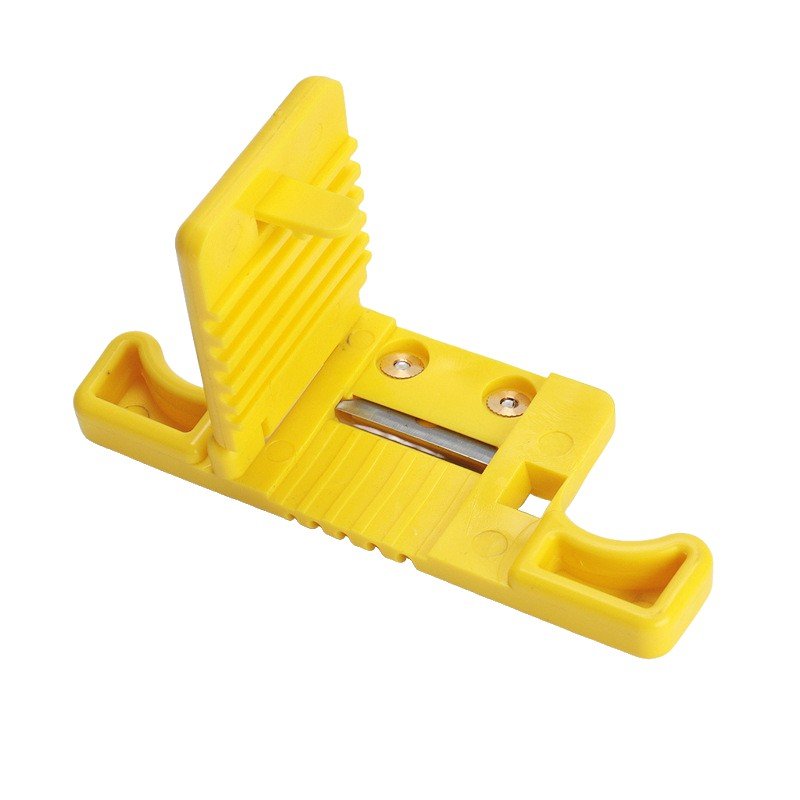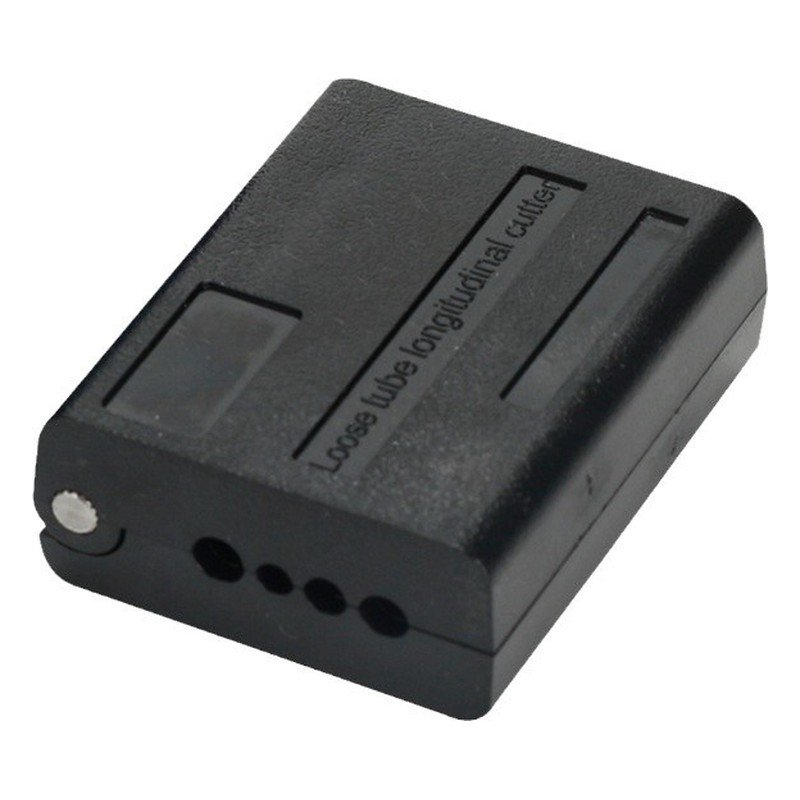
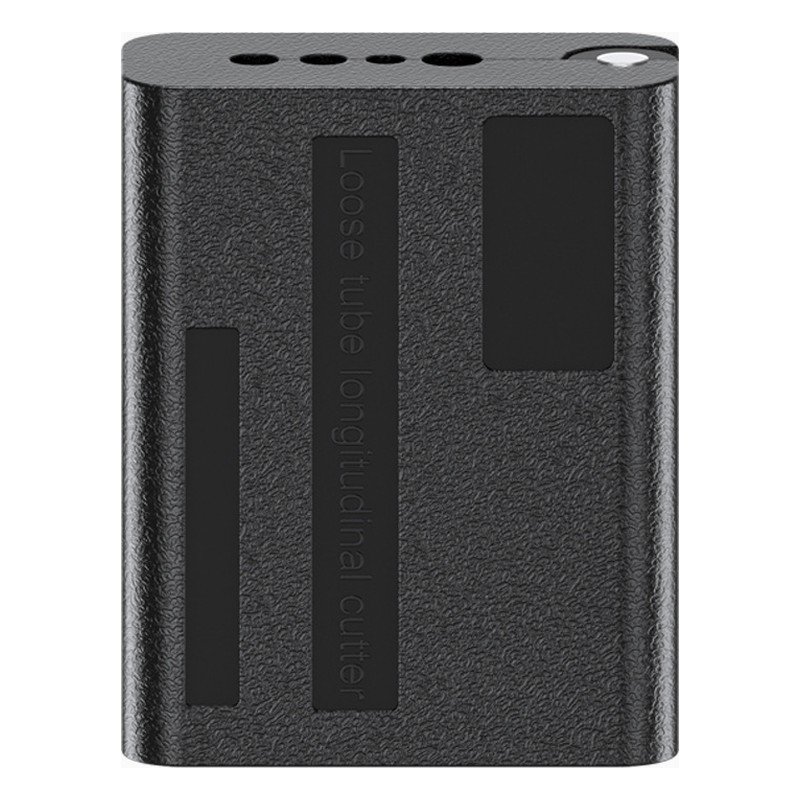
A solid box that swallows the tube and slits it into two halves: feed the loose tube through the hole that matches it — 1.5–1.9, 2.0–2.4, 2.5–2.9 or 3.0–3.3 mm — close the hinged lid, and draw the box along. The alloy blade inside splits the tube wall lengthwise, ready to peel away from the fibers.
Checked against the specifications on this page before dispatch.
Supplied neutral; labeling per order.
Held as neutral stock — small lots welcome, mix models in one shipment.
| Holes | 4 — for tube OD 1.5–1.9 / 2.0–2.4 / 2.5–2.9 / 3.0–3.3 mm |
|---|---|
| Blade | Alloy blade |
| Blade setting | Factory pre-set, no adjustment |
| Body | Moulded plastic box, hinged lid with steel pin |
| Dimensions | 74 × 74 × 30 mm |
| Weight | 51 g |
In the box: the parts above, packed per unit. Applications: Longitudinal opening of loose buffer tubes · Outdoor cable cutover · Tube preparation at cable ends · FTTx installation and maintenance.
Where a loose tube has to come off a fiber bundle — at a cable end, at a closure, along a cutover — the wall must be opened lengthwise without the blade ever wandering into the fibers. The K-LS1 guides the cut mechanically: the tube passes through a hole bored for its own diameter range, and a hole that fits the tube keeps it centred on the blade for the whole draw.
Open the lid on its steel pin and lay the tube across the hole that matches it — 1.5–1.9, 2.0–2.4, 2.5–2.9 or 3.0–3.3 mm — then close the box and hold it shut. Inside, the alloy blade stands at a factory-set height against the tube wall. Draw the box along the tube in one steady pull: the blade scores the wall from end to end, and the tube parts into two halves that peel away from the gel and fibers, which stay lying in the lower half until you lift them out.
Because the tube is captive inside the box, the K-LS1 is at its best on bench and closure work at cable ends — fan the tubes out of the cable, run each one through its hole, and the fibers are ready for cleaning and splicing. For a mid-span window it closes over the tube the same way; work a short section at a time so the opened window stays controlled.
Feed the tube through the hole that matches it — a tube loose in an oversize hole wanders and the score runs shallow; a tube forced through a small hole is scored too deep. Wipe gel from the holes and the blade seat after a session so the next tube seats fully, and store the box closed: the blade stays covered and the holes stay clean.
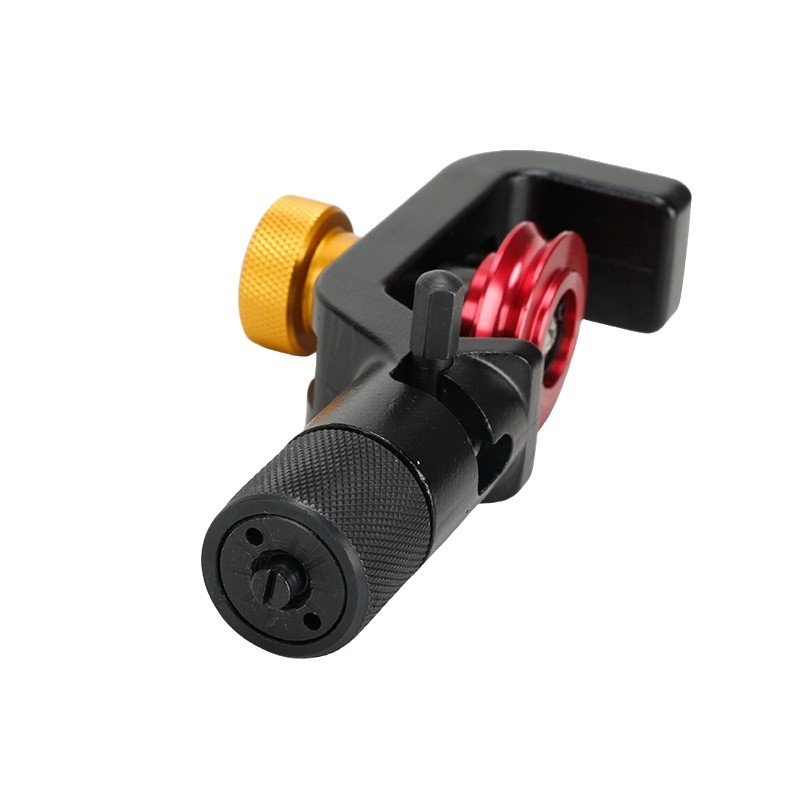
The small-cable armored slitter: the red roller sizes the same one-hand body down to cables from 4 to 10 mm —
View K-ACS-2 →
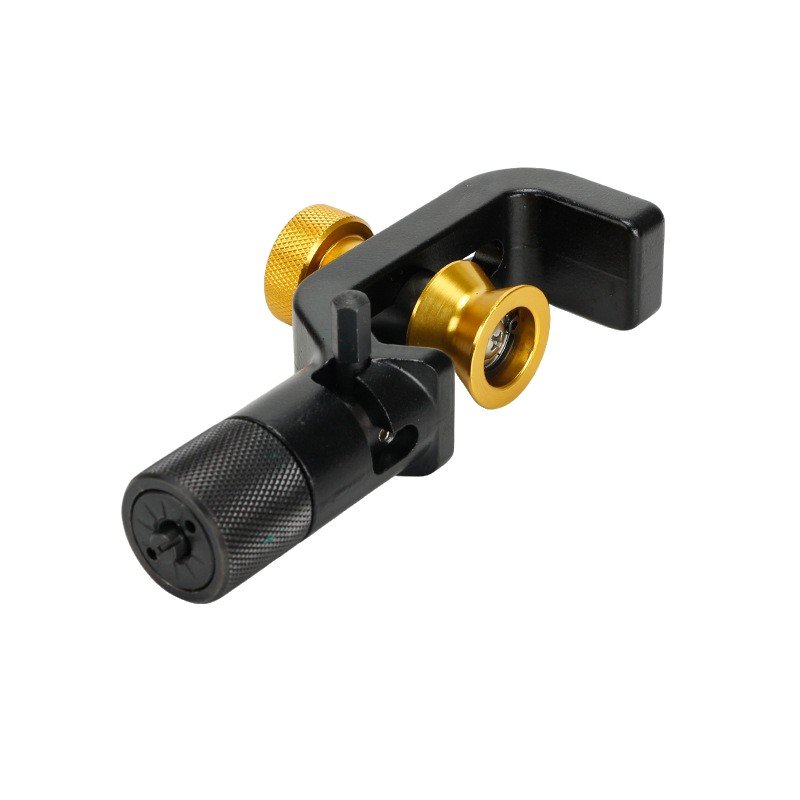
The general-purpose armored slitter: hook it over any round cable from 8 to 28.6 mm, set the blade to the jack
View K-ACS →
Shaves a window into one loose buffer tube mid-span — the cable is never cut, the fibers running through stay
View K-MSAT5 →
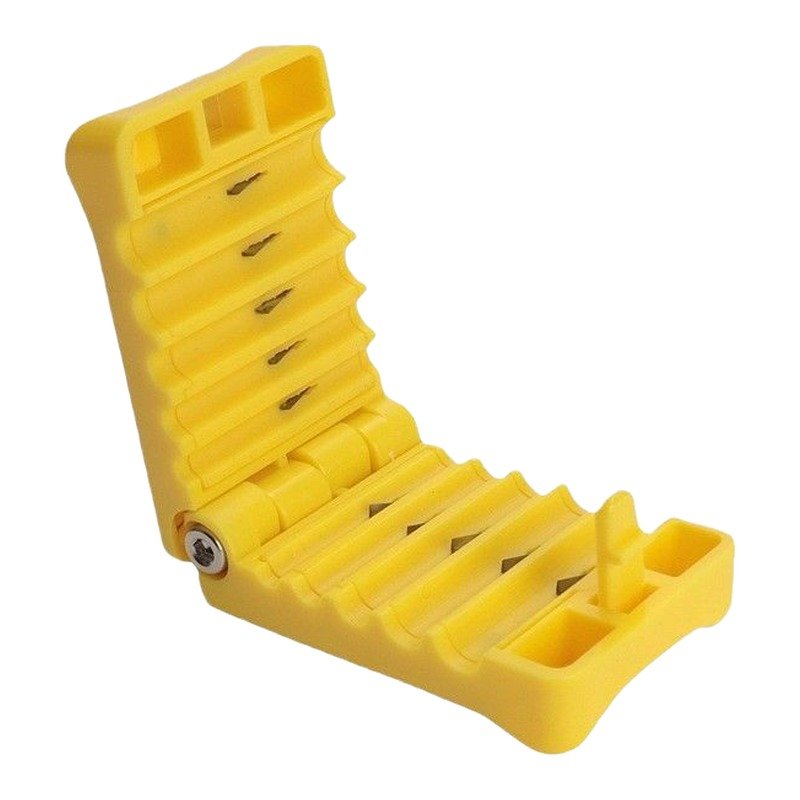
Five grooves, ten blade points, one pull: lay the loose tube in the groove sized to it — 1.5–1.9, 2.0–2.4, 2.5
View K-5 →Tell us the quantity and the finish or branding you need — Silvia replies personally with factory pricing (EXW).
Email: silvia@licoom.com · sales@licoom.com
WhatsApp: +86 150 6823 2998