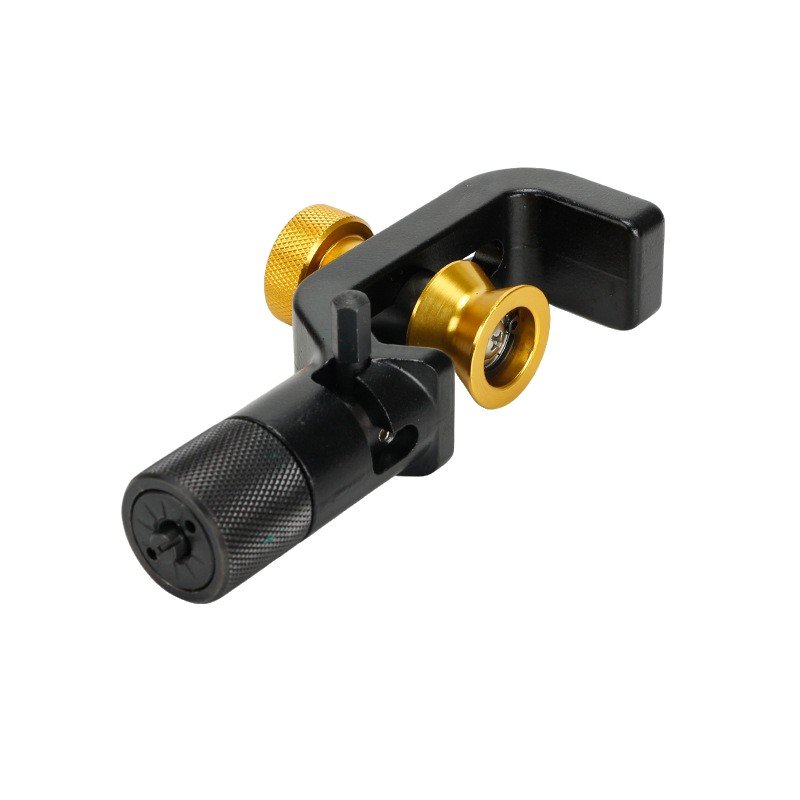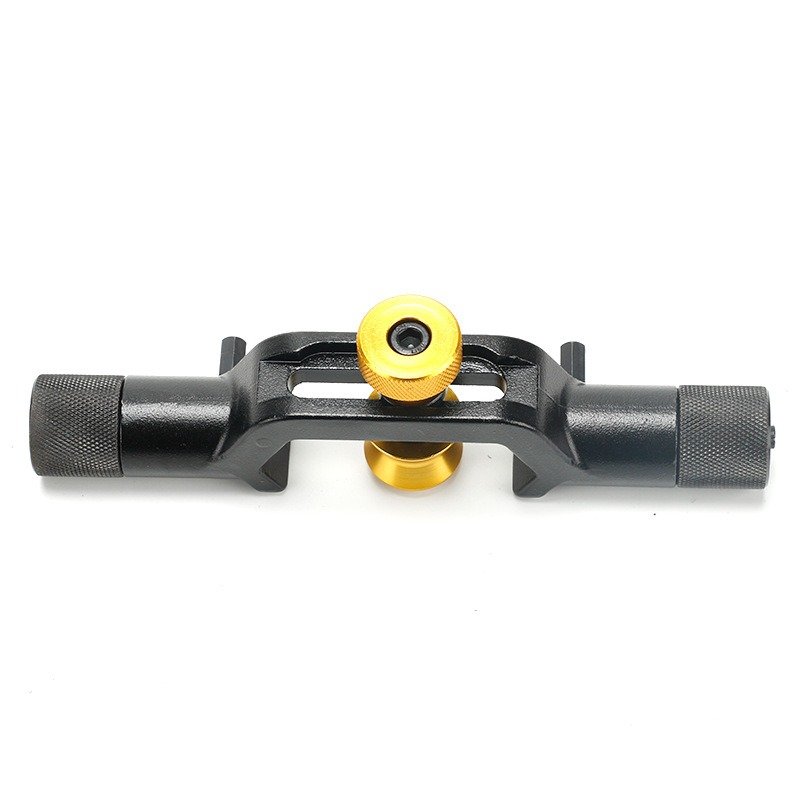
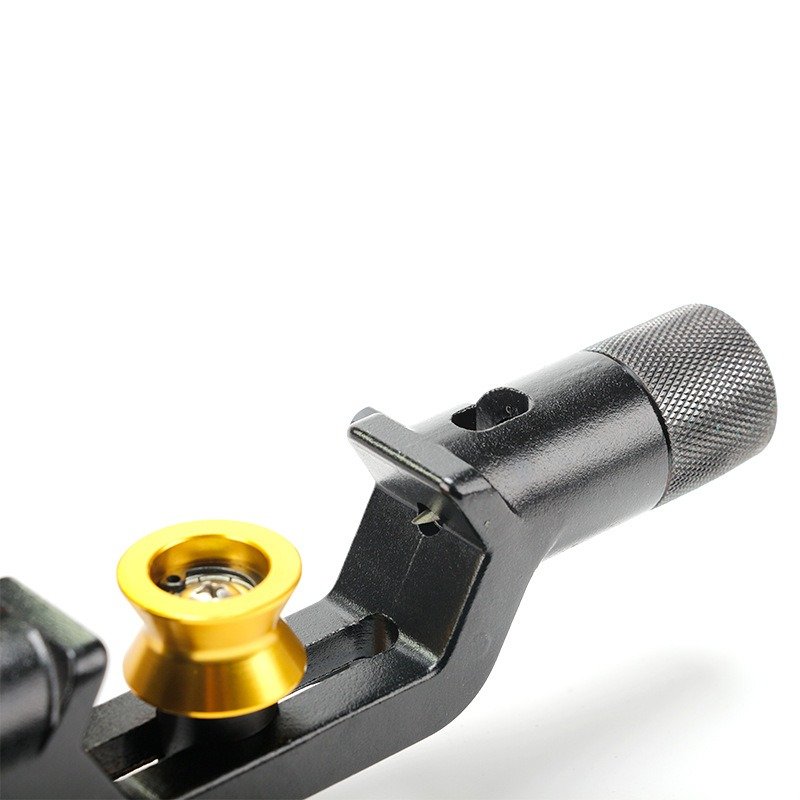
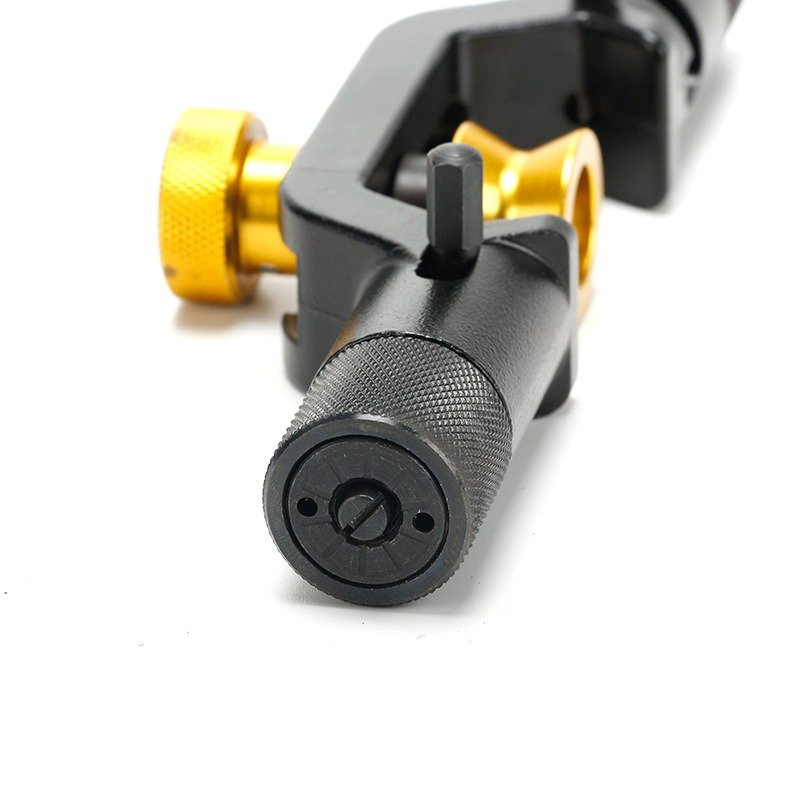
The two-hand armored slitter: a grip at each end of the bridge keeps the gold roller square on heavy cables from 8 to 28.6 mm over long slits, so the blade tracks straight through jacket and armor where a single handle would wander — the same depth dial and 90° slit-or-ring head, fed by both hands.
Checked against the specifications on this page before dispatch.
Supplied neutral; labeling per order.
Held as neutral stock — small lots welcome, mix models in one shipment.
| Cable diameter | 8–28.6 mm |
|---|---|
| Guide roller | Gold anodised aluminium roller |
| Blade | Hardened alloy steel, replaceable |
| Blade depth | Adjustable to 5.5 mm maximum |
| Cutting modes | Longitudinal slit and circumferential ring cut — blade rotates 90° on its lever |
| Body | Anodised aluminium and steel, double-handle bridge |
| Dimensions | 181 mm (overall length) |
| Weight | 416 g |
In the box: the parts above, packed per unit. Applications: Mid-span access on heavy armored trunk and feeder cables · Long longitudinal slits on large armored cables · End entry into splice closures · OSP and backbone cable preparation.
The heaviest armored cables on a build — trunk and feeder constructions up to 28.6 mm — are also the ones that need the longest openings: mid-span windows you can splice a branch into, running a metre or more. A single-handle slitter does the first stretch well, but over a long draw one hand cannot stop the head slowly yawing, and a wandering blade line means a second pass through armor that is already scored. The bridge body of the K-ACS-1 answers that with geometry: a grip at each end, and the working head in the middle.
Lay the cable into the centre of the bridge and bring the gold roller down onto the jacket with the tension knob, so the roller's groove centres the cable under the blade. Set the blade depth — up to 5.5 mm — against the jacket and armor thickness and prove it on a scrap end. Then take a grip in each hand and walk the tool along the cable: the two hands share the feed force and correct each other, the roller rolls true, and the blade scores jacket and corrugated armor in one straight line for the whole draw.
The central head carries the family's blade lever: turn the blade 90° and it ring-cuts. A long mid-span window on a trunk cable is rung at both ends, slit between the rings with the two-hand draw, and the shell lifts away to expose the tubes — while the cable either side of the window keeps its armor and its traffic. At the end of a heavy cable, the same two grips give the leverage to ring and slit thick jackets into a closure without the tool skating.
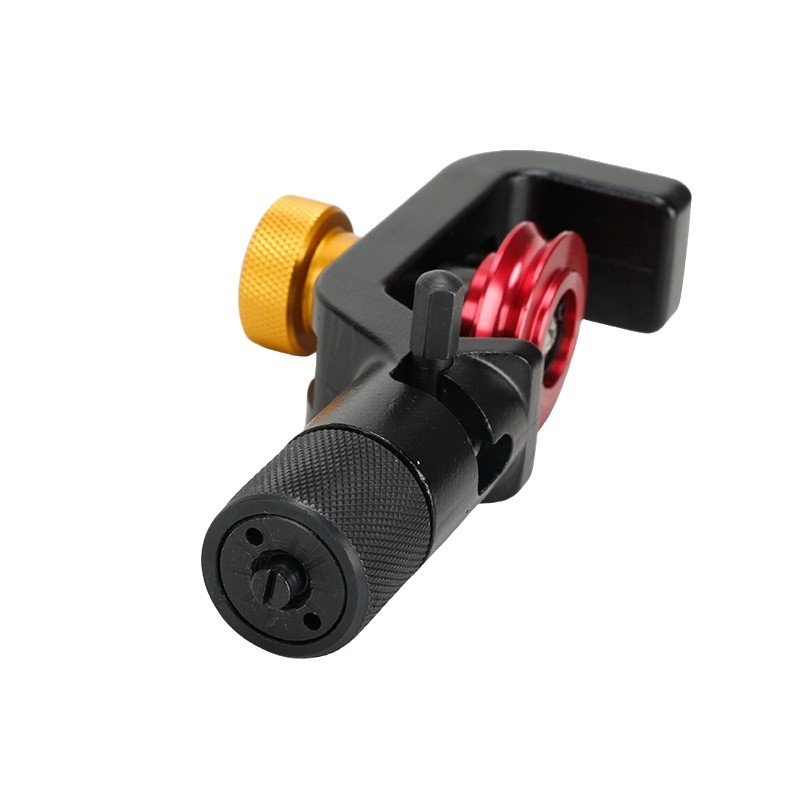
Keep to the range: the bridge and roller are sized for 8 to 28.6 mm; smaller armored cables belong to the single-handle models — the gold K-ACS is the lighter tool for general work, and 4–10 mm cables take the red-roller K-ACS-2. Brush armor filings out of the roller groove as they gather, change the blade when it dulls, and re-prove the depth on a scrap end after every blade change.
The general-purpose armored slitter: hook it over any round cable from 8 to 28.6 mm, set the blade to the jack
View K-ACS →
The small-cable armored slitter: the red roller sizes the same one-hand body down to cables from 4 to 10 mm —
View K-ACS-2 →
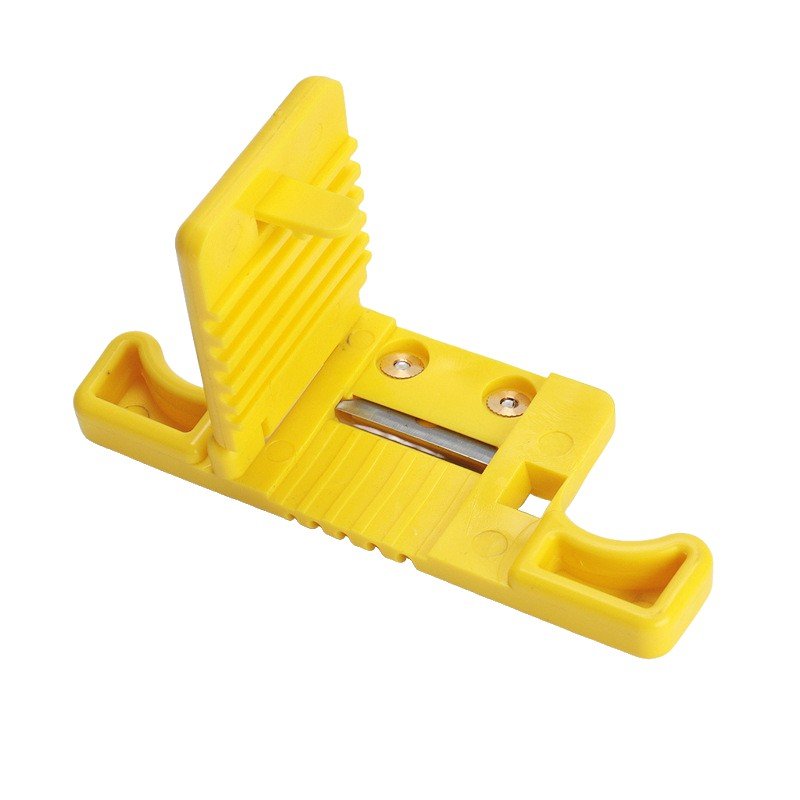
Shaves a window into one loose buffer tube mid-span — the cable is never cut, the fibers running through stay
View K-MSAT5 →
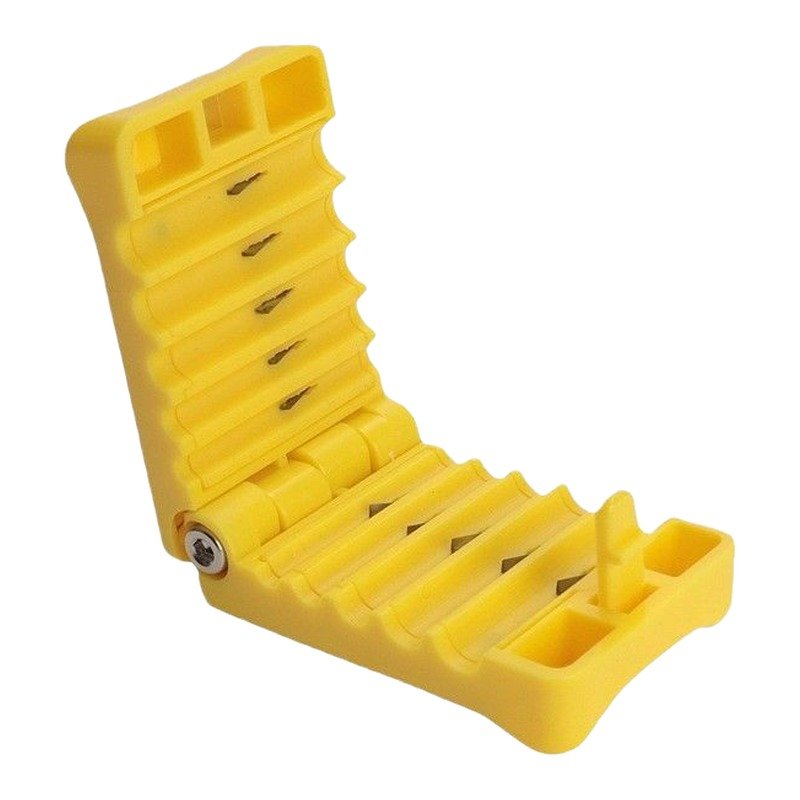
Five grooves, ten blade points, one pull: lay the loose tube in the groove sized to it — 1.5–1.9, 2.0–2.4, 2.5
View K-5 →Tell us the quantity and the finish or branding you need — Silvia replies personally with factory pricing (EXW).
Email: silvia@licoom.com · sales@licoom.com
WhatsApp: +86 150 6823 2998