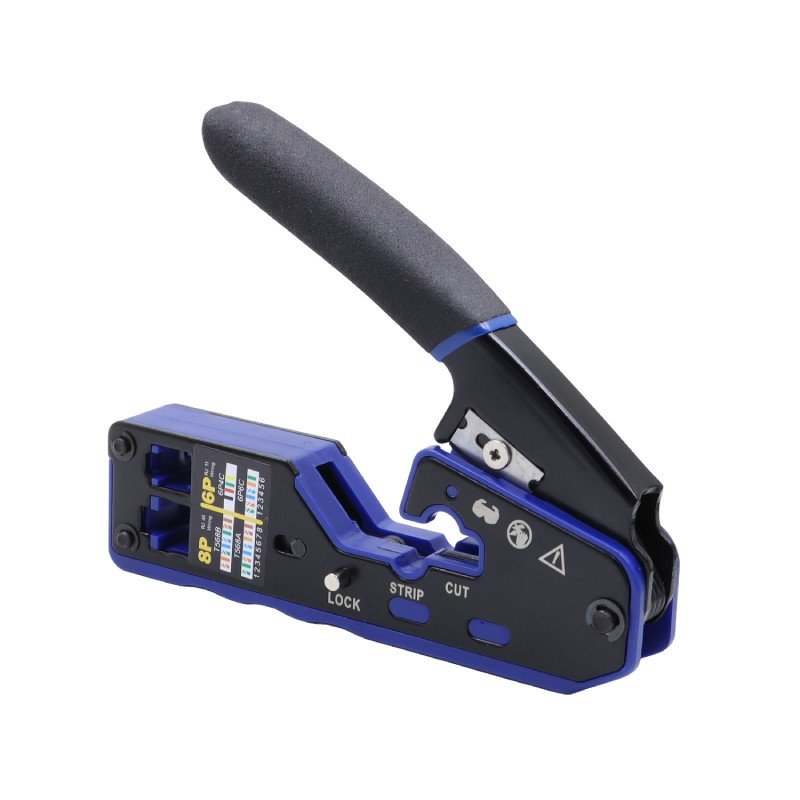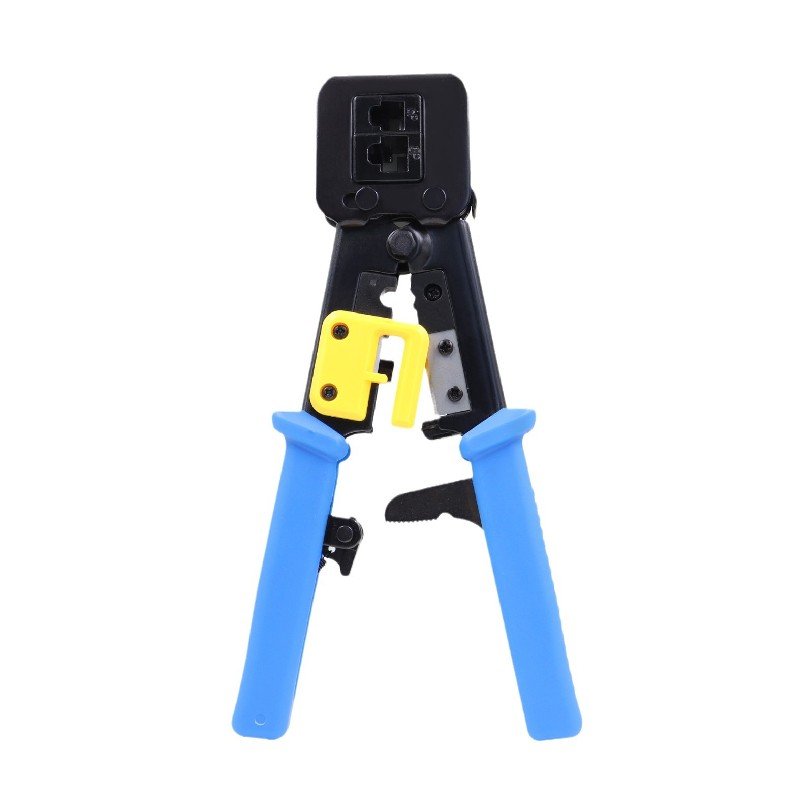
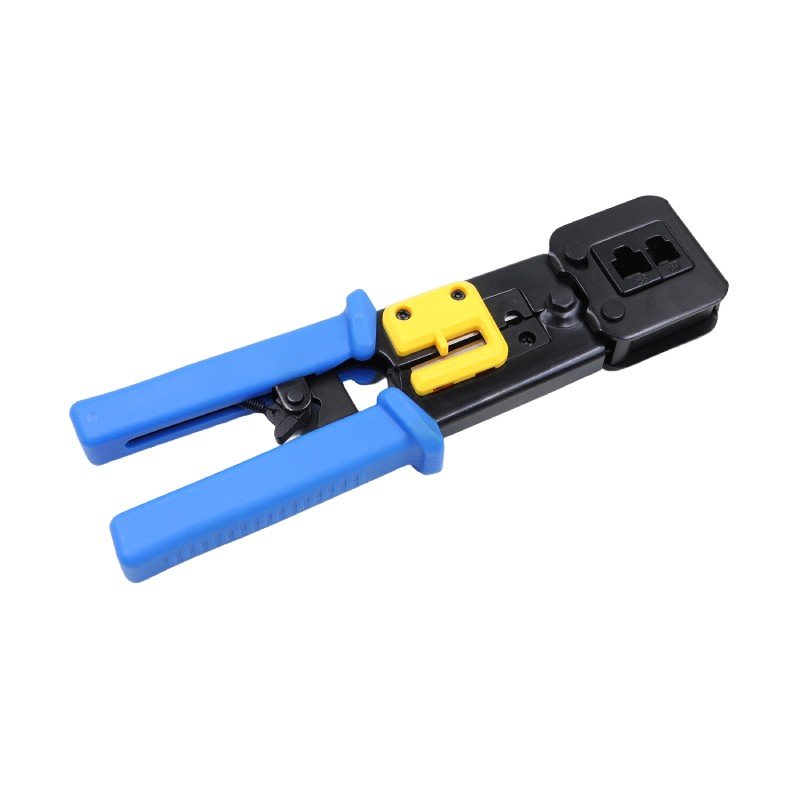
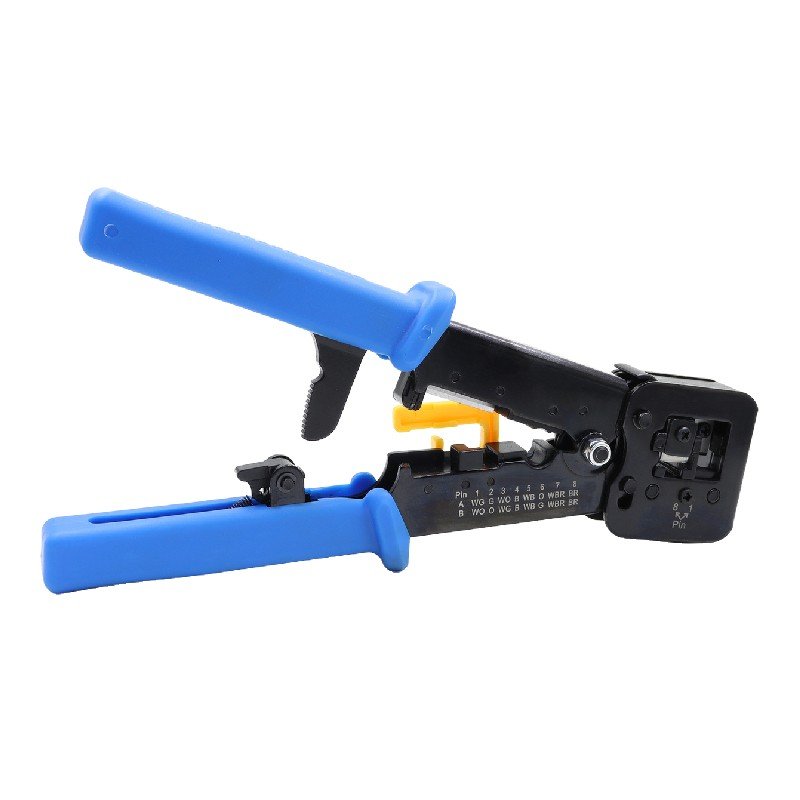
Crimp, trim, cut and strip with one ratchet tool: 8P pass-through plugs are crimped and trimmed flush in a single squeeze, and the second cavity takes 6P telephone plugs.
Crimp action and ratchet release checked before dispatch.
Supplied neutral; labeling per order.
Held as neutral stock — mix with the fiber range in one shipment.
| Crimp cavities | Two — 8P and 6P |
|---|---|
| 8P plugs | RJ45 pass-through (EZ) plugs, Cat5e / Cat6 / Cat6a; also standard non-pass-through RJ45 plugs |
| 6P plugs | RJ12 and RJ11 (6P6C / 6P4C) |
| Trimming | Pass-through conductors are trimmed flush with the plug face in the same crimp stroke |
| Cutter | Built-in cable cutter, replaceable blade |
| Stripper | Built-in round-cable jacket stripper at the throat |
| Ratchet | Full-cycle ratchet with quick-release lever — the crimp completes before the jaws open |
| Wiring guide | T568A / T568B colour chart printed on the frame |
| Body | Carbon steel, black finish |
| Handles | Blue non-slip grips; locking latch keeps the tool closed in the kit |
In the box: the parts above, packed per unit. Applications: Terminating pass-through RJ45 plugs on Cat5e, Cat6 and Cat6a patch cords · Data and voice cabling installation — Ethernet and telephone in one tool · Field-made patch cords in racks, offices and FTTH in-home wiring · RJ11 / RJ12 telephone plug termination · A standard hand tool in network and FTTH tool kits.
A standard RJ45 plug is a blind box: the eight conductors disappear into it, and if two of them swapped places while being pushed in, the first anyone knows is a failed test at the end of the run. A pass-through plug opens the front: the conductors are fed right through and out of the face, in their colour order, visible and correctable before any metal moves. That single change removes the most common cause of re-terminated ends.
The tool is built around it. Strip the jacket with the throat stripper — the cable sits in the semicircular seat and the blade parts the jacket as the tool turns, without scoring the twisted pairs. Untwist only as much as the plug needs, lay the pairs in the order on the frame's printed chart (T568B for most installations), feed them through the plug until the jacket enters the plug body, and check the colours at the face.
Then one squeeze does three things: the die drives all eight contacts down into their conductors, the strain-latch press closes on the jacket, and the trimmer blade cuts the protruding conductors flush with the plug face. The ratchet enforces the order — it will not release mid-stroke, so the trim can never happen before the crimp is fully made. A flush face matters beyond neatness: protruding ends can bridge to the socket's front plate in tight panels.
Habits that keep terminations first-time-right: keep untwist under about 13 mm, because long untwisted sections are where crosstalk creeps in; seat the jacket inside the plug so the latch crimps cable, not air; and change the trimmer blade when cuts stop being flush — a dull trimmer tears copper instead of shearing it, and the whiskers it leaves are the ones that short.
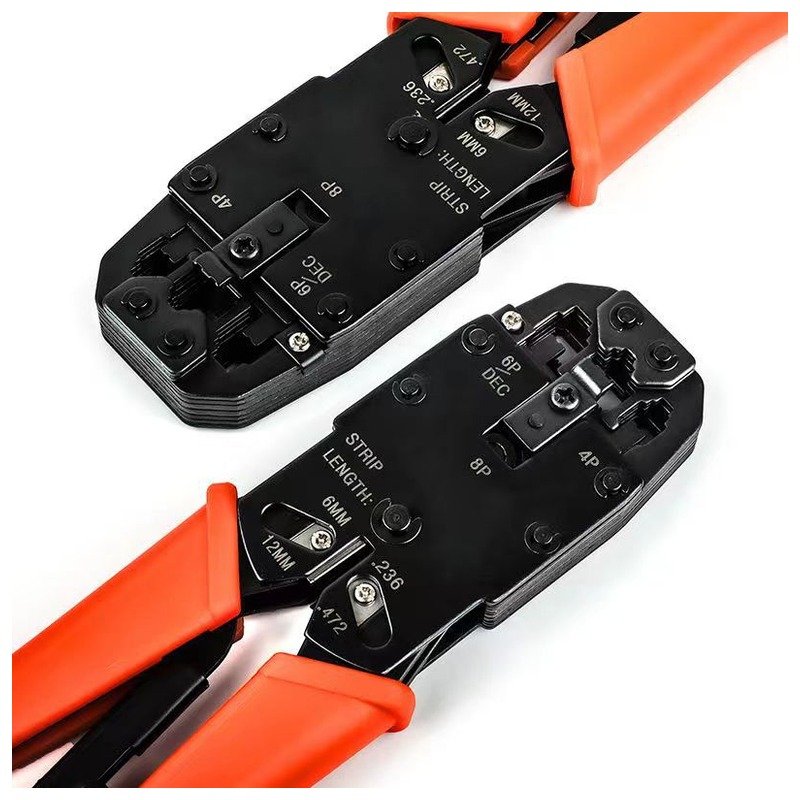
The ratchet version of the modular crimper: 8P, 6P DEC and 4P dies, built-in 6 mm and 12 mm strip gauges, and
View K-RJ10 →
A compact vertical-action crimper for the plugs a standard pliers tool handles badly: shielded Cat6A and Cat7
View K-C7A →
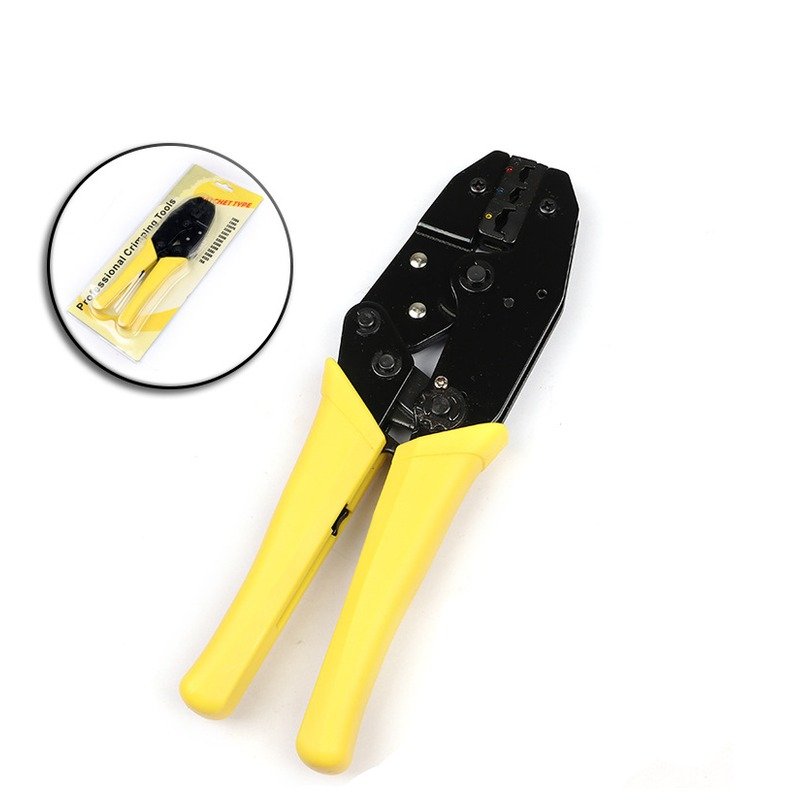
A ratchet hex crimper with quick-change dies — the photographed set crimps 1.5, 2.5 and 6 mm² terminals and co
View K-CX3 →
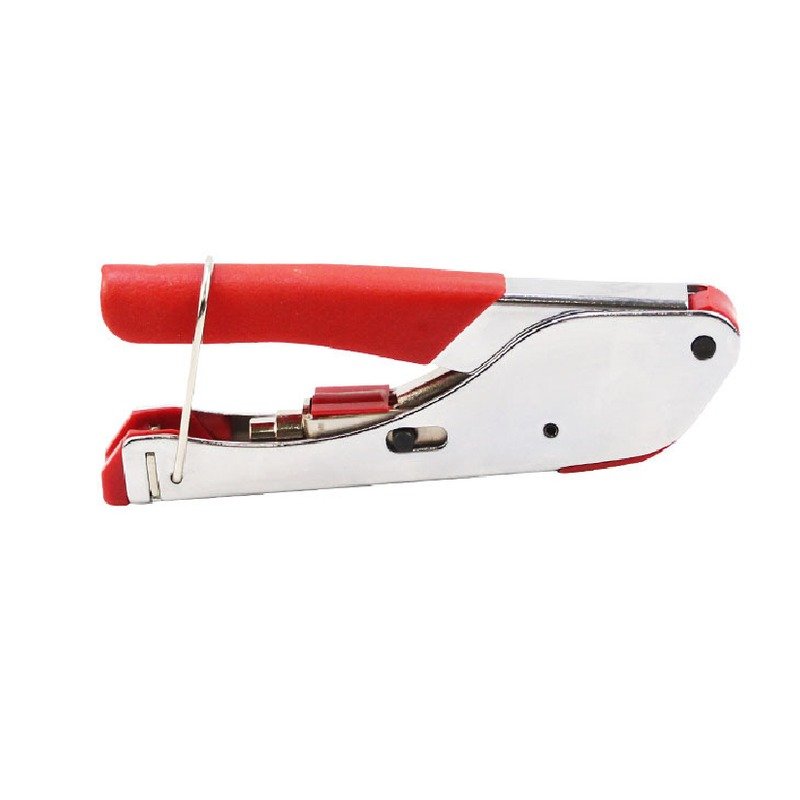
The compact compression tool for everyday RG6 and RG59 F-connector work — short body, fixed stroke, nothing to
View K-CX2 →Tell us the quantity and the finish or branding you need — Silvia replies personally with factory pricing (EXW).
Email: silvia@licoom.com · sales@licoom.com
WhatsApp: +86 150 6823 2998