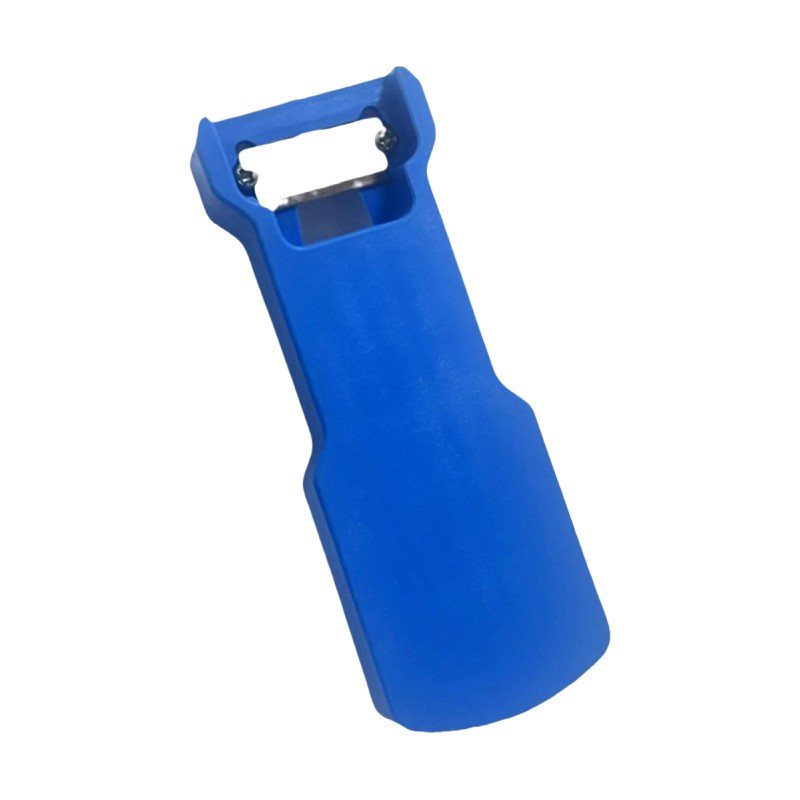
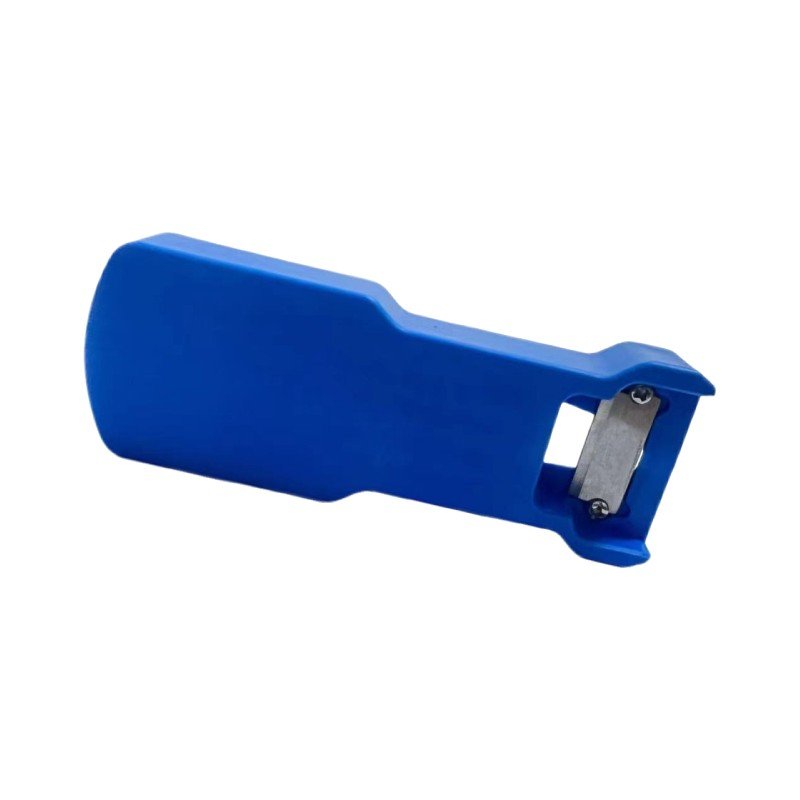
A one-piece aluminium paddle that slits round cable jackets lengthwise in a single draw: seat the cable at the head window, pull the tool along, and the fixed blade scores the jacket open along its whole run — at three cable sizes, 8.5, 10.4 and 14 mm — without ever reaching the core inside.
Checked against the specifications on this page before dispatch.
Supplied neutral; labeling per order — the K-870 and KS-1 are the main labeling lines in this group.
High-turnover hand tools held in depth — mix models freely in one shipment, restock as you sell.
| Function | Longitudinal jacket stripping — slits the jacket of round fiber optic cables lengthwise so it peels away from the core |
|---|---|
| Cable diameter | 8.5 / 10.4 / 14 mm — three cable sizes |
| Blade | Flat steel blade standing across the head window — scores the jacket lengthwise as the tool is drawn along the cable |
| Blade setting | Fixed stand, set for the three cable sizes — no depth dial, no adjustment between sizes; the blade is replaceable, clamped under a plate fixed by two screws |
| Body | Aluminium alloy, one-piece paddle body |
| Color | Blue |
| Dimensions | 115 × 37 × 14 mm |
| Weight | 137 g |
In the box: the parts above, packed per unit. Applications: Opening round fiber optic distribution and feeder cables for splice closures · Longitudinal jacket stripping at cable ends before termination · Mid-span jacket windows on installed cable runs · FTTH / FTTx cable preparation and maintenance.
Every splice, termination and branch starts the same way: the cable jacket has to come off so the tubes and fibers inside can be reached. Doing that with a bare knife is the risky way — the cut depth is whatever the hand makes it, pass by pass, and the thing under the jacket is the core the whole job depends on. A guided jacket stripper exists to take the judgement out of the depth: the blade stands at a fixed stand in the tool, the cable is held against it in a fixed seat, and the score that opens the jacket is the same depth at the start of the draw and at the end of it.
The K-ABS is the simplest form of that idea — one aluminium paddle, one window, one blade. The end of the cable is laid into the window at the head of the tool, where the flat steel blade stands across the opening. Grip the paddle by its broad tail and draw it along the cable: the window keeps the cable running straight under the edge, the blade scores a single line along the jacket as it travels, and at the end of the draw the jacket is slit along its whole length. Flex the cable and the slit opens — the jacket peels away from the core in one piece, with the score never reaching what is inside.
The head is set for three cable sizes — 8.5, 10.4 and 14 mm — and the blade stand is fixed for them: there is no depth dial to set, and nothing to change between sizes. That fixed stand is the tool's discipline and its limit. A cable at one of the three sizes seats squarely and scores at the set depth; a cable far off the sizes will not seat properly in the window, and forcing it is how cores get marked. Prove any new cable on a scrap end first — one short draw shows whether the score parts the jacket cleanly without touching what is under it, which is the only setup check this tool asks for.
At a cable end, draw back the full length you need stripped, peel the jacket away, and move on to the tubes. Mid-span, the same tool opens a window in a run that stays in place: seat the paddle on the cable where it lies, draw the length of the window, then ring the jacket at both ends of the slit — a circumferential cut with a ringing tool or a careful knife turn — and lift the windowed section of jacket out, leaving the core exposed at that point and the cable untouched everywhere else. That is how a branch or a repair is added to a live route without cutting the cable out of it.
Care is two screws' worth. Wipe jacket crumbs and cable gel out of the window after use, and check the blade edge: a blade that has started to tear instead of score is done. Undo the two screws on the clamp plate, lift the old blade out, seat the new one exactly as the old one sat, and tighten the plate back down — the blade stand is in the seat, not in your adjustment, so a swapped blade cuts at the same depth as the one it replaced. Store the tool dry, with nothing resting on the blade edge.
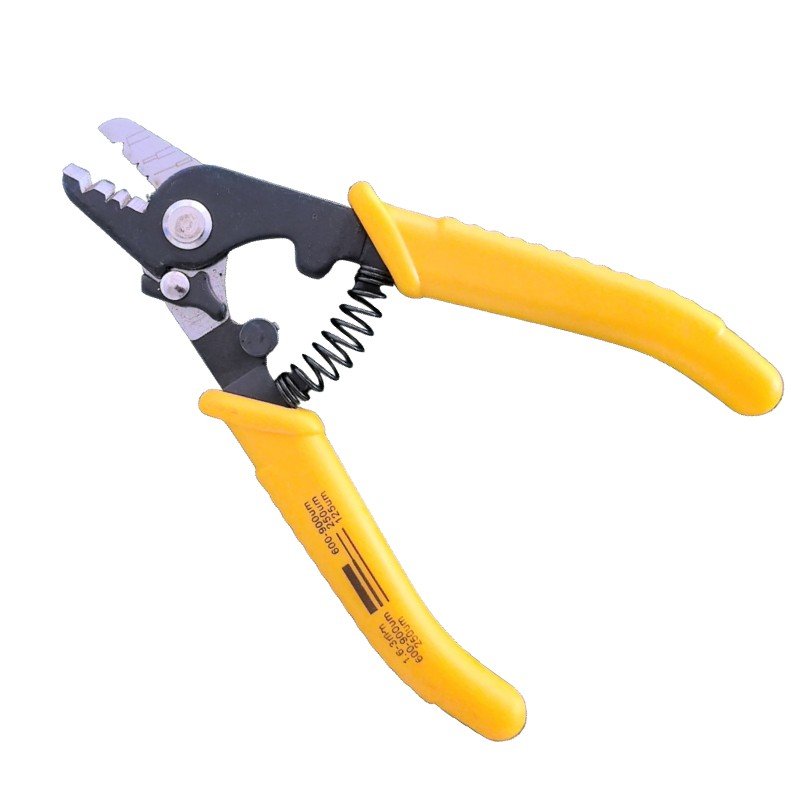
Three factory-set holes strip the fiber down layer by layer — 1.6–3.0 mm jacket, 600–900 µm buffer, 250 µm coa
View K-870 →
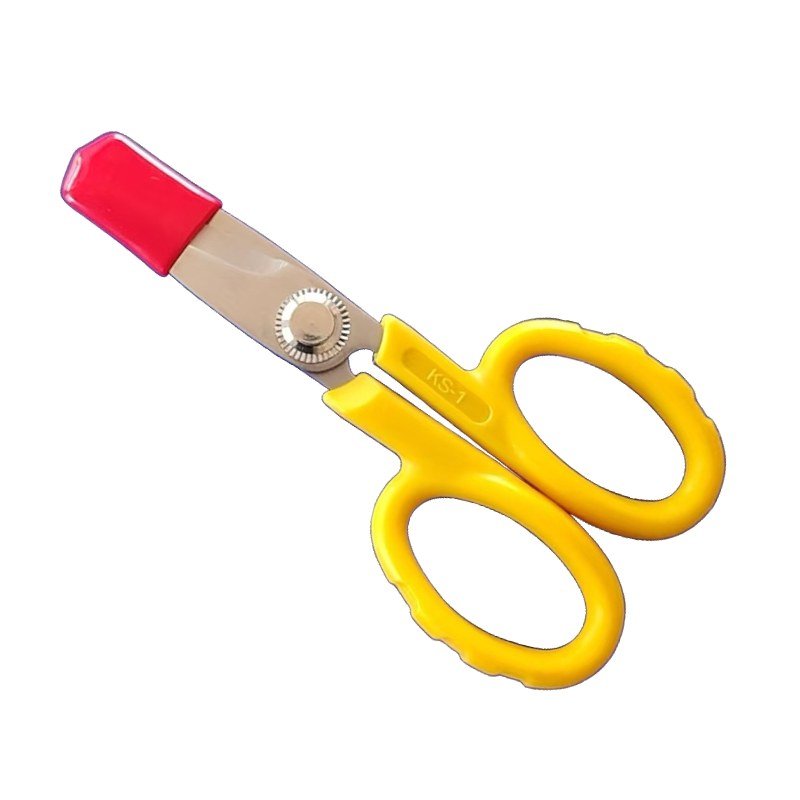
Lightweight, economical shears for cutting the Kevlar aramid strength members in fiber optic cable — one micro
View KS-1 →
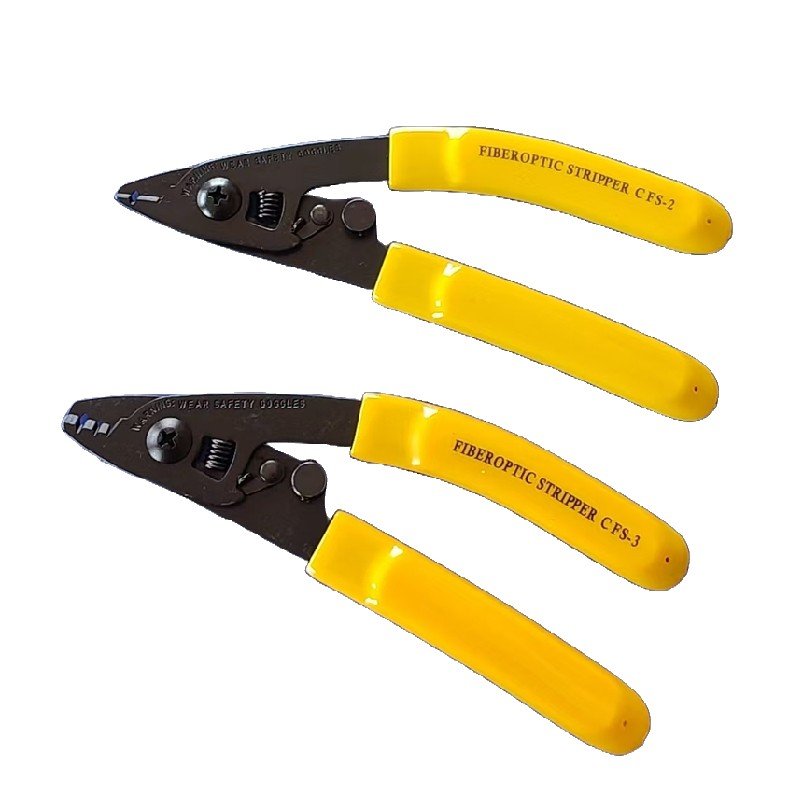
The two- and three-hole precision stripper for fiber preparation: factory-set notches take the fiber down laye
View CFS-2/3 →
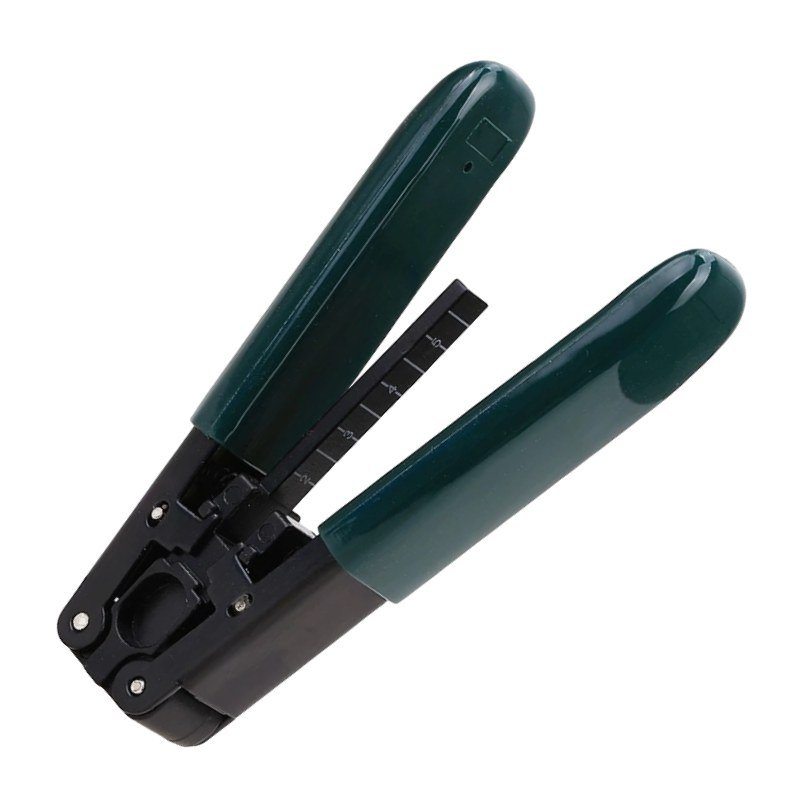
One squeeze slits the flat drop cable jacket along both edges and cuts the strength members — the jacket halve
View K-6 →Tell us the quantity and the finish or branding you need — Silvia replies personally with factory pricing (EXW).
Email: silvia@licoom.com · sales@licoom.com
WhatsApp: +86 150 6823 2998